

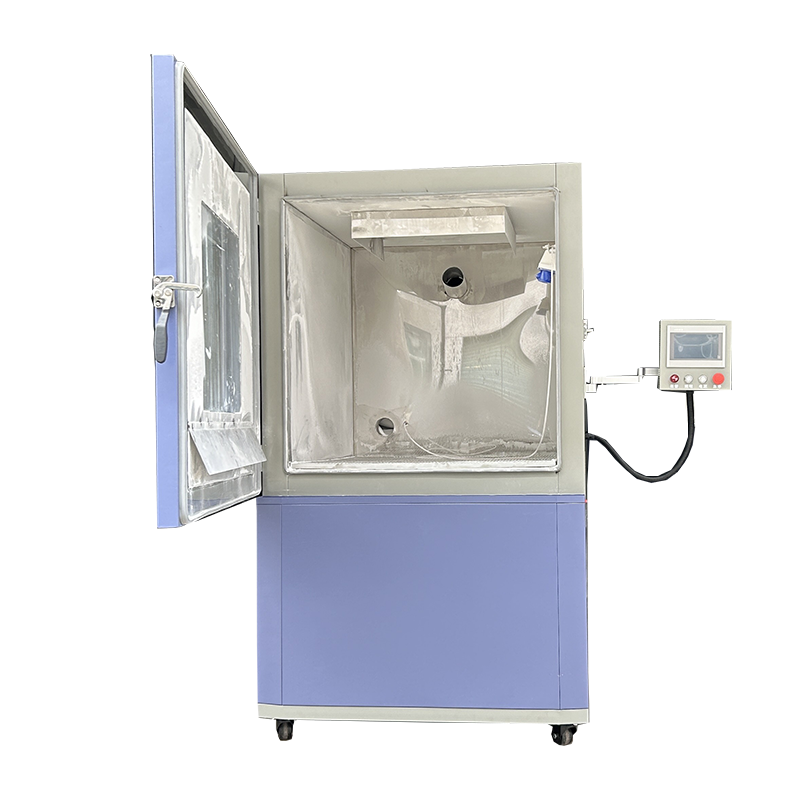
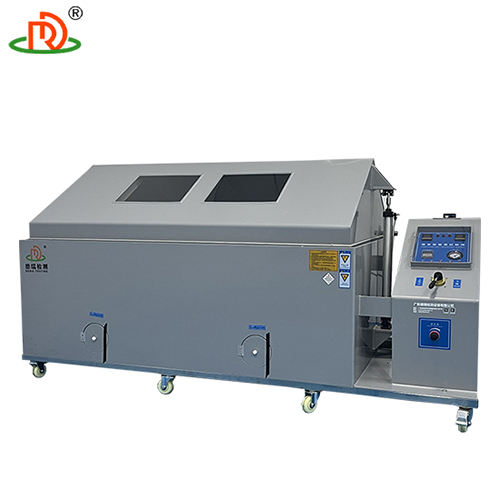
Programmable sand and dust testing machine
288005.0 INR/Unit
Product Details:
- Max Height 1200 mm
- Features Fully programmable; real-time monitoring; cycle timing; fast calibration
- Operating Voltage 220V
- Hardness Test chamber inner wall: HRC 50
- Application Sand and dust resistance testing of electrical and electronic products
- Accuracy 2% FS
- Response Time 2 s
- Click to view more
X
Programmable sand and dust testing machine Price And Quantity
- 1 Unit
- 288005.0 INR/Unit
- Approx. 1.0 m
- On-site installation & training included
- IEC 60529, MIL-STD-810G, ISO 20653
- 5C to 35C
- Tempered glass, high visibility
- 68 dB
- Internal LED for specimen visibility
- Auto and manual
- Fine, medium, coarse (ISO/IEC standard)
- Continuous, interval, cycle
- Integral HEPA filter
- IP54
- Stainless Steel Outer Chamber
- Over-temperature, over-pressure warning
- Adjustable multi-position clamps
- Lockable castor wheels
- High-performance silicone rubber gasket
Programmable sand and dust testing machine Product Specifications
- Bench-top
- Up to 5
- 30% RH
- 0.01 g/m
- 50 mm
- 0.1 - 1.0 MPa
- Max 500500 mm
- Sand and Dust Testing Machine
- Programmable duration and intensity
- RS485
- 0 - 1000 g/m
- 1000 mm
- 50L
- AC 220V 10%, 50Hz
- Digital touch screen
- 50 Hz
- RT +5C to 60C
- Laboratory and industrial testing
- Automatic
- 0.5 - 8 m/s (Programmable)
- Programmable PLC touch screen
- 2% FS
- 2 s
- Sand and dust resistance testing of electrical and electronic products
- Test chamber inner wall: HRC 50
- 220V
- Fully programmable; real-time monitoring; cycle timing; fast calibration
- 1200 mm
- 600 mm
- Approx. 250 kg
- Approx. 1.0 m
- On-site installation & training included
- IEC 60529, MIL-STD-810G, ISO 20653
- 5C to 35C
- Tempered glass, high visibility
- 68 dB
- Internal LED for specimen visibility
- Auto and manual
- Fine, medium, coarse (ISO/IEC standard)
- Continuous, interval, cycle
- Integral HEPA filter
- IP54
- Stainless Steel Outer Chamber
- Over-temperature, over-pressure warning
- Adjustable multi-position clamps
- Lockable castor wheels
- High-performance silicone rubber gasket
Programmable sand and dust testing machine Trade Information
- Cash in Advance (CID)
- 100 Unit Per Month
- 5 Days
- All India
Product Description
Dust Test Chamber Parameter
| Item | Specification |
| Internal dimension | 800W*800D*800Hmm |
| External dimension | 1300W*1000D*1700Hmm |
| Test sample | Size W20cm- L30cm-D15cm, weight 0.5kg |
| Chamber material | SUS304 Stainless steel |
| Specifications of square mesh sieve | Mesh hole 75um, mesh metal wire diameter 50um |
| Talcum powder amount | 2kg/ m |
| Airflow speed | No more than 2m/s |
| Door | Left open door with tempered glass door |
| Controller | PLC Touch Screen controller, programmable to set as below cycle: a. Blowing dust time (Stop/Blow) m/s b. Cycle time: can be adjusted c. Pre-set test time: 0s ~99m99s |
| Vacuum system | Pressure gauge, air filter, Pressure regulating FRL, connecting pipe, Vacuum pump |
| Vacuum pump capacity | 60-600 L/H |
| Fan | Centrifugal fan |
| Safety protection devices | Meter over-temperature function, Phase shortage protection, Power short-circuit protection |
Programmable Sand and Dust Tester is a professional equipment used to simulate sand and dust environment and test the protection performance of products under harsh dust conditions. It is widely used in electronics, automotive, aerospace, military and other fields to ensure the reliability and durability of products in extreme environments. The following are the detailed information of Programmable Sand and Dust Tester:
1. Functions and Uses
Simulate sand and dust environment: The programmable sand and dust tester can simulate various sand and dust environments, including wind and sand, dust, etc., to test the dustproof performance of products.
Test product protection performance: It is mainly used to test the sealing performance of the product's shell, dustproof performance, as well as the electrical performance and mechanical performance in the sand and dust environment.
Programmable control: Through the programmable controller, users can set different test parameters, such as wind speed, sand and dust concentration, test time, etc., to meet different test requirements.
2. Main technical parameters
Wind speed range: usually between 0.5m/s and 10m/s, which can be adjusted as needed.
Sand and dust concentration: usually between 2g/m and 4g/m, can be adjusted according to the test standard.
Testing time: programmable control up to several hundred hours.
Sand and dust type: Talcum powder, silica sand, etc. are usually used as the sand and dust source.
Temperature control: Some of the equipment is equipped with a temperature control system to simulate the sand and dust environment under different temperature conditions.
Humidity control: Some of the equipment is equipped with humidity control system, which can simulate the sand dust environment under different humidity conditions.
3. Test standards and methods
IEC 60529: International Electrotechnical Commission's test standard on the protection level of the enclosure, which stipulates the dustproof test methods of IP5X and IP6X.
GB/T 2423.37: Chinese national standard, stipulates the method of sand and dust test in the environmental test of electrical and electronic products.
MIL-STD-810G: U.S. military standard that specifies environmental engineering considerations and laboratory test methods, including sand and dust testing.
4. Test steps
1.
Initial testing: under standard environmental conditions, the test sample is subjected to initial testing of appearance, basic functions and electrical properties.
2.
Sample placement: place the sample in the test chamber to ensure that the sample is in normal working condition.
3.
Setting parameters: according to the test standards or customer requirements, set parameters such as wind speed, sand and dust concentration, test time, etc.
4.
Start test: Start the testing machine and begin the sand and dust test.
5.
Continuous monitoring: monitor the performance and status of the sample periodically during the test.
6.
End of test: After the test, remove the sample, perform appearance and function checks, and evaluate the test results.
5. Assessment Criteria
Appearance check: Check whether there is sand and dust deposited on the surface of the sample and whether there is sand and dust entering the sealed part.
Functional test: Test whether the functions of the samples are normal and whether they are affected by sand and dust.
Electrical performance: Test whether the electrical performance of the sample is affected, such as insulation resistance, contact resistance, etc.
6. Application areas
Electronic and electrical appliances: Test the dustproof performance of electronic products, such as cell phones, computers, household appliances, etc.
Automotive industry: Test the dustproof performance of automotive parts, such as lamps, instrument panels, engine parts, etc.
Aerospace: Test the dustproof performance of aerospace equipment, such as sensors, navigation equipment, etc.
Military industry: test the dustproof performance of military products, such as weapons and equipment, communication equipment, etc.
7. Precautions
Safe operation: operators should wear protective equipment, such as dust masks, protective glasses, etc.
Equipment maintenance: Regularly check and maintain the equipment to ensure its normal operation.
Sand and dust recovery: sand and dust should be recovered in time after use to avoid environmental pollution.
Environmental control: Keep the test environment clean to avoid external sand and dust affecting the test results.
8. Advantages
Programmable control: Users can set different test parameters according to their needs, improving the flexibility and accuracy of the test.
High degree of automation: High degree of automation of the equipment reduces the error of manual operation.
Multi-functional: not only sand and dust testing, but also simulation testing of temperature, humidity and other environmental factors.
Versatile Testing Capability
This sand and dust testing machine accommodates up to 5 specimens of varying sizes (max 500500 mm) with adjustable clamp holders, supporting fine, medium, and coarse particles in accordance with ISO/IEC standards. Programmable test speeds from 0.5 to 8 m/s and variable durations allow precise simulation of real-world conditions, suitable for both R&D and quality assurance.
Robust Construction and Safe Operation
Crafted from stainless steel, the machine's outer chamber ensures durability. The tempered glass window, integral HEPA dust collection, and over-temperature/over-pressure alarms assure user safety and contaminant control, while the high-performance silicone door seal keeps testing environments isolated from ambient conditions.
Advanced Control and Monitoring
A programmable PLC touchscreen delivers an intuitive user interface for controlling test parameters, including humidity (30% RH), temperature (RT +5C to 60C), and test duration. With real-time monitoring, digital data display, fast calibration options, and a rapid response time (2 s), users benefit from efficient and repeatable testing processes.
FAQ's of Programmable sand and dust testing machine:
Q: How does the programmable sand and dust testing machine ensure accurate and repeatable results?
A: The machine utilizes both auto and manual calibration methods, ensuring measurement accuracy within 2% FS. It features programmable test speeds, durations, and intensities to award consistent testing conditions. The digital touchscreen provides real-time monitoring and control for all test parameters, reducing human error and optimizing repeatability.Q: What are the primary applications of this testing machine?
A: This equipment is designed for conducting sand and dust resistance testing on electrical and electronic devices. It helps manufacturers assess product durability and ingress resistance under harsh environmental conditions, aiding compliance with IEC 60529, MIL-STD-810G, and ISO 20653 standards.Q: When should I conduct a calibration with this machine?
A: Calibration should be performed prior to initial use and after any significant maintenance or adjustment. Routine checks using the automatic and manual functions ensure ongoing accuracy, especially after changes in test materials or environmental conditions.Q: Where can this machine be installed and how portable is it?
A: Thanks to lockable castor wheels and bench-top mounting, the machine is easily transportable and suitable for laboratory or industrial environments. Its 1.0 m3 chamber volume and compact design allow flexible placement in various testing laboratories or production facilities.Q: What is the process for conducting a standard dust ingress test using this machine?
A: Place up to 5 specimens onto the adjustable clamps, set test parameters (speed, duration, particle size) via the touchscreen, and initiate the test. The system automatically controls and monitors the test environment, collects dust with the HEPA filter, and provides safety alerts if thresholds are exceeded. Results are displayed digitally for convenient analysis.Q: How can I benefit from using this machine for product testing?
A: By simulating real-world sand and dust exposure, the machine helps you identify potential weaknesses in product designs, ensures compliance with international ingress protection standards, and supports product improvement for greater reliability and customer satisfaction. Installation and training are provided, ensuring rapid setup and effective operation.Tell us about your requirement

Price:
Quantity
Select Unit
- 50
- 100
- 200
- 250
- 500
- 1000+
Additional detail
Mobile number
Email

Other Products in 'Environment Test Chamber' category

Contact Details

- 1st Floor, No. 3, Shugang Avenue, Hongmei Town,Dongguan Guangdong, China
- Mr. Shirley (Manager)
- Mobile : +8615580327593
- Send Inquiry
-

Derui Testing Equipment Co., Ltd
 Send Inquiry
Derui Testing Equipment Co. Ltd
All Rights Reserved.(Terms of Use)
Developed and Managed by Infocom Network Private Limited.
Developed and Managed by Infocom Network Private Limited.
 English
 Spanish
 French
 German
 Italian
 Chinese (Simplified)
 Japanese
 Korean
 Arabic
 Portuguese