

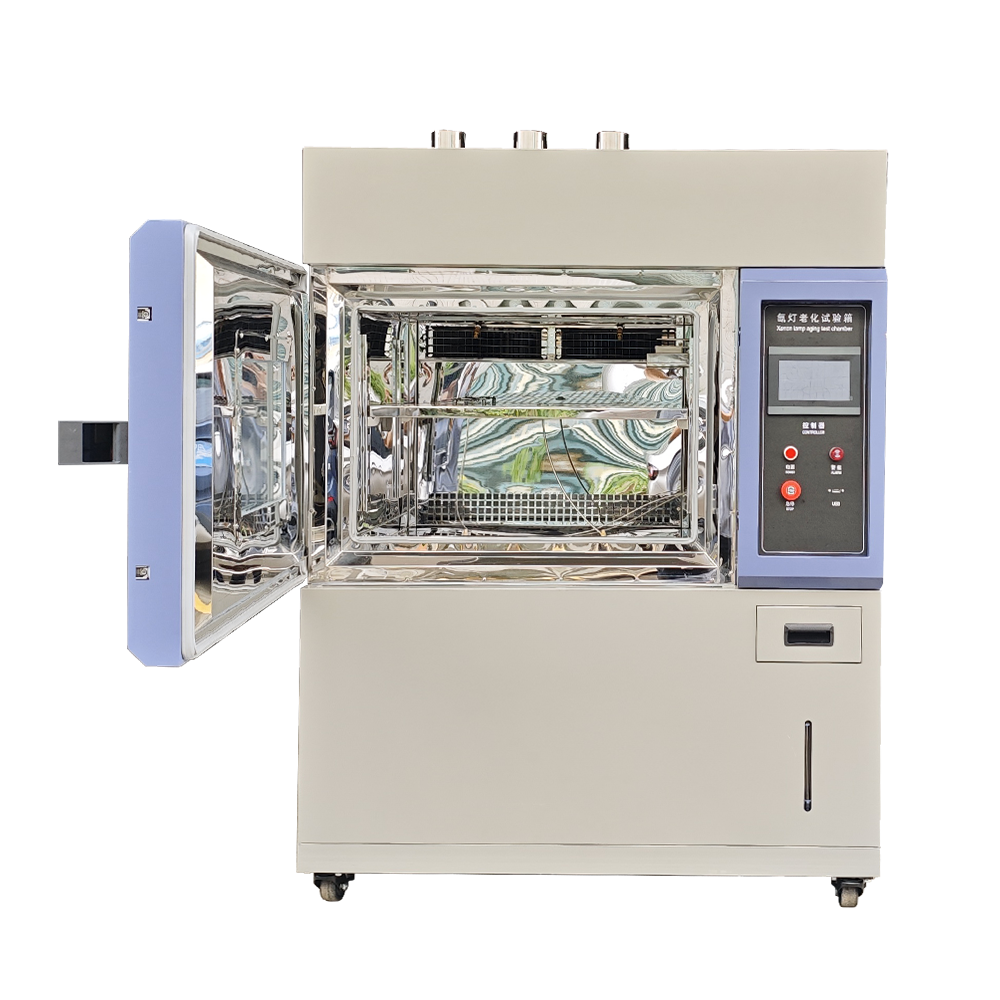
Textile UV Aging Test Chamber Suppliers, Industrial Xenon Lamp, Color Fade Resistance Analysis
598005.0 INR/Unit
Product Details:
- Resolution 0.1% (Digital)
- Operating Voltage 220V
- Interface Type RS485, USB
- Equipment Type Textile UV Aging Test Chamber
- Power Supply AC 220V / 50Hz
- Automation Grade Automatic
- Test Range UV, Visible, IR Spectrum
- Click to view more
X
Textile UV Aging Test Chamber Suppliers, Industrial Xenon Lamp, Color Fade Resistance Analysis Price And Quantity
- 1 Unit
- 598005.0 INR/Unit
- Stainless Steel
- 1200 cm²
- Air-cooled Industrial Xenon Arc Lamp
- ISO 105-B02, AATCC TM16, ASTM G155
- Over-temperature Protection, Door Interlock
- 1200 x 550 x 1700 mm
- 2.5 kW
- Corrosion Resistant Stainless Steel SUS304
- 0~9999 min (Programmable)
Textile UV Aging Test Chamber Suppliers, Industrial Xenon Lamp, Color Fade Resistance Analysis Product Specifications
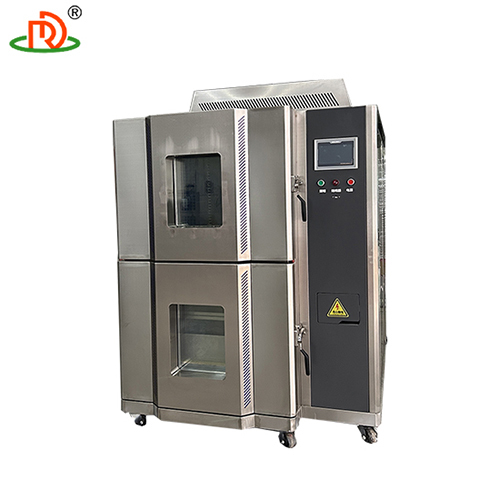
- Textile UV Aging Test Chamber
- 220 kg
- AC 220V / 50Hz
- 0.1% (Digital)
- 220V
- RS485, USB
- 1700 mm
- 60 mm (Exhaust Port)
- 75 x 150 mm (Standard)
- Textile UV Aging & Fade Analysis
- Automatic
- UV, Visible, IR Spectrum
- 24 Specimens
- 0.6 MPa (Compressed Air)
- 50 Hz
- 40~98%RH (Controlled)
- Industrial Grade
- Adjustable, 0.1~1.5 m/min
- 500 mm max
- Room temperature ~ 80C
- Color Fade Resistance, Lightfastness, Weathering Test
- 2 s
- 0~100% Light Transmission
- Large Chamber for Bulk Testing
- 2%
- Floor Standing
- Programmable Microcomputer Controller
- Digital Touch Screen
- Industrial Xenon Lamp, Programmable Exposure, Data Logging
- 400 mm
- Stainless Steel
- 1200 cm²
- Air-cooled Industrial Xenon Arc Lamp
- ISO 105-B02, AATCC TM16, ASTM G155
- Over-temperature Protection, Door Interlock
- 1200 x 550 x 1700 mm
- 2.5 kW
- Corrosion Resistant Stainless Steel SUS304
- 0~9999 min (Programmable)
Textile UV Aging Test Chamber Suppliers, Industrial Xenon Lamp, Color Fade Resistance Analysis Trade Information
- Cash in Advance (CID)
- 80 Unit Per Month
- 10 Days
- All India
Product Description
Industrial Xenon Test Chamber Suppliers: Technical Expertise and Global Compliance
Industrial Xenon Test Chambers are critical for evaluating material durability under simulated sunlight, temperature, and humidity conditions. As a supplier of precision testing equipment, we provide chambers designed to meet stringent international standards while addressing diverse industrial requirements. Below is an overview of our technical capabilities, manufacturing expertise, and value propositions for businesses seeking reliable xenon testing solutions.
Technical Specifications of Supplied Xenon Test Chambers
1.
Light Source & Spectral Control
Xenon Arc Lamps: Air- or water-cooled lamps with spectral output matching natural sunlight (290800 nm).
Irradiance Adjustment: 0.31.5 W/m @ 340 nm, calibrated to ASTM G155 and ISO 4892-2 protocols.
2.
Environmental Parameters
Temperature Range:
Black Panel Temperature (BPT): 40C to 120C (1C).
Chamber Air Temperature: 10C to 80C (1.5C).
Humidity Control: 10%95% RH (3% stability) with optional dew cycle simulation.
3.
Chamber Design
Capacity: 50L (benchtop) to 1000L (walk-in), with customizable sample racks.
Construction: Corrosion-resistant stainless steel interiors, double-sealed doors, and quartz viewing windows.
4.
Compliance & Certifications
Standards: ASTM G155, ISO 4892-2, SAE J2527, AATCC TM16.
Certifications: CE, ISO 9001, and ISO 14001 compliant manufacturing processes.
Supplier Capabilities
1.
Custom Engineering Solutions
Tailored chamber designs for specialized applications (e.g., automotive coatings, photovoltaic materials).
Integration of add-ons: salt spray modules, ozone exposure, or IoT-enabled remote monitoring.
2.
Quality Assurance
Rigorous pre-shipment testing, including spectral calibration and humidity uniformity validation.
NIST-traceable sensor calibration reports provided with each unit.
3.
Global Logistics & Support
Worldwide shipping with compliance to regional regulations (e.g., RoHS, REACH).
On-site installation, operator training, and 24/7 technical support.
4.
Sustainable Manufacturing
Energy-efficient designs with heat recovery systems, reducing operational costs by up to 20%.
Eco-friendly refrigerants and recyclable materials used in construction.
Industries Served
Automotive: Testing paint fade, interior trim, and polymer components.
Aerospace: Validating composite materials and avionics under extreme UV exposure.
Textiles: Evaluating colorfastness and UV degradation resistance.
Construction: Assessing durability of sealants, roofing membranes, and coatings.
Procurement Considerations
1.
Certifications
Verify supplier adherence to ISO 9001 (quality management) and ISO 17025 (testing competence).
2.
After-Sales Service
Prioritize suppliers offering extended warranties, spare parts availability, and calibration services.
3.
Scalability
Opt for modular designs to accommodate future testing needs (e.g., larger sample sizes).
4.
Technical Validation
Request third-party test reports or case studies demonstrating chamber performance.
Frequently Supplied Models
1.
Benchtop Xenon Chambers: Compact units for R&D labs (50150L).
2.
High-Capacity Walk-In Chambers: For bulk testing of automotive parts or construction materials.
3.
Hybrid Chambers: Combine xenon weathering with salt spray or temperature shock capabilities.
Why Partner with Us?
Decades of Expertise: Over 20 years in environmental testing equipment manufacturing.
Global Network: Partnerships with 50+ distributors across North America, Europe, and Asia.
End-to-End Solutions: From chamber design to post-purchase technical support.
Conclusion
As a trusted supplier of Industrial Xenon Test Chambers, we prioritize precision, compliance, and sustainability to meet the evolving demands of material testing. Our chambers empower industries to validate product longevity, reduce R&D cycles, and comply with global standards. For businesses seeking reliable xenon testing solutions, our technical expertise and customer-centric approach ensure long-term operational success.
| Model | DR-H301 |
| Internal dimension (WxDxH) | 500*600*500mm |
| External dimension (WxDxH) | 1000*1000*1750mm |
| Temperature range | RT+10~ 60 (suggest to use 402) |
| Temperature Fluctuation | 1 |
| Ozone concentration | 50~1000 pphm, adjustable |
| Ozone concentration deviation | 10% |
| Sample holder | SUS#304 stainless steel |
| Temperature controller | Programmable touch screen controller |
| Ozone concentration analysis | Concentration analysis meter |
| Ozone generator | High pressure silence discharge type |
| Protection system | Leakage, short circuit, over temperature, over heat |
| Test criteria | ASTM D1149, ISO 1431, JIS K6259... |
Robust Construction & Large Capacity
Engineered from SUS304 stainless steel, the chamber is built for longevity and corrosion-resistance, ensuring reliable operation even during prolonged testing. Its generous capacity allows up to 24 standard-sized textile specimens to be evaluated simultaneously-ideal for bulk testing environments or high-throughput labs requiring consistent and repeatable results.
Advanced Programmable Controls
Users benefit from a programmable microcomputer controller, enabling dynamic adjustment of exposure duration, test speed (0.1-1.5 m/min), and programmable sample rotation. This automation optimizes efficiency and accuracy, while the digital touch screen interface streamlines both operation and data acquisition. Digital logging allows for comprehensive analysis and traceable records.
Comprehensive Safety & Standards Compliance
Built-in over-temperature protection and an interlocking door safeguard both operators and specimens during high-intensity testing. The chamber strictly follows ISO 105-B02, AATCC TM16, and ASTM G155 testing standards, ensuring your test outcomes are globally recognized and credible for certification or quality control reports.
FAQ's of Textile UV Aging Test Chamber Suppliers, Industrial Xenon Lamp, Color Fade Resistance Analysis:
Q: How does the Textile UV Aging Test Chamber simulate environmental exposure for textiles?
A: The chamber uses a 2.5 kW air-cooled industrial xenon arc lamp to replicate sunlight, providing UV, visible, and infrared spectrum exposure. Its programmable controls enable precise simulation of varying environmental conditions, including temperature (room temperature to 80C) and controlled humidity (40-98% RH), ensuring reliable color fade and lightfastness assessments.Q: What are the key benefits of using this chamber for color fade resistance analysis?
A: This system provides accelerated, repeatable testing of textiles under controlled light, temperature, and humidity, allowing manufacturers and researchers to reliably evaluate product durability. The large exposure area and capacity for 24 specimens streamline batch testing, while digital logging ensures detailed, traceable data for quality assurance and certification.Q: When should the test chamber be used in the textile production process?
A: The chamber is ideal for both research and development stages, as well as during routine quality control. It's used when evaluating new materials, comparing batch consistency, or verifying compliance with international standards for lightfastness and weathering resistance before product release.Q: Where can this chamber be installed and what are the installation requirements?
A: Designed as floor-standing equipment, it requires a stable, ventilated space with access to AC 220V/50Hz power and compressed air (0.6 MPa). The 1700 mm maximum height and outer dimensions (1200 x 550 x 1700 mm) should be considered when allocating workspace. An exhaust port (60 mm) must be properly connected for safe operational ventilation.Q: What types and sizes of samples can be tested?
A: The chamber accommodates up to 24 standard textile specimens measuring 75 x 150 mm each. The stainless steel sample holders ensure stability and corrosion resistance even under long exposure cycles, making the chamber suitable for a wide variety of textile materials and finishes.Q: How is the testing process controlled and monitored?
A: Operators use the digital touch screen to program test cycles, set parameters such as test width (400 mm), exposure time (0-9999 min), and monitor real-time conditions. The programmable microcomputer controller automates sample movement and data acquisition, while built-in safety features prevent mishaps during operation.Q: What standards does this chamber comply with for textile testing?
A: The chamber meets ISO 105-B02, AATCC TM16, and ASTM G155 standards, ensuring its test results are internationally recognized and suitable for certification, product development, and export requirements.Tell us about your requirement

Price:
Quantity
Select Unit
- 50
- 100
- 200
- 250
- 500
- 1000+
Additional detail
Mobile number
Email

Other Products in 'Environment Test Chamber' category

Contact Details

- 1st Floor, No. 3, Shugang Avenue, Hongmei Town,Dongguan Guangdong, China
- Mr. Shirley (Manager)
- Mobile : +8615580327593
- Send Inquiry
-

Derui Testing Equipment Co., Ltd
 Send Inquiry
Derui Testing Equipment Co. Ltd
All Rights Reserved.(Terms of Use)
Developed and Managed by Infocom Network Private Limited.
Developed and Managed by Infocom Network Private Limited.
 English
 Spanish
 French
 German
 Italian
 Chinese (Simplified)
 Japanese
 Korean
 Arabic
 Portuguese