

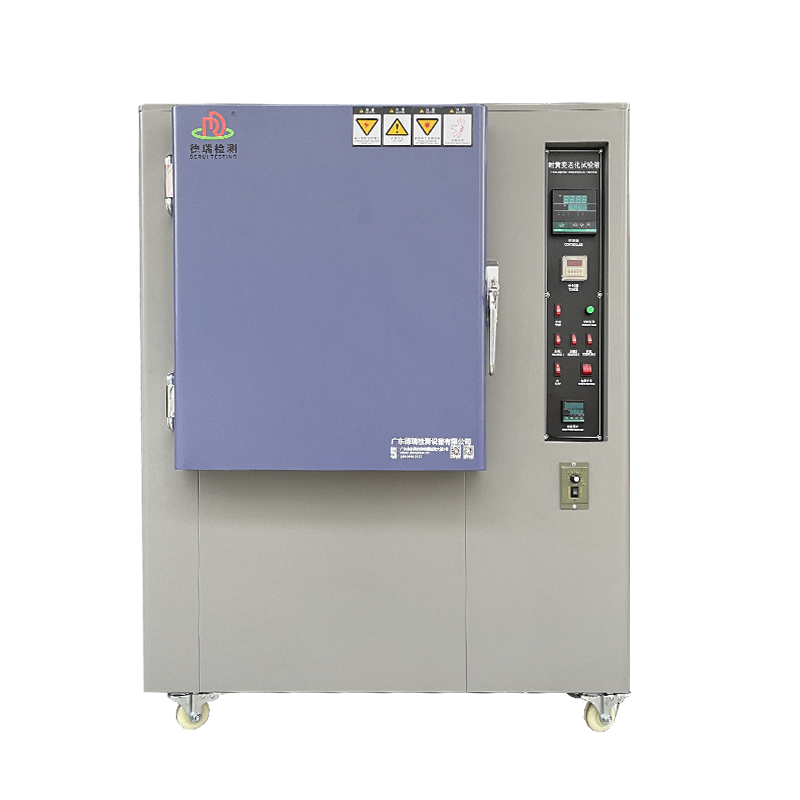
Verification of resistance to yellowing and aging of electronic connectors
148105.0 INR/Unit
Product Details:
- Accuracy 0.1%
- Measuring Range 0-100% yellowing index
- Application Verification of resistance to yellowing and aging of electronic connectors
- Power Supply AC 220V, 50Hz
- Interface Type USB and RS232
- Features Programmable test cycles, automatic logging, over-temperature protection
- Equipment Type Yellowing & Aging Resistance Testing Machine
- Click to view more
X
Verification of resistance to yellowing and aging of electronic connectors Price And Quantity
- 1 Unit
- 148105.0 INR/Unit
- 0-40C, 85%RH
- IEC, ASTM, UL applicable standards
- 90 kg gross
- Air-cooled
- Programmable timer up to 9999 minutes
- Onsite installation & training
- 55 dB
- High-grade stainless steel
- Integrated spectrophotometer
- PC analysis software included
- Internal memory and USB export
- UV and Xenon Lamp
- Overload, over-temp, and leakage protection
Verification of resistance to yellowing and aging of electronic connectors Product Specifications
- Verification of resistance to yellowing and aging of electronic connectors
- 0.1%
- 0-100% yellowing index
- AC 220V, 50Hz
- USB and RS232
- Programmable test cycles, automatic logging, over-temperature protection
- Yellowing & Aging Resistance Testing Machine
- 400 mm
- 200 mm/min
- 50/60Hz
- Single phase 220V
- 1-12 pieces
- Digital touchscreen
- Programmable digital control
- 0.01%
- 0.5-0.7 Mpa
- 78 kg
- Room temperature to 300C
- Fully Automatic
- Floor standing
- Standard connector port
- 0.5 seconds
- Laboratory and Industrial QC
- Up to 200 hours
- 100 mm
- Customizable based on chamber size
- Various depending on connector type
- 1200 mm
- 20%-98%RH adjustable
- 0-40C, 85%RH
- IEC, ASTM, UL applicable standards
- 90 kg gross
- Air-cooled
- Programmable timer up to 9999 minutes
- Onsite installation & training
- 55 dB
- High-grade stainless steel
- Integrated spectrophotometer
- PC analysis software included
- Internal memory and USB export
- UV and Xenon Lamp
- Overload, over-temp, and leakage protection
Verification of resistance to yellowing and aging of electronic connectors Trade Information
- Cash in Advance (CID)
- 90 Unit Per Month
- 7 Days
- All India
Product Description
Item Specification
1. Internal chamber size(W*D*H) 50*50*60cm
2. External chamber size(W*D*H) 114*74*130cm
3. Temperature Range Ambient Temperature~200
4. Control Mode Automatic Calculation Controller
5. Temperature display accuracy 0.1
6. Control accuracy 3
7. Distribution accurac 1 (ambient ~ 100)
8. Time memory 0-999 hours, Power Failure Memory Type, with Buzzer
9. Sample holder rotation speed Diameter 45cm, 102 roll/min
10. UV light source 300W UV lamp
11. Heating method Hot air circulation
12. Chamber material Internal: Stainless Steel SUS304;
13. External: Steel plate with baking varnish
For the verification of yellowing resistance of electronic connectors, it is necessary to focus on verifying the yellowing resistance of materials and stability of electrical performance in ultraviolet (UV), high temperature, humidity and heat, etc. It is suitable for reliability testing of connectors in the fields of automobiles, consumer electronics and industrial equipment. The following are the technical points and verification program:
1. Principle of yellowing-resistant aging test
Aging mechanism:
Light aging: ultraviolet light (wavelength 290-400 nm) triggered polymer materials (such as PA, PBT, PC) chain breakage, resulting in surface yellowing.
Heat aging: High temperature (>85C) accelerates the oxidation reaction, prompting plasticizer volatilization or material crystallization.
Moist heat aging: moisture penetration leading to material hydrolysis (e.g. PET) or interfacial corrosion (metal terminals).
Test Objective:
Verify the color stability (E 1.5) of connector housings and insulators in long-term use.
Ensure that electrical properties such as contact resistance, insulation resistance, etc. comply with standards (e.g. IEC 60512).
2. Test equipment and conditions
(1) Core equipment
UV aging tester:
Light source: UVA-340 (simulated solar spectrum) or UVB-313 (accelerated aging).
Irradiation intensity: 0.5-1.5 W/m/nm @340 nm (adjustable).
Constant Temperature and Humidity Chamber:
Temperature range: -40C ~ +150C, Humidity: 10%-98% RH.
Colorimeter:
Measurement parameters: CIE Lab E value (accuracy 0.05), quantifying the degree of yellowing.
(2) Test conditions (example)
Test Type Condition Parameter Standard Basis
UV aging 60C, UVB-313 light 8h + condensation 4h, cycle 1000h ASTM G154
High temperature aging 125C, 1000h IEC 60068-2-2
Damp heat aging 85C/85% RH, 1000h IEC 60068-2-78
3. Test procedure and evaluation method
Pretreatment:
Samples are equilibrated in a standard environment (23C, 50% RH) for 24 hours.
Initial performance test:
Color measurement: Initial Lab* values are recorded using a colorimeter.
Electrical test: contact resistance (20 m), insulation resistance (100 M).
Aging test:
Accelerated aging under preset conditions (e.g. UV + high temperature cycle).
Mid-term testing:
Take samples every 250h, observe surface cracks and deformation, and record E value.
End point evaluation:
Appearance inspection: visually compare the color cards (e.g. Pantone color number) and confirm that there is no significant yellowing.
Electrical performance: contact resistance change rate 10%, insulation resistance 10 M.
Mechanical properties: Plugging and unplugging force attenuation 15% (refer to EIA-364-13 standard).
4. Key influencing factors and material optimization
Material selection:
Anti-UV additives: add benzotriazole light stabilizers (e.g. Tinuvin 326).
Heat-resistant resin: Select LCP (liquid crystal polymer) or PPS (polyphenylene sulfide).
Process improvement:
Control mold temperature during injection molding (e.g. PBT needs 80-100C) to reduce yellowing caused by internal stress.
Optimization of metal terminal plating (e.g. gold/tin plating, thickness 0.5 m).
5. Test standards and industry norms
International Standard:
IEC 60512-11-14: Environmental test methods for connectors (including weathering test).
ISO 4892-3: Laboratory light source exposure test for plastics (Xenon/UV lamp).
Industry Specification:
Automotive electronics: USCAR-2 (high temperature durability), LV214 (hot and humid aging).
Consumer Electronics: Apple MFi certification (color stability requirements).
Advanced Chamber Construction for Reliable Performance
The testing machine utilizes a high-grade stainless steel chamber to guarantee uniform test environments and impressive durability. Air-cooled operation maintains internal stability, while the chamber accommodates customizable capacities. Designed for both laboratory and industrial QC contexts, you can test electronic connectors of various sizes and configurations, achieving trustworthy and reproducible results every time.
Precisely Simulate Aging with Programmable Digital Control
Users benefit from programmable digital controls and a digital touchscreen display, optimizing test cycles to match specific requirements. The machine allows for temperature adjustments from room temperature up to 300C and humidity control from 20% to 98%RH. The integrated spectrophotometer measures yellowing index with 0.1% accuracy and 0.01% resolution. These features ensure precise, repeatable, and traceable testing procedures.
Streamlined Data Management and Comprehensive Safety Features
The internal memory and USB export functions, alongside PC analysis software, simplify data storage, sharing, and reporting. Safety is prioritized through overload, over-temperature, and leakage protection. Automated logging, programmable cycles, and a noise level 55 dB round out features that enhance both operator safety and operational efficiency, while comprehensive onsite installation and training bolster user confidence.
FAQ's of Verification of resistance to yellowing and aging of electronic connectors:
Q: How does the Yellowing & Aging Resistance Testing Machine verify resistance to yellowing and aging in electronic connectors?
A: The equipment exposes electronic connectors to accelerated environmental stress using UV and Xenon lamps, programmable cycles, controlled temperature (up to 300C), and adjustable humidity (20%-98%RH). Using its integrated spectrophotometer, it measures changes in color (yellowing index) over time, providing precise, real-time results.Q: What is the process for conducting a test using this machine?
A: Testing involves placing 1-12 electronic connector specimens in the chamber, programming the desired test parameters via the touchscreen, and initiating the cycle. The chamber then automatically manages exposure, temperature, and humidity while real-time data are logged internally and can be exported via USB for analysis.Q: When should I use this testing machine for electronic connectors?
A: Use this testing machine during quality control at various production stages or during product development when you need to assess long-term reliability and compliance with standards such as IEC, ASTM, or UL. It is suitable for both routine laboratory analysis and industrial verification.Q: Where can the testing machine be installed and operated efficiently?
A: This floor-standing machine is optimized for laboratory and industrial quality control settings. It requires an AC 220V power supply in an environment with temperatures from 0-40C and humidity up to 85% RH, ensuring operational stability within standard indoor conditions.Q: What are the benefits of using a programmable timer and automatic logging system in this equipment?
A: A programmable timer (up to 9999 minutes) and automatic logging promote precise control over test duration and ensure detailed, error-free documentation of every test. This reduces manual intervention, increases consistency in results, and greatly simplifies data management and result retrieval.Q: How is safety managed during the testing process?
A: The system incorporates overload, over-temperature, and leakage protection mechanisms to protect both users and specimens during testing. These automated safeguards monitor operational conditions and intervene if anomalies are detected, maintaining a safe environment throughout each cycle.Q: What are the advantages of integrated data storage and PC analysis software?
A: Internal memory and USB export allow direct retrieval of test results, facilitating analysis and record-keeping. The included PC software further enables comprehensive data review, trend analysis, and reporting, assisting in compliance, audits, and continuous quality improvement efforts.Tell us about your requirement

Price:
Quantity
Select Unit
- 50
- 100
- 200
- 250
- 500
- 1000+
Additional detail
Mobile number
Email

Other Products in 'Furniture Test Equipment' category

Contact Details

- 1st Floor, No. 3, Shugang Avenue, Hongmei Town,Dongguan Guangdong, China
- Mr. Shirley (Manager)
- Mobile : +8615580327593
- Send Inquiry
-

Derui Testing Equipment Co., Ltd
 Send Inquiry
Derui Testing Equipment Co. Ltd
All Rights Reserved.(Terms of Use)
Developed and Managed by Infocom Network Private Limited.
Developed and Managed by Infocom Network Private Limited.
 English
 Spanish
 French
 German
 Italian
 Chinese (Simplified)
 Japanese
 Korean
 Arabic
 Portuguese