

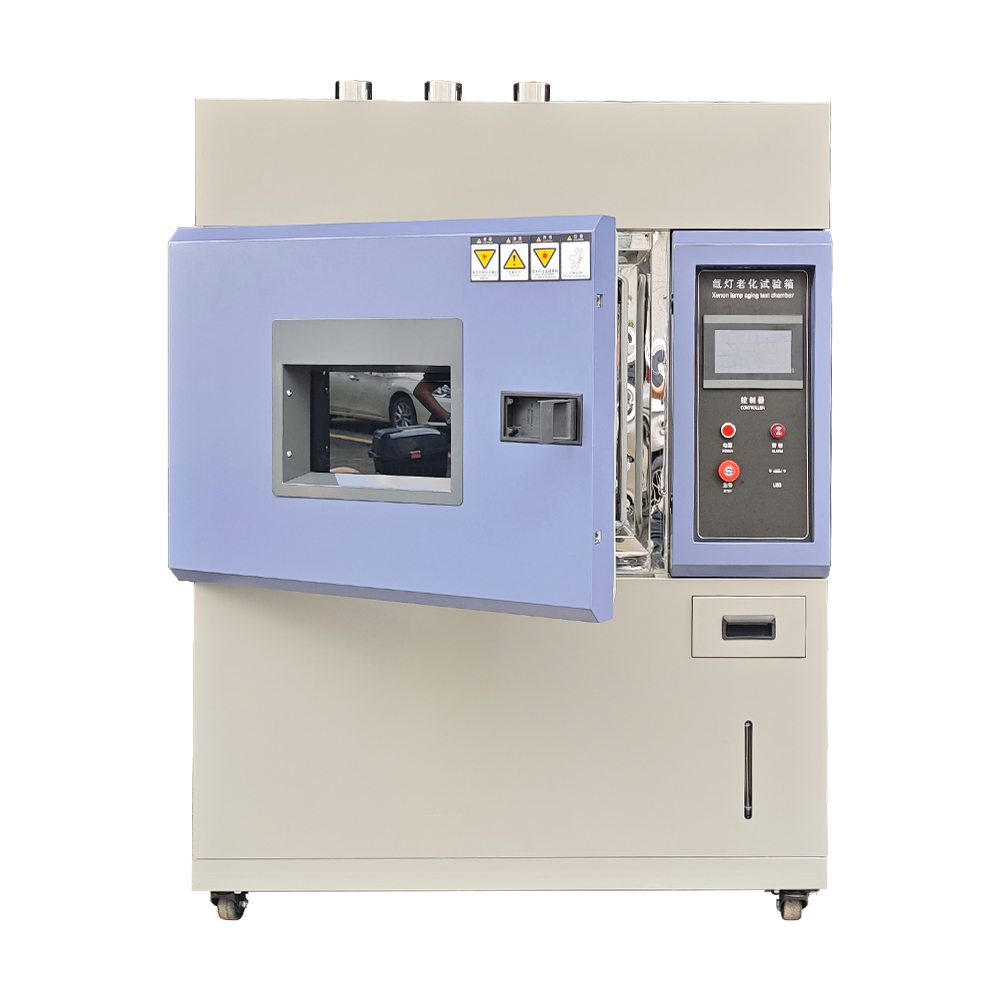
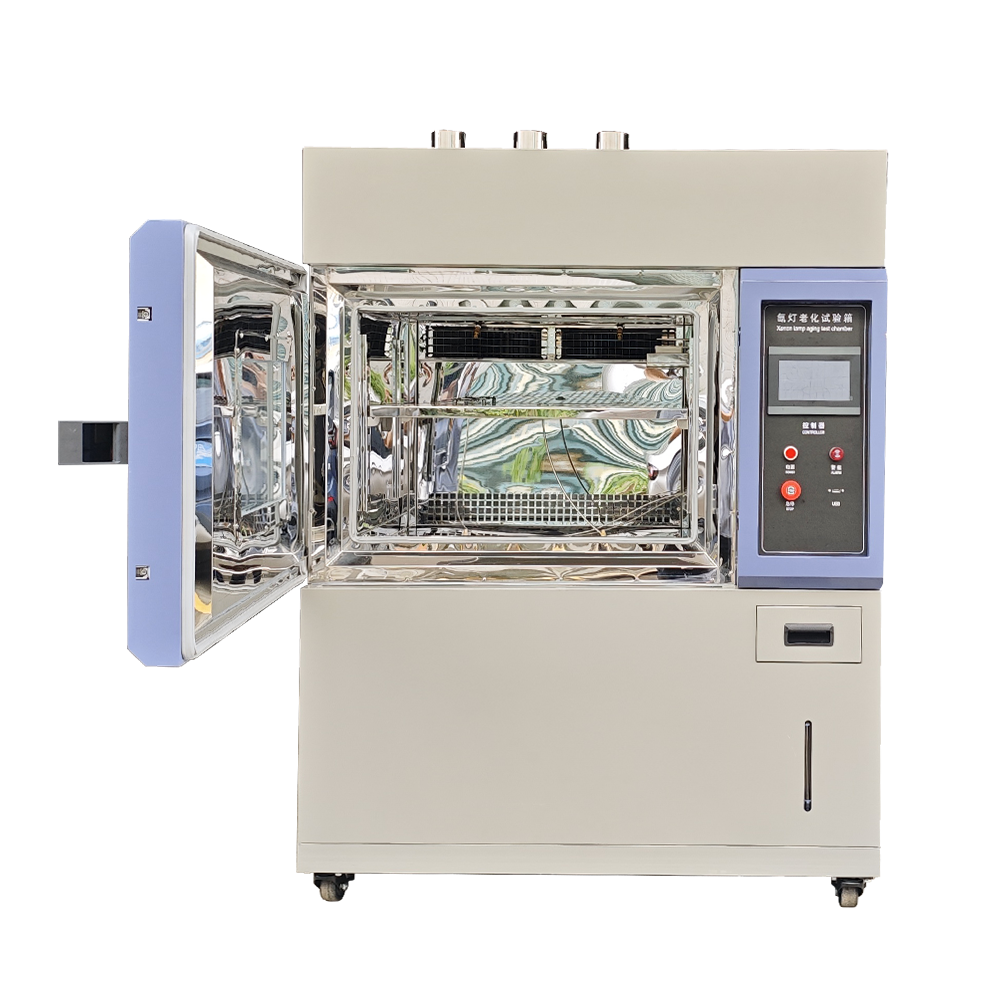
Xenon Test Chamber for UV Resistance 500-1200nm Wavelength Control Solar Module Degradation Test
598005.0 INR/Unit
Product Details:
- Application UV resistance and solar module degradation test
- Response Time <2 seconds
- Mounting Type Floor Standing
- Automation Grade Automatic
- Temperature RT +10C to 80C
- Equipment Type Xenon Test Chamber
- Operating Voltage 220V / 50Hz
- Click to view more
X
Xenon Test Chamber for UV Resistance 500-1200nm Wavelength Control Solar Module Degradation Test Price And Quantity
- 1 Unit
- 598005.0 INR/Unit
- Ambient temp 5 to 35C
- Built-in memory; USB export
- Water circulation and forced air cooling
- 500 nm 1200 nm precise filter system
- ISO 4892-2, IEC 61215, ASTM G155
- <70 dB(A)
- Over-temperature, Over-pressure, Water shortage, Door interlock
- Water-cooled Xenon Arc Lamp
- Stainless Steel (304 grade)
- Adjustable, corrosion-resistant tray
- 10% across exposure area
- Powder-coated cold rolled steel
- 2.5 kW
Xenon Test Chamber for UV Resistance 500-1200nm Wavelength Control Solar Module Degradation Test Product Specifications
- 1620 mm
- 0.4 - 0.7 MPa (Air supply)
- Irradiance 0.20 ~ 1.20 W/m/nm at 340 nm
- Accelerated UV aging/degradation testing
- Programmable, typically 1-999 min/cycle
- 380 mm test area
- Industrial-grade chamber body; not applicable
- 1-10 (customizable racks)
- Microprocessor / PLC Touchscreen Control
- Max 300 x 300 mm
- Chamber volume 400 L
- 50/60 Hz
- DN25 (Inlet/Exhaust)
- LCD Touch Screen
- 500 - 1200 nm wavelength range
- AC 220V, 50/60Hz, single phase
- 10% ~ 80% RH (controllable)
- 220V / 50Hz
- USB, RS232 Serial
- Approx. 450 kg
- 0.01 W/m
- Adjustable, max 450 mm
- Programmable UV cycles, Irradiance auto-control, Safety alarms, Data logging
- 2% of set value
- RT +10C to 80C
- Xenon Test Chamber
- <2 seconds
- UV resistance and solar module degradation test
- Floor Standing
- Automatic
- Ambient temp 5 to 35C
- Built-in memory; USB export
- Water circulation and forced air cooling
- 500 nm 1200 nm precise filter system
- ISO 4892-2, IEC 61215, ASTM G155
- <70 dB(A)
- Over-temperature, Over-pressure, Water shortage, Door interlock
- Water-cooled Xenon Arc Lamp
- Stainless Steel (304 grade)
- Adjustable, corrosion-resistant tray
- 10% across exposure area
- Powder-coated cold rolled steel
- 2.5 kW
Xenon Test Chamber for UV Resistance 500-1200nm Wavelength Control Solar Module Degradation Test Trade Information
- Cash in Advance (CID)
- 80 Unit Per Month
- 10 Months
- All India
Product Description
The Xenon Test Chamber for Solar Panel Durability is an advanced laboratory system designed to evaluate the long-term performance and reliability of photovoltaic (PV) modules under simulated environmental stressors. Tailored for Indias growing solar energy industry, this chamber ensures compliance with international standards while addressing the unique climatic challenges of high UV exposure, temperature extremes, and humidity fluctuations. Below are the technical specifications, applications, and compliance details optimized for search engines and B2B buyers.
Technical Specifications
-
Light Source & Spectral Accuracy
-
Xenon Arc Lamps: Full-spectrum output (290800 nm) replicates natural sunlight, critical for testing UV degradation in PV cells.
-
Irradiance Control: Adjustable from 0.5 to 1.5 W/m @ 340 nm, calibrated to IEC 61215 and IEC 61730 standards for solar panels.
-
-
Environmental Simulation
-
Temperature Range:
-
Panel Surface Temperature: -40C to +120C (1C accuracy).
-
Chamber Air Temperature: 10C to 85C (2C uniformity).
-
-
Humidity Control: 10%95% RH (3% stability), with cyclic condensation for monsoon-like conditions.
-
-
Chamber Design
-
Capacity: Accommodates PV modules up to 2.5m x 1.5m (customizable for larger panels).
-
Material: Corrosion-resistant stainless steel interior, UV-resistant quartz windows, and reinforced insulation.
-
Safety Features: Overload protection, emergency shutdown, and fire-retardant construction.
-
-
Automation & Data Analytics
-
Programmable Profiles: Simulate diurnal cycles, seasonal changes, or accelerated aging (up to 10x real-time speed).
-
Real-Time Monitoring: Track IV curve performance, maximum power point (MPP), and degradation rates via integrated sensors.
-
Data Export: Generate IEC-compliant reports in CSV/PDF formats, including EL (electroluminescence) imaging compatibility.
-
Key Applications in Solar Energy
-
UV Degradation Testing:
-
Assess PV cell encapsulants, backsheets, and anti-reflective coatings under prolonged UV exposure.
-
-
Thermal Cycling:
-
Validate module resilience to temperature swings (-40C to +85C) mimicking desert and tropical climates.
-
-
Humidity-Freeze Testing:
-
Simulate high humidity followed by sub-zero conditions to detect microcracks or delamination.
-
-
PID (Potential Induced Degradation) Testing:
-
Evaluate module performance under high voltage and humidity stress per IEC 62804.
-
-
Accelerated Aging:
-
Predict 25-year lifespan using IEC 61215-compliant accelerated protocols.
-
Compliance & Certifications
-
International Standards:
-
IEC 61215 (Terrestrial PV Module Design Qualification).
-
IEC 61730 (Safety Testing for PV Modules).
-
IS 16046 (Indian Standard for Solar Panel Testing).
-
-
Certifications: CE, RoHS, and ISO 9001:2015 compliant manufacturing.
Technical Advantages for the Indian Market
-
Climate-Specific Testing:
-
Pre-set profiles replicate Indias extreme conditions (e.g., Rajasthans heat, Keralas humidity).
-
-
Cost Efficiency:
-
Energy-saving inverter compressors reduce operational costs by 30%, critical for cost-sensitive markets.
-
-
Localized Support:
-
Pan-India service network with technicians in Delhi, Mumbai, Chennai, and Bengaluru for installation, calibration, and maintenance.
-
-
Scalability:
-
Modular design supports future upgrades, such as salt spray testing for coastal installations.
-
FAQs (Xenon Test Chamber for Solar Panel Durability)
Q1: How does xenon testing improve solar panel lifespan in India?
A: By simulating decades of UV, heat, and humidity exposure in weeks, manufacturers identify weaknesses early, ensuring panels withstand Indias harsh climates.
Q2: Can this chamber test bifacial solar modules?
A: Yescustomizable racks and dual-sided irradiance settings support bifacial panel testing.
Q3: What is the lead time for chamber delivery in India?
A: Standard units ship in 68 weeks; expedited options available for urgent projects.
Q4: Are training programs included?
A: Yesfree onsite training for operators on IEC testing protocols and maintenance.
Q5: How does the chamber ensure data accuracy?
A: NABL-accredited calibration (optional) and real-time sensor validation ensure audit-ready results.
High-Precision UV Testing
Our Xenon Test Chamber is fitted with a precise 2.5 kW water-cooled xenon arc lamp and specialized filters to mimic solar radiation between 500-1200 nm. This accuracy supports consistent results in UV degradation and resistance testing, ensuring dependable simulation of real-world solar conditions.
Advanced Safety & Data Features
Safety is paramount, with integrated over-temperature, pressure, water shortage, and door interlock protections. Automated alarms and data logging functionality ensure test integrity, while built-in memory and USB export make record-keeping seamless, enabling users to monitor and archive test results effortlessly.
Intuitive Operation & Customization
Featuring an LCD touchscreen interface, users can easily set programmable UV cycles, adjust test speed from 1-999 minutes, and manage test parameters with high resolution and rapid response. The chamber accommodates up to ten specimens of various sizes using corrosion-resistant, adjustable trays, providing adaptability for different research needs.
FAQ's of Xenon Test Chamber for UV Resistance 500-1200nm Wavelength Control Solar Module Degradation Test:
Q: How does the Xenon Test Chamber simulate natural sunlight for UV resistance testing?
A: The chamber uses a water-cooled xenon arc lamp with a precise filter system covering 500-1200 nm wavelengths, closely matching the solar spectrum. This enables accurate simulation of sunlight exposure, ensuring reliable UV resistance and solar module degradation results.Q: What types of tests can be performed with this Xenon Test Chamber?
A: This chamber is designed for accelerated aging, UV resistance, and solar module degradation tests, following standards such as ISO 4892-2, IEC 61215, and ASTM G155. It is suitable for evaluating materials like photovoltaic modules, coatings, and plastics under controlled sunlight simulation.Q: When should the chamber's programmable cycles be used?
A: Programmable cycles are ideal for simulating various day-night or seasonal irradiation conditions, and for tailoring the intensity and duration of UV exposure to match real-world usage. These cycles help in studying the effects of prolonged sunlight on material endurance.Q: Where is this Xenon Test Chamber typically installed and used?
A: Due to its floor-standing design and industrial specification, the chamber is commonly used in research and development laboratories, manufacturing quality control departments, and testing facilities in the photovoltaic, automotive, and material science industries.Q: What is the process for setting up a test in the chamber?
A: Users place specimens (up to 10, sized max 300 x 300 mm each) on adjustable, corrosion-resistant trays. Using the microprocessor or PLC touchscreen, test parameters such as irradiance, cycle duration, temperature, and humidity are set. The chamber automatically manages safety, data logging, and test progression.Q: How can users benefit from the chamber's advanced control and data features?
A: With automatic irradiance control, user-programmable cycles, and robust safety alarms, the chamber ensures precise and repeatable testing while minimizing manual oversight. Data can be stored internally or exported via USB, simplifying result analysis and compliance documentation.Q: What are the environmental requirements and safety measures of operation?
A: The chamber operates efficiently at ambient temperatures from 5 to 35C with controlled humidity (10-80% RH). Integrated alarms protect against over-temperature, water shortage, and over-pressure, while the door interlock system ensures user safety during operation.Tell us about your requirement

Price:
Quantity
Select Unit
- 50
- 100
- 200
- 250
- 500
- 1000+
Additional detail
Mobile number
Email

Other Products in 'Environment Test Chamber' category

Contact Details

- 1st Floor, No. 3, Shugang Avenue, Hongmei Town,Dongguan Guangdong, China
- Mr. Shirley (Manager)
- Mobile : +8615580327593
- Send Inquiry
-

Derui Testing Equipment Co., Ltd
 Send Inquiry
Derui Testing Equipment Co. Ltd
All Rights Reserved.(Terms of Use)
Developed and Managed by Infocom Network Private Limited.
Developed and Managed by Infocom Network Private Limited.
 English
 Spanish
 French
 German
 Italian
 Chinese (Simplified)
 Japanese
 Korean
 Arabic
 Portuguese