

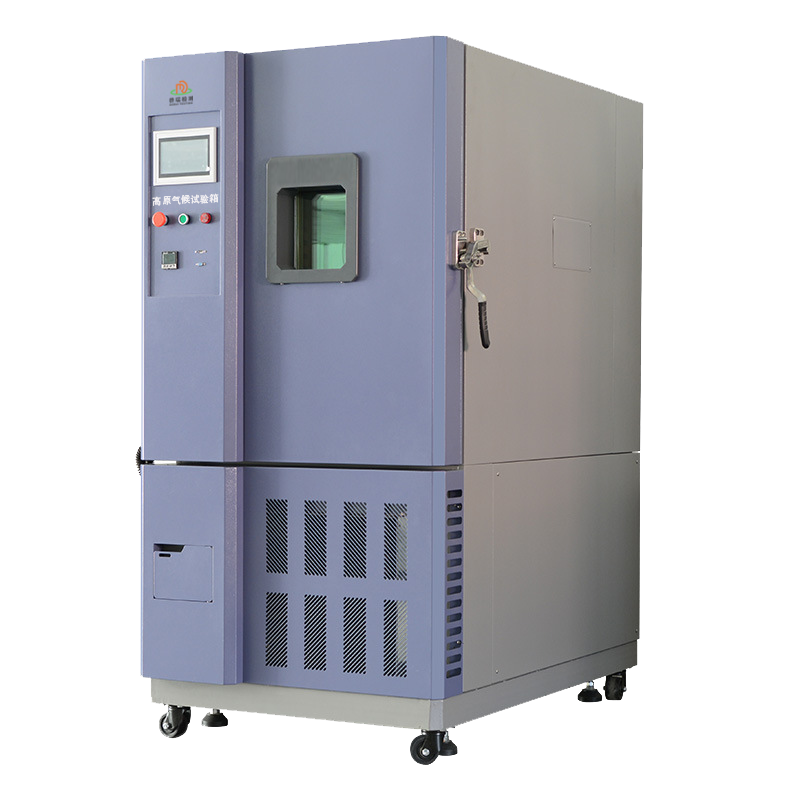
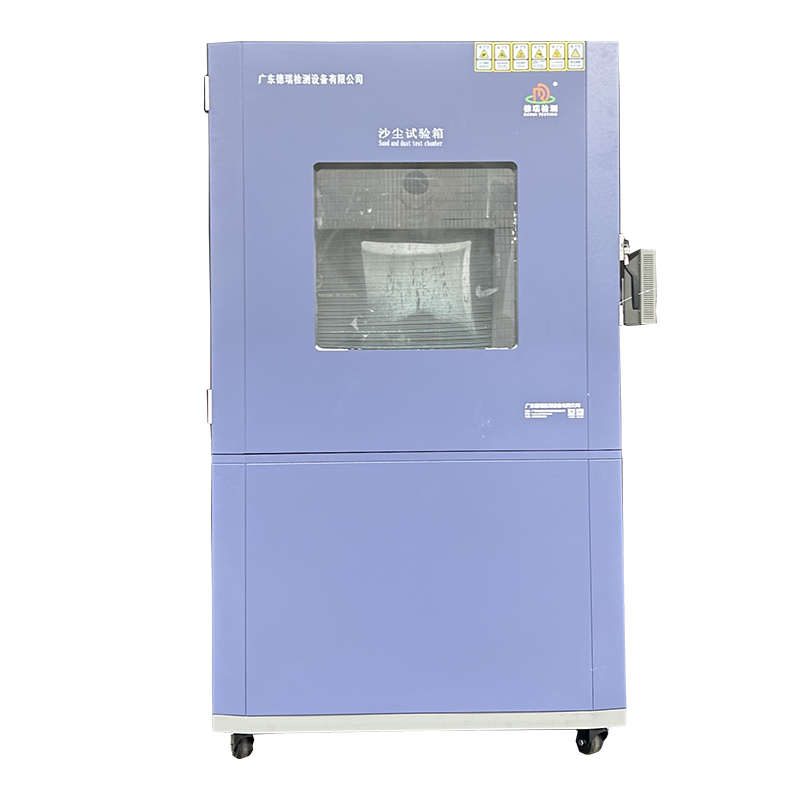
battery altitude simulation test chamber
508050.0 INR/Unit
Product Details:
- Response Time 3 min (Temp/Humidity stabilization)
- Application Battery safety and performance testing under simulated altitude conditions
- Power Supply AC 220V/50Hz
- Features Data logging, programmable cycles, safety alarm systems
- Measuring Range Pressure (0~110 kPa), Temperature (-70C to +150C)
- Resolution 0.01C / 0.01%RH / 0.01 kPa
- Gas Pressure 0~1 MPa (Adjustable)
- Click to view more
X
battery altitude simulation test chamber Price And Quantity
- 1 Unit
- 508050.0 INR/Unit
- User-customizable cycling modes
- Approx. 7 kW
- Integrated humidity generation and removal system
- Air-cooled or water-cooled options
- Over-temperature, over-pressure, leakage, emergency stop
- 3C/min (standard)
- SUS304 stainless steel
- 65 dB
- 250300 mm observation window
- USB, Ethernet
battery altitude simulation test chamber Product Specifications
- Fully automatic
- Chamber shell: stainless steel, Hardness HRB60
- Battery Altitude Simulation Test Chamber
- 7-inch LCD Touch Screen
- 0.5C (Temperature), 1% RH (Humidity), 0.5 kPa (Pressure)
- DN65
- USB, RS-232
- Simulates up to 50,000 m altitude
- 220V/50Hz single phase
- 1~4 (Adjustable)
- Up to 400400400 mm
- Programmable touchscreen control
- Approx. 500 kg
- Floor standing
- -70C to +150C
- 50Hz
- 20%~98% RH (Programmable)
- 0.01C / 0.01%RH / 0.01 kPa
- 0~1 MPa (Adjustable)
- Altitude simulation 0~50,000 m
- Pressure (0~110 kPa), Temperature (-70C to +150C)
- Data logging, programmable cycles, safety alarm systems
- 0~400 mm
- 400 mm
- Laboratory battery test
- AC 220V/50Hz
- Battery safety and performance testing under simulated altitude conditions
- 3 min (Temp/Humidity stabilization)
- Adjustable, 1~1000 m/min
- 150 L
- User-customizable cycling modes
- Approx. 7 kW
- Integrated humidity generation and removal system
- Air-cooled or water-cooled options
- Over-temperature, over-pressure, leakage, emergency stop
- 3C/min (standard)
- SUS304 stainless steel
- 65 dB
- 250300 mm observation window
- USB, Ethernet
battery altitude simulation test chamber Trade Information
- 100 Unit Per Month
- 7 Days
- All India
Product Description
Specifications:
| Internal dimension (W*D*H) | 1000*1000*1000mm |
| Temperature range | -70~+100(no load);-55~+100(with load) |
| Temperature fluctuation | 0.5 |
| Temperature uniformity | 2 |
| Ambient Humidity | 85%RH |
| Cooling speed | 1/min in average (with loading 15kg,+85~-55 ) |
| Heating speed | 1/min in average (with loading,-55~+85) |
| Pressure Range | 101Kpa~1Kpa |
| Pressure Accuracy | 5% |
| Pressure Control Method | Adjust temperature first, then pump vacuum |
| Internal chamber material | Steel plate with plastic spray |
| External chamber material | Stainless steel |
| Cooling method | Water Cooler |
| Controller | LCD touch screen, programmable control temperature and Pressure Can set different parameter for cyclic test |
| Insulation material | Compound material without sweating, special for low pressure |
| Heating Method | Electrical |
| Compressor | Imported new generation with low noise |
| Safety protection device | Protection for leakage Over-temperature Compressor over voltage and overload Heater short circuit |
Equipment Overview
The battery height simulation test chamber is designed specifically to simulate high-altitude and low-pressure environments, with the aim of testing the performance and safety characteristics of batteries under these conditions. This device is widely used in various fields such as aerospace, military equipment, electronic products, and battery research and development, ensuring the stability and reliability of the product in extreme environments.
major function
1. High altitude low pressure simulation: Simulate the low pressure environment that batteries may encounter during high-altitude transportation or storage, and comprehensively evaluate battery performance.
2. Safety testing: Strictly detect whether the battery has dangerous phenomena such as explosion, fire, smoke or leakage in low-pressure environment.
3. Performance evaluation: Accurately evaluate the stability and reliability of the battery under high-altitude conditions, ensuring compliance with relevant industry standards and specifications.
Technical Parameter
1. Inner box size: Tailored according to the size of the tested sample to ensure sufficient space for sample placement and even distribution of temperature and air pressure.
2. Temperature Range: Covering a wide temperature range with minimal temperature fluctuations and deviations, ensuring the accuracy of test results.
3. Pressure range: Typically tested under negative pressure of 11.6kPa (1.68psi), simulating a high-altitude environment in reality.
4. Testing time: The standard testing time is 6 hours, and the battery is required to remain safe and normal during this period.
5. Control method: Advanced button or PLC touch screen control is adopted to automatically adjust the test cycle, monitor the pressure changes inside the box in real time, and achieve automated testing process.
Equipment Features
1. Compact design: Lightweight in size, saving up to 30% of floor space compared to international brands, optimizing space utilization.
2. Energy saving and efficient: By using fluid simulation precision calculation frequency conversion technology, the energy-saving effect is significant, reducing energy consumption by 30%.
3. Safety protection: Equipped with multiple safety protection devices, such as leakage protection switches, fuses, etc., to ensure the safe and worry free operation of the equipment.
4. Intelligent control: Automatically control the test cycle, monitor changes in air pressure throughout the process, automatically terminate the test function, and improve testing efficiency.
Typical applications
The battery height simulation test chamber plays an important role in aerospace, military equipment, electronic products, and battery research and development, and is a key equipment to ensure stable performance of products in extreme environments.
Advanced Environmental Simulation
Simulate demanding altitude, temperature, and humidity conditions, ranging from -70C to +150C and up to 50,000 m altitude. Achieve accurate test results for batteries with programmable cycling modes, rapid stabilization, and precise measurement resolution. Integrated air- or water-cooled systems ensure temperature and humidity are tightly controlled for consistent testing outcomes.
Unmatched Safety and Reliability
Built with SUS304 stainless steel and equipped with comprehensive safety protections including over-temperature, over-pressure, leakage, and emergency stop. The chamber shell's high hardness (HRB60) enhances durability while advanced alarms continuously monitor operations and safeguard specimens and users during tests.
Intuitive Operation and Data Management
The 7-inch LCD touchscreen enables simple configuration and monitoring of test parameters. Data logging is streamlined with USB, RS-232, and Ethernet interfaces, making process documentation, remote access, and analysis straightforward. Customizable cycling and automatic controls reduce human error and maximize productivity.
FAQ's of battery altitude simulation test chamber:
Q: How does the battery altitude simulation test chamber ensure accurate test conditions?
A: The chamber uses advanced control systems to manage altitude, temperature (from -70C to +150C), and humidity (20% to 98% RH), providing programmable cycling and fine-tuned conditions. Its measurement accuracy is 0.5C for temperature, 1% RH for humidity, and 0.5 kPa for pressure, ensuring reliable and repeatable test results.Q: What safety features are included in this test chamber?
A: It includes over-temperature and over-pressure protection, leakage detection, and an emergency stop mechanism. Additionally, the chamber's robust SUS304 stainless steel construction and safety alarm systems enhance reliability and user safety during battery testing.Q: When should I use the altitude simulation test chamber in my battery testing process?
A: Utilize the chamber when you need to evaluate battery performance and safety under simulated high-altitude or extreme environmental conditions, such as for aerospace, automotive, or portable battery applications. Its programmable features make it suitable for both R&D and routine quality inspections.Q: Where can the battery altitude simulation test chamber be installed?
A: The chamber is floor-mounted and designed for laboratory environments in research institutes, manufacturing facilities, and quality control labs. Its compact 150 L capacity and design allow easy integration into a variety of laboratory setups.Q: What is the process for running a test in this chamber?
A: Users load specimens (up to 4, maximum size 400400400 mm), set parameters via the touchscreen, and start programmable cycles. The chamber manages altitude, temperature, and humidity, logs data, and triggers safety protocols as needed. Observation and adjustments can be made in real-time through the large window and user interface.Q: How is data output and analysis handled after testing?
A: Test data can be exported via USB, RS-232, or Ethernet. The integrated data logging system records all parameter changes and results, supporting traceability and simplifying analysis for compliance or quality documentation.Q: What are the benefits of using this battery altitude simulation test chamber?
A: It supports comprehensive battery testing to ensure products meet rigorous safety and performance standards under diverse environmental conditions. The chamber's automation, data management, and multi-layered safety features increase testing efficiency, reduce risks, and help accelerate product development cycles.Tell us about your requirement

Price:
Quantity
Select Unit
- 50
- 100
- 200
- 250
- 500
- 1000+
Additional detail
Mobile number
Email

Other Products in 'Environment Test Chamber' category

Contact Details

- 1st Floor, No. 3, Shugang Avenue, Hongmei Town,Dongguan Guangdong, China
- Mr. Shirley (Manager)
- Mobile : +8615580327593
- Send Inquiry
-

Derui Testing Equipment Co., Ltd
 Send Inquiry
Derui Testing Equipment Co. Ltd
All Rights Reserved.(Terms of Use)
Developed and Managed by Infocom Network Private Limited.
Developed and Managed by Infocom Network Private Limited.
 English
 Spanish
 French
 German
 Italian
 Chinese (Simplified)
 Japanese
 Korean
 Arabic
 Portuguese