

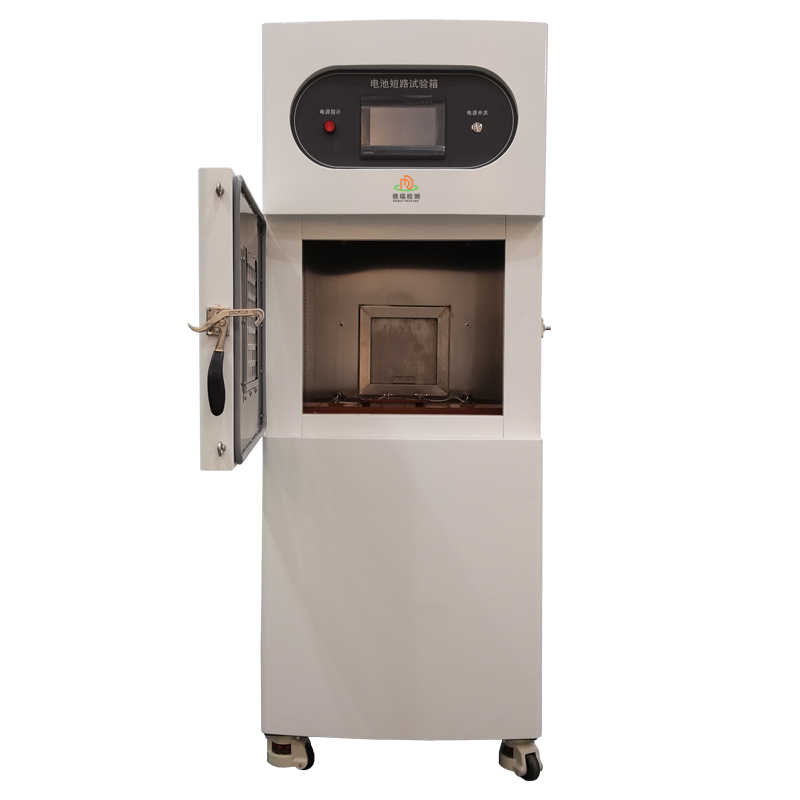
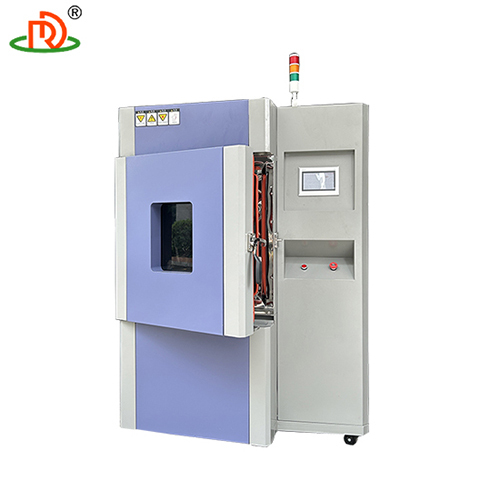
New energy vehicle battery short-circuit testing equipment
238005.0 INR/Unit
Product Details:
- Temperature Room Temperature (10-35C)
- Gas Pressure 0.6-0.8 MPa
- Hardness Industrial rack, powder coated steel
- Response Time 100 ms
- Port Size 10 mm (air inlet)
- Operating Voltage DC 12V (control circuit)
- Mounting Type Floor standing
- Click to view more
X
New energy vehicle battery short-circuit testing equipment Price And Quantity
- 1 Unit
- 238005.0 INR/Unit
- Natural Air Cooling
- Adjustable battery clamps
- USB Export, Large Capacity Memory
- Up to 10 meters
- GB/T 31485-2015, IEC62660, UL2580
- Internal/External Switchable
- Sound and Light Alarm on Failure
- Current, Voltage, Temperature Monitoring
- Overcurrent, Overvoltage, Emergency Stop
- English/Chinese
- Indoor, Well-ventilated Area
- User Manual, All Standard Cables, Calibration Certificate
- Printable/Exportable Test Results
New energy vehicle battery short-circuit testing equipment Product Specifications
- AC 220V 10%, 50Hz
- 0-2000A
- 20~80% RH
- Automatic fault detection, overload protection, real-time data storage
- New energy vehicle battery short-circuit test
- 1% F.S.
- 50Hz
- PLC Automatic Control
- Up to 300 Ah battery
- Short-Circuit Testing Equipment
- Approx. 220 kg
- Battery Module/Pack Safety Testing
- 1800 mm
- 100 ms
- Industrial rack, powder coated steel
- 0.6-0.8 MPa
- Room Temperature (10-35C)
- 10 mm (air inlet)
- 0.1A / 0.1V
- Fully Automatic
- RS232/USB
- 2-50 mm/min adjustable
- 0-300 mm
- Floor standing
- Customizable, suitable for various battery modules
- 400 mm
- DC 12V (control circuit)
- Digital Touchscreen
- 0-1000V
- 1 at a time
- Natural Air Cooling
- Adjustable battery clamps
- USB Export, Large Capacity Memory
- Up to 10 meters
- GB/T 31485-2015, IEC62660, UL2580
- Internal/External Switchable
- Sound and Light Alarm on Failure
- Current, Voltage, Temperature Monitoring
- Overcurrent, Overvoltage, Emergency Stop
- English/Chinese
- Indoor, Well-ventilated Area
- User Manual, All Standard Cables, Calibration Certificate
- Printable/Exportable Test Results
New energy vehicle battery short-circuit testing equipment Trade Information
- Cash in Advance (CID)
- 80 Unit Per Month
- 5 Days
- All India
Product Description
| Model | DR-D201 |
| Inner box size | 500x500x500mm (width x depth x height); |
| Equipment dimensions | 700x800x1530mm (width x depth x height); |
| Internal material | SUS201 stainless steel plate, thickness 1.2mm, with Teflon affixed; |
| External material | 1.5mm thick cold-rolled steel plate with paint treatment; |
| Observation window | The size is 250x250mm two-layer tempered glass, the transparent window is equipped with stainless steel mesh; |
| Smoke outlet | 100mm in diameter, located at the back of the box; |
| Pressure relief port | The size of the opening is 200x200mm, located on the back side of the box. When the sample explodes, the pressure relief port will pop open to relieve the pressure; |
| Box door | The single door opens to the left, the box door is equipped with a safety limit switch, and the side is equipped with an explosion-proof chain. The device can be operated only when the box door is closed to ensure the safety of personnel; |
| Test hole | There are 2 test holes with a diameter of 50mm on the left side of the device, which are convenient for putting in the collection lines of temperature, voltage, current, etc.; |
| Lighting device | It is convenient to observe the state of the tested sample; |
| Temperature collection range | RT-1000; |
| Temperature acquisition channel | 1 channel; |
| Temperature display accuracy | 0.5; |
| Voltage acquisition range | 0-100V; |
| Voltage acquisition channel | 1 channel; |
| Voltage display accuracy | 0.5%; |
| Maximum short-circuit current | 1000A; |
| Current acquisition channel | 1 channel; |
| Current display accuracy | 0.5%; |
| The internal resistance of the device loop | 8020m; |
| Equipment movement | There are four universal casters at the bottom of the equipment, which can be moved freely; |
| Control method | PLC touch screen control; |
| Equipment weight | 85Kg |
| Power supply | AC220V;50Hz/60Hz |
New energy vehicle battery short-circuit testing equipmentMain Functions
High-current/high-voltage short-circuit simulation: Through the control system, apply high current (e.g., above 1000A) or high voltage (e.g., above 1000V) to both ends of the battery to simulate short-circuit faults in actual use.
Thermal runaway assessment: Real-time monitoring of the temperature change of the battery during the short-circuit process to assess the risk of thermal runaway and thermal runaway behavior.
Safety Test: Evaluate the safety performance of the battery under high current/high voltage short circuit conditions, including whether smoke, fire, explosion and other dangerous situations will occur.
Data Acquisition and Analysis: Real-time acquisition of battery temperature, voltage, current and other data and generation of detailed test reports to help analyze the thermal runaway characteristics and safety performance of the battery.
Multiple safety protection: Equipped with multiple safety protection devices, such as explosion-proof box, fire extinguishing system, emergency stop device, etc., to ensure the safety of the testing process.
Environmental control: It can simulate the short-circuit situation under different environmental conditions (such as temperature and humidity) to evaluate the safety performance of the battery under different environments.
Frequently Asked Questions
Q1: What is the maximum test current and voltage of the new energy vehicle battery short circuit test equipment?
A1: The maximum test current is 2000A and the maximum test voltage is 1500V.
Q2: What are the short-circuit triggering methods?
A2: Short circuit triggering methods include mechanical triggering, electrochemical triggering and high current/high voltage triggering.
Q3: What are the safety protection measures of the equipment?
A3: The equipment is equipped with explosion-proof box, fire extinguishing system, emergency stop device, etc. to ensure the safety of the testing process.
Q4: How to analyze the test results?
A4: By analyzing the temperature change, voltage and current data of the batteries, the risk and safety of thermal runaway are evaluated, and design and material improvements are made based on the results.
Q5: Is the equipment easy to operate?
A5: Yes, the equipment is equipped with a user-friendly interface with simple parameter setting and easy operation. Meanwhile, the fully automated operation reduces human intervention and improves test efficiency and repeatability of results.
Comprehensive Testing with International Compliance
The equipment strictly adheres to major standards such as GB/T 31485-2015, IEC62660, and UL2580, ensuring global compatibility for battery safety testing. It meets the rigorous requirements of automotive and industrial regulations, making it a dependable solution for both domestic and international manufacturers and suppliers.
Safety and Automation at Its Core
Equipped with automatic fault detection and emergency protection mechanisms, this floor-standing device delivers secure short-circuit tests for battery packs. Automated PLC control, sound and light alarms, and rapid response times (100 ms) guarantee operator safety and precise, repeatable results.
User-Friendly Data Management and Monitoring
Monitor current, voltage, and temperature in real-time using an intuitive digital touchscreen. Test data can be easily exported via USB for analysis, and comprehensive print/export functions ensure thorough record-keeping. Remote signal transmission (up to 10 meters) and multilingual support further enhance convenience for users.
FAQ's of New energy vehicle battery short-circuit testing equipment:
Q: How does the short-circuit testing equipment ensure compliance with battery safety standards?
A: The equipment is engineered to meet GB/T 31485-2015, IEC62660, and UL2580 standards, ensuring all safety and performance requirements are fulfilled during battery short-circuit testing. Its precise monitoring and data recording also facilitate regulatory audits.Q: What safety features are built into the equipment for secure testing?
A: It incorporates overcurrent and overvoltage protection, an emergency stop button, sound and light alarms upon test failure, and automatic fault detection. These mechanisms help prevent accidents and ensure a safe operating environment.Q: When should this equipment be used during the battery manufacturing process?
A: This device is ideal for quality assurance and final product safety verification phases in battery production. It validates the resistance of battery modules or packs to short-circuit scenarios before deployment in vehicles.Q: Where should the machine be installed for optimal operation?
A: The unit should be installed indoors in a well-ventilated area, ensuring room temperatures between 10-35C and humidity levels from 20% to 80% RH, to maintain accuracy and safety during testing.Q: What is the process for conducting a battery short-circuit test with this equipment?
A: Operators securely mount battery specimens using adjustable clamps, select the desired test parameters via the touchscreen, and initiate the test. The system performs fully automatic short-circuiting while continuously monitoring current, voltage, and temperature. Test results are then exported or printed for review.Q: How can users benefit from the data management features?
A: With USB export capabilities, large-capacity memory, and real-time monitoring, users can easily store, retrieve, and analyze test data. Printable reports ensure compliance documentation is straightforward and comprehensive.Q: What types of batteries and battery sizes can be tested with this equipment?
A: The equipment accommodates a wide range of battery modules and packs, supporting customizable specimen sizes and a capacity of up to 300 Ah, making it suitable for various new energy vehicle battery applications.Tell us about your requirement

Price:
Quantity
Select Unit
- 50
- 100
- 200
- 250
- 500
- 1000+
Additional detail
Mobile number
Email

Other Products in 'Environment Test Chamber' category

Contact Details

- 1st Floor, No. 3, Shugang Avenue, Hongmei Town,Dongguan Guangdong, China
- Mr. Shirley (Manager)
- Mobile : +8615580327593
- Send Inquiry
-

Derui Testing Equipment Co., Ltd
 Send Inquiry
Derui Testing Equipment Co. Ltd
All Rights Reserved.(Terms of Use)
Developed and Managed by Infocom Network Private Limited.
Developed and Managed by Infocom Network Private Limited.
 English
 Spanish
 French
 German
 Italian
 Chinese (Simplified)
 Japanese
 Korean
 Arabic
 Portuguese