

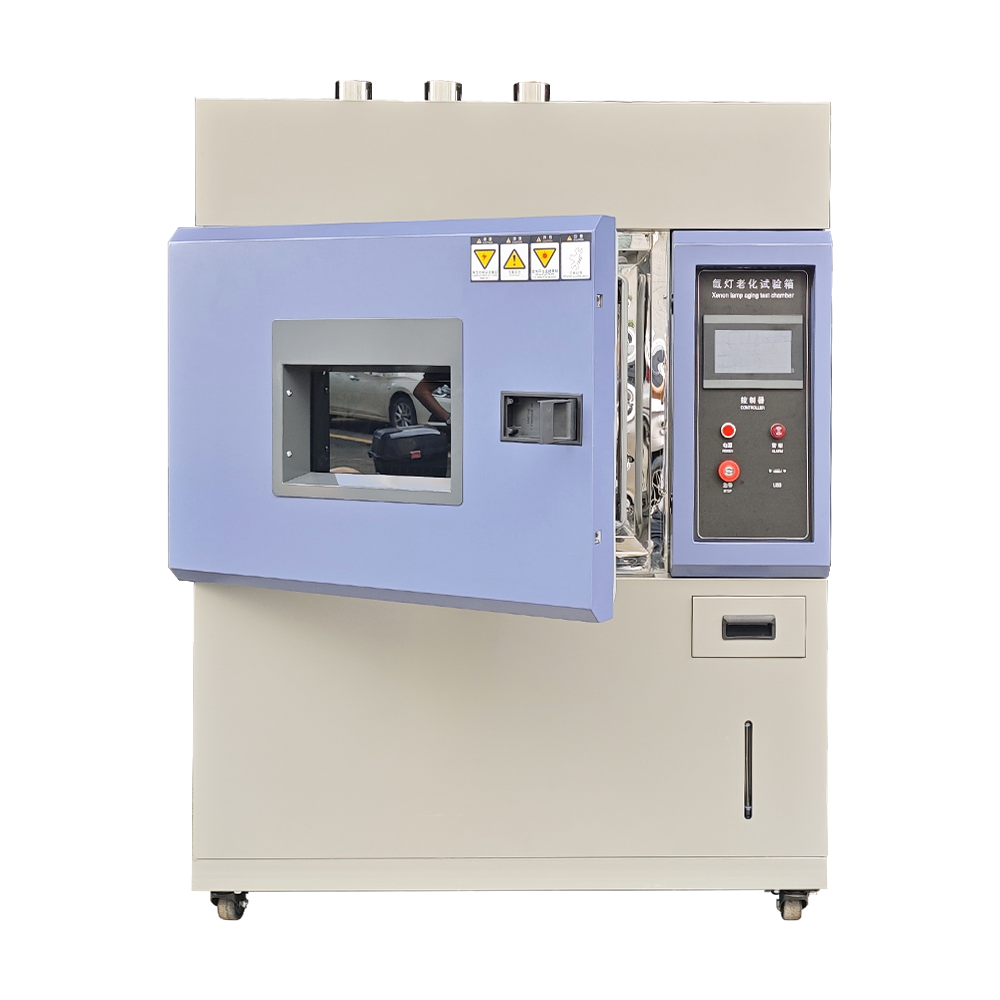
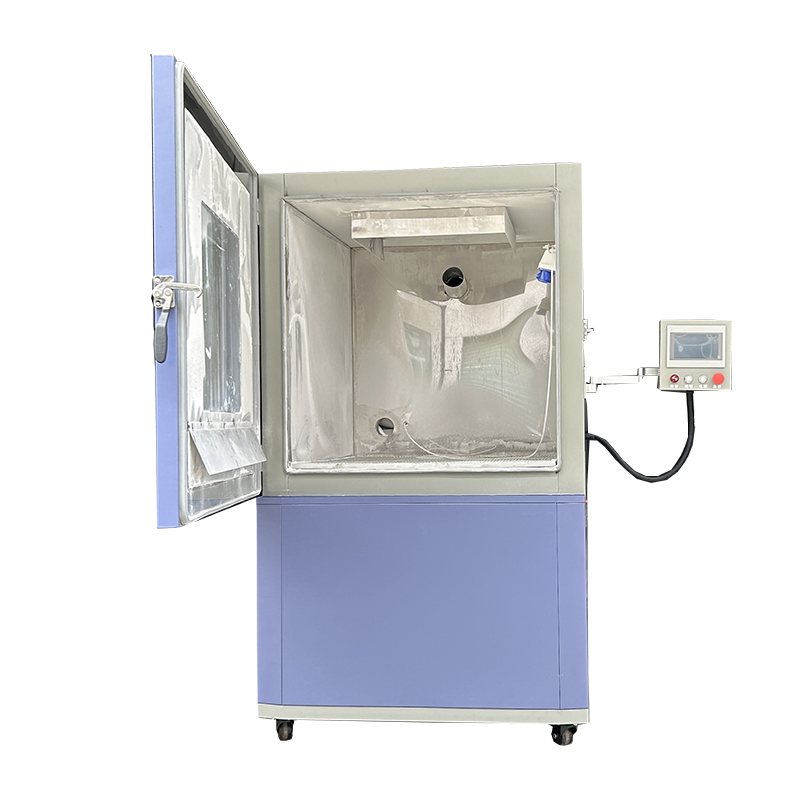
china xenon test chamber
458005.0 INR/Unit
Product Details:
- Resolution 0.1 (temp/humidity)
- Display Type Digital LCD Display
- Specimen Size 70 mm x 150 mm
- Number of Specimens Up to 24 pieces
- Mounting Type Floor Standing
- Temperature 10~70C
- Frequency 50Hz
- Click to view more
X
china xenon test chamber Price And Quantity
- 458005.0 INR/Unit
- 1 Unit
- Double-layer Thermal Insulation
- 65 dB(A)
- 250~1200 W/m2
- Approx. 500L
- 1500 hours (Xenon Arc Lamp)
- 290~800 nm
- Air & Water Cooled
- Coated Steel
- Stainless Steel
- Over-temperature, Water Shortage, Over-current
- ISO 4892-2, ASTM G155, GB/T 16422.2
- Programmable up to 9999 Hours
china xenon test chamber Product Specifications
- 70 mm x 150 mm
- Digital LCD Display
- 0.1 (temp/humidity)
- Floor Standing
- Up to 24 pieces
- Adjustable
- 500 mm
- UV Exposure, Rainfall Simulation, Programmable
- Xenon Arc Test Chamber
- 50Hz
- 10~70C
- 370 kg
- 0.5C (temp), 2% RH (humidity)
- Aging Test for Materials
- User defined (light, temperature, humidity)
- Programmable Touch Screen
- 0.4~0.6 MPa
- 1300 mm
- AC 220V10% 50Hz
- Customized
- Automatic
- 220V
- USB, RS232
- Standard
- UV, Visible, Full Spectrum
- Adjustable
- 30%~98% RH
- Immediate
- Weathering Test, Color Fastness, Light Resistance
- Double-layer Thermal Insulation
- 65 dB(A)
- 250~1200 W/m2
- Approx. 500L
- 1500 hours (Xenon Arc Lamp)
- 290~800 nm
- Air & Water Cooled
- Coated Steel
- Stainless Steel
- Over-temperature, Water Shortage, Over-current
- ISO 4892-2, ASTM G155, GB/T 16422.2
- Programmable up to 9999 Hours
china xenon test chamber Trade Information
- Cash in Advance (CID)
- 100 Unit Per Month
- 5 Days
- All India
Product Description
Standard Features
| Model | DR-H301 |
| Internal dimension (WxDxH) | 500*600*500mm |
| External dimension (WxDxH) | 1000*1000*1750mm |
| Temperature range | RT+10~ 60 (suggest to use 402) |
| Temperature Fluctuation | 1 |
| Ozone concentration | 50~1000 pphm, adjustable |
| Ozone concentration deviation | 10% |
| Sample holder | SUS#304 stainless steel |
| Temperature controller | Programmable touch screen controller |
| Ozone concentration analysis | Concentration analysis meter |
| Ozone generator | High pressure silence discharge type |
| Protection system | Leakage, short circuit, over temperature, over heat |
| Test criteria | ASTM D1149, ISO 1431, JIS K6259... |
major function
1. Spectral simulation: The spectrum emitted by xenon lamps is very close to the solar spectrum, and can simulate the effects of ultraviolet, visible, and infrared light.
2. Temperature control: The temperature inside the test chamber can be controlled within a certain range, usually from -40 to 150 (the specific range depends on the equipment model).
3. Humidity control: The humidity range is usually 20% to 98%, which can simulate various environmental conditions from dry to high humidity.
4. Rainfall simulation: Equipped with a water spray system, it can simulate the impact of rainwater on materials, including special environments such as acid rain.
5. Light intensity control: The light intensity can be adjusted to meet different testing needs.
6. Irradiance control: Some advanced models of test chambers can accurately control irradiance to simulate lighting conditions in different geographical locations and seasons.
application area
Xenon lamp test chambers are widely used in the following fields:
Materials Science: Used to test the weather resistance of various materials such as polymers, coatings, leather, fibers, plastics, rubber, etc.
Chemical industry: used to test the weather resistance of chemical drugs such as dyes, rubber additives, preservatives, etc.
Textile: Used to test the weather resistance of fibers and fabrics.
Electronics: Used to test the weather resistance of electronic products such as mobile phones, tablets, etc.
Architecture: Used to test the weather resistance of building materials such as paint, coatings, cement, etc.
Automotive: Used to test the weather resistance of automotive exterior components such as paint, plastic parts, rubber parts, etc.
Aviation: used to test the anti-aging capability of aircraft external materials (such as wing skin, coating, etc.).
Cooling method
The cooling methods for xenon lamp test chambers mainly include water cooling and air cooling:
Water cooling: Suitable for high-power, high load, and high heat application scenarios, it has high cooling efficiency and stability, but the system is complex and requires high maintenance.
Air cooling: suitable for applications with low to medium power and load, with a simple structure and easy maintenance, but relatively low cooling efficiency and high noise.
The main functions of the control system of the xenon lamp test chamber
1. Lighting control:
Light intensity adjustment: The control system can accurately adjust the light intensity of the xenon lamp to simulate solar radiation in different environments.
Light cycle control: You can set the on and off time of the light to simulate a day night cycle.
2. Temperature control:
Temperature setting: Users can set the target temperature inside the test chamber, and the control system will automatically adjust the heating or cooling equipment according to the set value.
Temperature stability: The control system ensures that the temperature inside the test chamber remains stable, avoiding the impact of temperature fluctuations on the test results.
3. Humidity control:
Humidity setting: Users can set the target humidity inside the test chamber, and the control system will automatically adjust the humidification or dehumidification equipment according to the set value.
Humidity stability: The control system ensures that the humidity inside the test chamber remains stable, avoiding the impact of humidity fluctuations on the test results.
4. Rainfall control:
Spray cycle setting: The spray cycle and duration can be set to simulate rainfall conditions.
Spray intensity control: Some advanced control systems can adjust the intensity of the spray to simulate different rainfall conditions.
5. Irradiance control:
Irradiance setting: Users can set the target irradiance inside the test chamber, and the control system will automatically adjust the output of the xenon lamp based on the set value.
Irradiance monitoring: The control system monitors irradiance in real-time and makes necessary adjustments to ensure the stability of irradiance.
2. Control mode
1. Manual control:
Users can manually adjust parameters such as light intensity, temperature, humidity, etc. through the control panel.
Suitable for testing scenarios that require frequent parameter adjustments.
2. Automatic control:
The control system can automatically adjust various parameters according to preset programs without manual intervention.
Suitable for testing scenarios that require long-term stable operation.
3. Remote control:
Through network connection, users can remotely monitor and control the test chamber.
Suitable for testing scenarios that require remote monitoring and management.
Advanced Weathering Simulation
This Xenon Arc Test Chamber replicates sunlight, rainfall, and humidity to evaluate material durability and color stability in demanding environments. The programmable touch-screen control and adjustable test parameters guarantee consistency and reliability for weathering, aging, and light fastness assessments, meeting international testing standards.
Precision and Versatility
Operators benefit from a highly adjustable test range, encompassing temperature (10-70C), humidity (30%-98% RH), and irradiance. The user-defined measuring range, digital LCD display, immediate response time, and high accuracy (0.5C, 2% RH) ensure results are both reliable and repeatable, making the chamber suitable for a wide variety of materials and customizable specimen capacities.
FAQ's of china xenon test chamber:
Q: How does the China Xenon Test Chamber simulate environmental conditions for accelerated aging tests?
A: The chamber uses a xenon arc lamp to reproduce the full spectrum of sunlight, while programmable controls enable simulation of UV, visible, and infrared light, along with regulated temperature (10-70C), humidity (30%-98% RH), and rainfall. This comprehensive control provides realistic weathering environments for accurate and accelerated material aging tests.Q: What materials and industries benefit from using this xenon arc test chamber?
A: This equipment is ideal for manufacturers and laboratories testing plastics, coatings, textiles, paints, and automotive materials. Its robust build and precise control make it suitable for evaluating color fastness, durability, and light resistance across industries such as automotive, construction, electronics, and textiles.Q: When should I perform maintenance on the xenon arc lamp and other components?
A: The xenon arc lamp is rated for 1500 hours of operation and should be replaced at the end of its lifespan to maintain consistent irradiance. Regular checks of water and air cooling systems, filters, and safety features are recommended to ensure ongoing reliability and accuracy.Q: Where can this chamber be installed, and what are its space requirements?
A: This floor-standing chamber is designed for laboratories or industrial settings with access to standard AC 220V power supply and water connections (for water cooling). With a maximum height of 1300 mm and a weight of 370 kg, ensure a sturdy, level surface with sufficient clearance for ventilation and specimen handling.Q: What is the process for conducting a weathering test using this chamber?
A: First, specimens (up to 24 pieces, each 70 mm x 150 mm) are mounted inside the chamber. Test parameters-light type, irradiance, duration, temperature, and humidity-are programmed via the touch screen. Once initiated, the chamber automatically manages all test variables, executing exposure, rainfall simulation, and recording data for later analysis through USB or RS232 interfaces.Q: How does the chamber ensure safety during operation?
A: The system includes comprehensive safety measures such as over-temperature, water shortage, and over-current protection. Double-layer thermal insulation and high-grade materials minimize external heat transfer and ensure safe, quiet (<65 dB(A)), and reliable operation throughout all test cycles.Q: What benefits does using this xenon test chamber offer compared to other aging test methods?
A: This chamber delivers highly accelerated, programmable weathering tests with precise control over light spectrum, temperature, humidity, and more. Its automatic operation, digital monitoring, and standards compliance provide quicker, more reliable results, optimizing material development, quality assurance, and research processes.Tell us about your requirement

Price:
Quantity
Select Unit
- 50
- 100
- 200
- 250
- 500
- 1000+
Additional detail
Mobile number
Email

Other Products in 'Environment Test Chamber' category

Contact Details

- 1st Floor, No. 3, Shugang Avenue, Hongmei Town,Dongguan Guangdong, China
- Mr. Shirley (Manager)
- Mobile : +8615580327593
- Send Inquiry
-

Derui Testing Equipment Co., Ltd
 Send Inquiry
Derui Testing Equipment Co. Ltd
All Rights Reserved.(Terms of Use)
Developed and Managed by Infocom Network Private Limited.
Developed and Managed by Infocom Network Private Limited.
 English
 Spanish
 French
 German
 Italian
 Chinese (Simplified)
 Japanese
 Korean
 Arabic
 Portuguese