

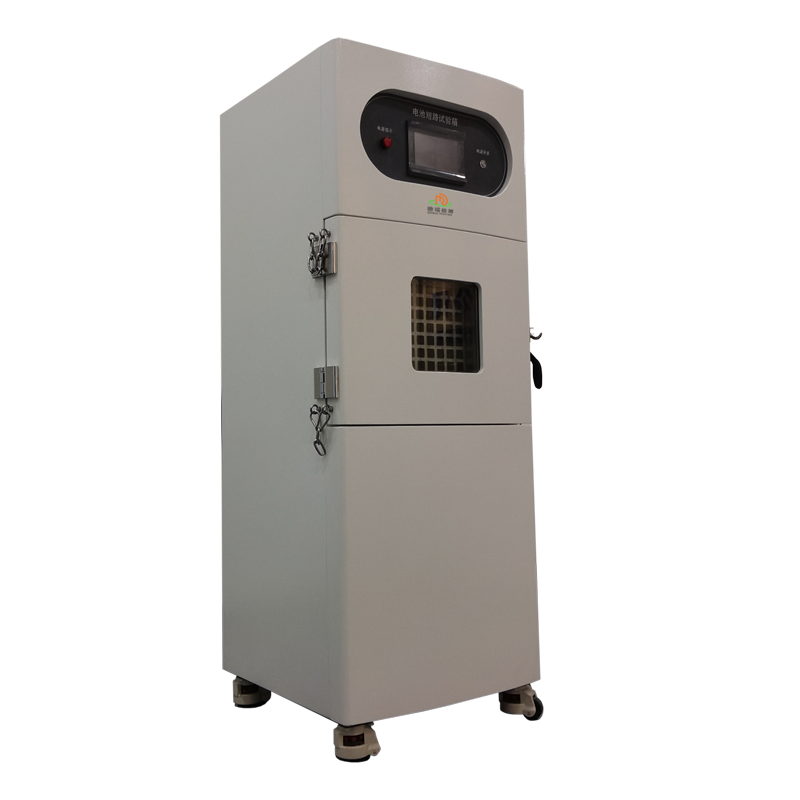
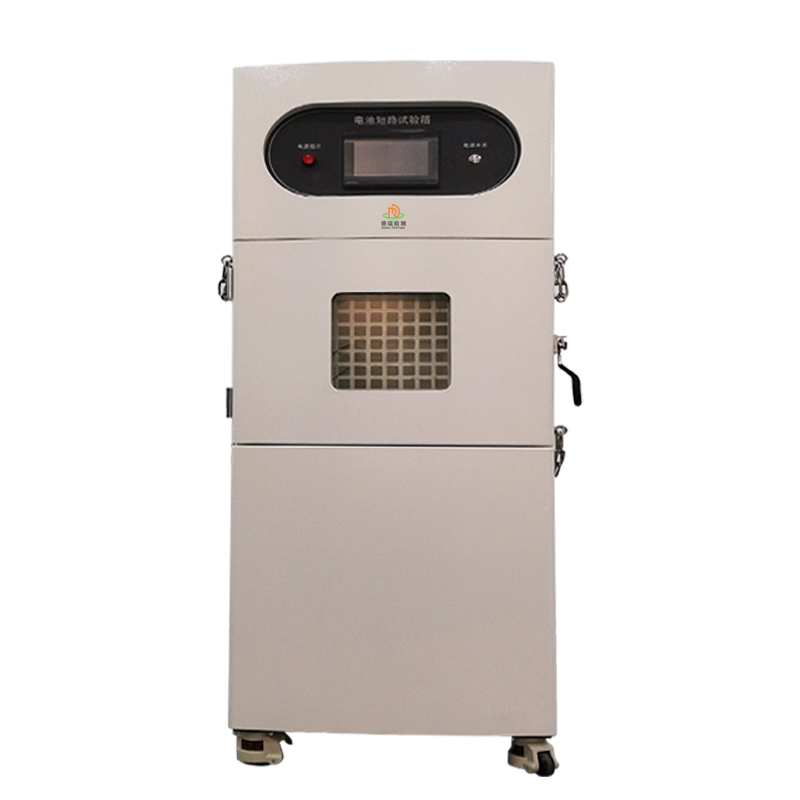
Battery module short circuit testing system
178005.0 INR/Unit
Product Details:
- Hardness Industrial grade construction
- Interface Type RS232/USB/LAN
- Application Battery safety and performance test
- Gas Pressure 0.5 - 0.7 MPa
- Resolution 0.1 A
- Features Automatic data logging, safety interlocks, emergency stop
- Port Size Standard interface ports available
- Click to view more
X
Battery module short circuit testing system Price And Quantity
- 178005.0 INR/Unit
- 1 Unit
- Buzzer and light indicators
- Air and optional water cooling
- GB/T, IEC, UL compliance
- Reinforced stainless steel
- Self-diagnosis and calibration function
- Manual and auto modes
- 100,000+ test records
- Overcurrent, overtemperature protection, explosion-proof chamber
- 1 ms ~ 1000 s, programmable
- 5 m ~ 50 m, selectable
Battery module short circuit testing system Product Specifications
- Automatic data logging, safety interlocks, emergency stop
- Standard interface ports available
- 10 ms
- 1 - 500 mm/min adjustable
- Digital LCD display
- Short circuit evaluation of battery modules
- 0.1 A
- 0.5 - 0.7 MPa
- RS232/USB/LAN
- Battery safety and performance test
- Industrial grade construction
- Floor standing
- Up to 600 x 400 x 200 mm
- 0 - 10000 A
- PLC control with touch screen interface
- Battery Module Short Circuit Testing System
- 20% - 90% RH
- 10C to 40C operating range
- Suitable for large battery modules
- 50/60 Hz
- Fully automatic
- 0 - 10000 A
- Approx. 2 meters
- Customizable as per specimen
- Approx. 600 kg
- 1% FS
- 1 (per cycle)
- AC 220 V, 50/60 Hz
- Max 300 mm
- AC 220 V 10%
- Buzzer and light indicators
- Air and optional water cooling
- GB/T, IEC, UL compliance
- Reinforced stainless steel
- Self-diagnosis and calibration function
- Manual and auto modes
- 100,000+ test records
- Overcurrent, overtemperature protection, explosion-proof chamber
- 1 ms ~ 1000 s, programmable
- 5 m ~ 50 m, selectable
Battery module short circuit testing system Trade Information
- Cash in Advance (CID)
- 100 Unit Per Month
- 5 Days
- All India
Product Description
Battery Module Short Circuit Test System is a professional equipment for evaluating the safety and reliability of battery modules in the event of a short circuit. Battery modules, as a combination of multiple battery cells, are widely used in electric vehicles, energy storage systems and high-power electronic devices. In order to ensure safety under extreme conditions (e.g. short circuit, overcharge, overdischarge, etc.), the Battery Module Short Circuit Test System evaluates the response of the battery module and detects whether it will lead to safety issues such as overheating, explosion or fire.
1. Main functions of the battery module short circuit test system
The core function of the Battery Module Short Circuit Test System is to simulate the occurrence of a short circuit in a battery module, to help detect whether the battery can maintain stability under short circuit conditions, and to determine its safety under extreme conditions. Typically, the system is capable of performing the following operations:
Simulation of short-circuit phenomenon: Through the current control module to simulate the short-circuit situation of the battery module, different types of short-circuit tests can be performed, such as direct short-circuit, load short-circuit, etc.
Real-time monitoring: The system is able to monitor the temperature, voltage, current and other key parameters of the battery module in real time to ensure the safety of the testing process.
Battery module short-circuit test systems usually comply with a series of international safety standards, such as:
IEC 62619: Battery test standard for industrial energy storage systems, ensuring the safety requirements for battery modules during the test process.
UL 2054: Safety standard for battery packs for domestic and commercial use.
UN 38.3: United Nations test standard for transportation batteries, covering a wide range of limit tests such as short-circuit, overcharge and over-discharge.
ISO 26262: Functional safety standard for the automotive industry, ensuring the safety of battery modules in areas such as electric vehicles.
Data recording and analysis: All data during the testing process is recorded and reports are generated for subsequent analysis. Through data analysis, it is possible to evaluate the response of the battery module in a short-circuit event.
Automatic Protection Function: When the battery module's reaction is found to exceed the set safety threshold during the test, the system will automatically cut off the power supply and alarm.
| Model | DR-D201 |
| Inner box size | 500x500x500mm (width x depth x height); |
| Equipment dimensions | 700x800x1530mm (width x depth x height); |
| Internal material | SUS201 stainless steel plate, thickness 1.2mm, with Teflon affixed; |
| External material | 1.5mm thick cold-rolled steel plate with paint treatment; |
| Observation window | The size is 250x250mm two-layer tempered glass, the transparent window is equipped with stainless steel mesh; |
| Smoke outlet | 100mm in diameter, located at the back of the box; |
| Pressure relief port | The size of the opening is 200x200mm, located on the back side of the box. When the sample explodes, the pressure relief port will pop open to relieve the pressure; |
| Box door | The single door opens to the left, the box door is equipped with a safety limit switch, and the side is equipped with an explosion-proof chain. The device can be operated only when the box door is closed to ensure the safety of personnel; |
| Test hole | There are 2 test holes with a diameter of 50mm on the left side of the device, which are convenient for putting in the collection lines of temperature, voltage, current, etc.; |
| Lighting device | It is convenient to observe the state of the tested sample; |
| Temperature collection range | RT-1000; |
| Temperature acquisition channel | 1 channel; |
| Temperature display accuracy | 0.5; |
| Voltage acquisition range | 0-100V; |
| Voltage acquisition channel | 1 channel; |
| Voltage display accuracy | 0.5%; |
| Maximum short-circuit current | 1000A; |
| Current acquisition channel | 1 channel; |
| Current display accuracy | 0.5%; |
| The internal resistance of the device loop | 8020m; |
| Equipment movement | There are four universal casters at the bottom of the equipment, which can be moved freely; |
| Control method | PLC touch screen control; |
| Equipment weight | 85Kg |
| Power supply | AC220V;50Hz/60Hz |
Battery module short circuit test systems typically comply with a range of international safety standards such as:
IEC 62619: Standard for testing batteries used in industrial energy storage systems, ensuring the safety requirements for battery modules during testing.
UL 2054: Safety standard for battery packs for domestic and commercial use.
UN 38.3: United Nations test standard for transportation batteries, covering a wide range of limit tests such as short-circuit, overcharge and over-discharge.
ISO 26262: Functional safety standard for the automotive industry, ensuring the safety of battery modules in areas such as electric vehicles.
Cautions
1.
Safety first: battery module short circuit test is potentially dangerous, must strictly comply with safety regulations, equipped with the necessary safety protection devices.
2.
Environmental control: Ensure that the temperature and humidity of the test environment are controlled within the specified range to avoid external factors affecting the test results.
3.
Sample selection: Select representative battery module samples to ensure the reliability and repeatability of the test results.
4.
Data Recording: Record all data and observations in the testing process in detail to ensure the integrity and traceability of the data.
5.
Equipment calibration: Regular calibration of equipment to ensure the accuracy of test results.
Robust Safety & Protection
This short circuit testing system is built with multiple layers of protection, including overcurrent, overtemperature cut-offs, and an explosion-proof chamber. Reinforced stainless steel construction ensures industrial-grade durability and operator safety. Combined with buzzer and light alarm indicators, operators receive real-time notification of critical events, maximizing safety during high-current testing cycles.
Flexible and Accurate Testing
Operators can easily select test parameters such as short circuit duration (1 ms to 1000 s), short circuit resistance (5-50 m), and testing speeds (1-500 mm/min) via a user-friendly touch screen. With a wide measuring range up to 10,000 A and 1% FS accuracy, the machine delivers reliable results for various battery module sizes. Automatic data logging and programmable modes streamline the test process.
Data Management & Compliance
The system supports robust data storage for over 100,000 test records, accessible via RS232, USB, or LAN interfaces. Built-in self-diagnosis and calibration guarantee accuracy. It complies with industry standards like GB/T, IEC, and UL, making it suitable for global markets and exportation. Calibration and records are maintained efficiently, supporting regulatory and quality requirements.
FAQ's of Battery module short circuit testing system:
Q: How does the Battery Module Short Circuit Testing System ensure operator safety during high-current tests?
A: The system incorporates multiple safety mechanisms, including overcurrent and overtemperature protection, an explosion-proof reinforced stainless steel chamber, and real-time buzzer and light indicators. Emergency stop functions and safety interlocks further ensure operator and equipment safety throughout testing cycles.Q: What is the process for conducting a short circuit test with this system?
A: To perform a test, users can configure parameters like short circuit duration and resistance via the PLC touch screen. After placing the specimen in the chamber, the test is initiated in either auto or manual mode. The machine records and displays results on a digital LCD and automatically logs data for future analysis.Q: When should I use air cooling versus optional water cooling?
A: Air cooling is suitable for standard battery module tests, whereas water cooling is recommended during prolonged or high-current operations, where added thermal management is required to maintain test stability and safety.Q: Where can I retrieve the test data recorded by the system?
A: Test data, including over 100,000 records, can be accessed through the digital interface or exported via standard RS232, USB, or LAN ports. This ensures seamless integration with data management systems and facilitates compliance documentation.Q: What benefits does programmable short circuit duration and resistance provide?
A: Programmable settings allow for precise matching of real-world fault scenarios, ensuring battery modules are tested for genuine short circuit conditions. This flexibility improves the accuracy and relevance of safety assessments.Q: How does the machine handle calibration and maintenance?
A: The system includes a self-diagnosis and calibration function, ensuring ongoing measurement accuracy. Regular maintenance is simplified by built-in alerts and clear calibration procedures displayed on the touch screen interface.Q: What kind of battery modules can this system accommodate?
A: Designed for versatility, the system can test specimens up to 600 x 400 x 200 mm in size, with a maximum current range of 10,000 A. It is ideal for large battery modules used in a variety of industries, including automotive and energy storage applications.Tell us about your requirement

Price:
Quantity
Select Unit
- 50
- 100
- 200
- 250
- 500
- 1000+
Additional detail
Mobile number
Email

Other Products in 'Environment Test Chamber' category

Contact Details

- 1st Floor, No. 3, Shugang Avenue, Hongmei Town,Dongguan Guangdong, China
- Mr. Shirley (Manager)
- Mobile : +8615580327593
- Send Inquiry
-

Derui Testing Equipment Co., Ltd
 Send Inquiry
Derui Testing Equipment Co. Ltd
All Rights Reserved.(Terms of Use)
Developed and Managed by Infocom Network Private Limited.
Developed and Managed by Infocom Network Private Limited.
 English
 Spanish
 French
 German
 Italian
 Chinese (Simplified)
 Japanese
 Korean
 Arabic
 Portuguese