

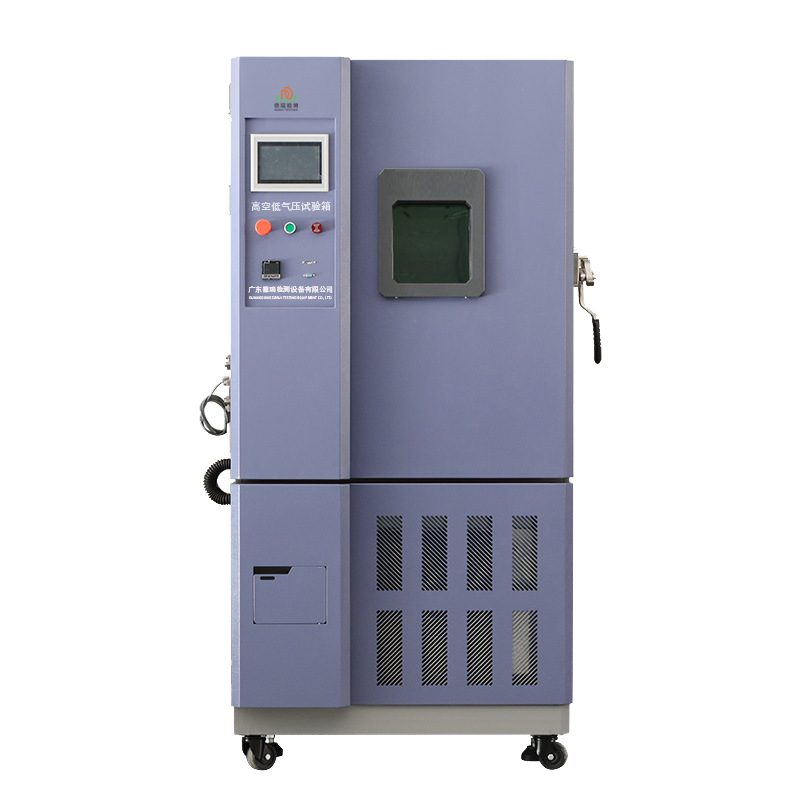
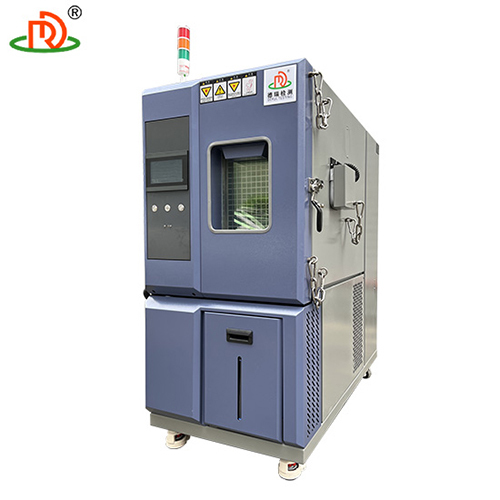
high altitude test chamber
338005.0 INR/Unit
Product Details:
- Humidity 10% 98% RH (controllable)
- Accuracy Pressure 0.5% FS, Temperature 0.5C, Humidity 2% RH
- Power Supply AC 380V, 50Hz, 3 Phase
- Specimen Size Max 400 mm x 500 mm
- Display Type LCD touch screen
- Resolution 0.1 kPa / 0.1C / 0.1% RH
- Frequency 50 Hz
- Click to view more
X
high altitude test chamber Price And Quantity
- 338005.0 INR/Unit
- 1 Unit
- LED lighting inside the workspace
- Bitzer/Copeland (as per model)
- 10 years (under standard operation)
- Electric heater
- Acoustic and visual alerts for faults
- 100 mm high-density polyurethane foam
- Single door with observation window and airtight sealing
- 65 dB(A)
- +5C to +40C
- Leakage protection, compressor overheat protection, overcurrent and phase loss protection
- Cold-rolled steel with powder coated finish
- Mechanical refrigeration cascade system
- SUS304 Stainless Steel
high altitude test chamber Product Specifications
- 2 sec
- Programmable touch screen (PLC-based)
- Adjustable (0.5 5 m/min)
- Automatic
- 1 3 m
- Pressure, temperature, humidity
- DN80 (customizable)
- Approx. 2200 mm
- Environmental testing under simulated altitude conditions
- Pressure: 1 kPa 101 kPa; Altitude: 0 50,000 m
- 380V, 50Hz
- 1 6 (adjustable)
- Floor-standing
- Pressure 0.5% FS, Temperature 0.5C, Humidity 2% RH
- 10% 98% RH (controllable)
- AC 380V, 50Hz, 3 Phase
- 0 1000 mm
- LCD touch screen
- Max 400 mm x 500 mm
- Automatic control, data logging, overpressure/overtemperature protection, remote monitoring
- High Altitude Test Chamber
- 0.1 kPa / 0.1C / 0.1% RH
- Approx. 1500 kg
- 50 Hz
- Aerospace, automotive, military, electronics and component environmental simulation
- Stainless steel chamber construction
- RS232, USB, Ethernet
- 500 mm
- 0.1 1.0 MPa
- -70C to +150C
- LED lighting inside the workspace
- Bitzer/Copeland (as per model)
- 10 years (under standard operation)
- Electric heater
- Acoustic and visual alerts for faults
- 100 mm high-density polyurethane foam
- Single door with observation window and airtight sealing
- 65 dB(A)
- +5C to +40C
- Leakage protection, compressor overheat protection, overcurrent and phase loss protection
- Cold-rolled steel with powder coated finish
- Mechanical refrigeration cascade system
- SUS304 Stainless Steel
high altitude test chamber Trade Information
- Cash in Advance (CID)
- 116 Unit Per Month
- 7 Days
- All India
Product Description
Specifications:
| Internal dimension (W*D*H) | 1000*1000*1000mm |
| Temperature range | -70~+100(no load);-55~+100(with load) |
| Temperature fluctuation | 0.5 |
| Temperature uniformity | 2 |
| Ambient Humidity | 85%RH |
| Cooling speed | 1/min in average (with loading 15kg,+85~-55 ) |
| Heating speed | 1/min in average (with loading,-55~+85) |
| Pressure Range | 101Kpa~1Kpa |
| Pressure Accuracy | 5% |
| Pressure Control Method | Adjust temperature first, then pump vacuum |
| Internal chamber material | Steel plate with plastic spray |
| External chamber material | Stainless steel |
| Cooling method | Water Cooler |
| Controller | LCD touch screen, programmable control temperature and Pressure Can set different parameter for cyclic test |
| Insulation material | Compound material without sweating, special for low pressure |
| Heating Method | Electrical |
| Compressor | Imported new generation with low noise |
| Safety protection device | Protection for leakage Over-temperature Compressor over voltage and overload Heater short circuit |
High altitude test chamber is a testing equipment used to simulate high-altitude environmental conditions, mainly used to test the performance, reliability, and adaptability of products in high-altitude environments. This test chamber is widely used in aerospace, automotive, electronics, communication, military and other fields to ensure the normal operation of products in extreme environments such as low pressure, low oxygen, and low temperature.
major function
1. Low pressure simulation: Simulate a high-altitude low-pressure environment through a vacuum system.
2. Temperature control: The temperature inside the test chamber can be adjusted to simulate low temperature conditions in high-altitude areas.
3. Humidity control: Some high-altitude test chambers have humidity control functions to simulate dry or humid environments in high-altitude areas.
4. Oxygen content regulation: Some equipment can regulate oxygen concentration to simulate low oxygen environments in high-altitude areas.
Application scenarios
Aerospace: Testing the performance of aircraft, satellites, and other equipment in high-altitude environments.
Automotive industry: Testing the reliability of automotive components in high-altitude environments.
Electronic products: Test the working status of electronic devices in low-pressure and low-temperature environments.
Military equipment: Test the adaptability of military equipment in high-altitude areas.
Technical Parameter
Altitude simulation range: Typically, it can simulate altitudes ranging from 0 meters to tens of thousands of meters.
Temperature range: Typically between -70 C and+150 C depending on requirements.
Humidity range: 0% RH to 98% RH (if equipped with humidity control function).
Pressure control accuracy: usually 1% or higher.
Oxygen concentration control: 0% to 21% (if equipped with oxygen control function).
Engineered for Extreme Simulation
This high altitude test chamber provides precise simulation of altitude, temperature, and humidity for rigorous environmental testing. Its stainless steel inner construction, thick insulation, and advanced cooling and heating systems ensure reliability and consistency for various industries. The user-friendly touch screen interface, robust safety protections, and large observation window support smooth operation and monitoring.
Versatile Testing for Multiple Applications
Designed for aerospace, automotive, military, and electronics sectors, this chamber handles varied specimen sizes (up to 400mm x 500mm) and offers adjustable capacity (1-3 m3) and altitude (up to 50,000m). Its programmable control allows complex test cycles, while data interfaces (RS232, USB, Ethernet) support integration and data analysis needs.
Automatic Control and Reliable Results
Equipped with a PLC-based touch screen controller, the chamber's automation offers stable performance with rapid response time (2 sec). LED lighting, airtight sealing, acoustic and visual alarms, and detailed safety mechanisms-including compressor overheat and leakage protection-ensure secure and traceable testing outcomes, every time.
FAQ's of high altitude test chamber:
Q: How does the high altitude test chamber simulate different environmental conditions?
A: The chamber utilizes mechanical refrigeration and electric heating systems to regulate temperature from -70C to +150C, control humidity between 10% and 98% RH, and adjust pressure from 1 kPa to 101 kPa, simulating altitudes up to 50,000 meters. This allows for comprehensive testing of products under diverse simulated atmospheric conditions.Q: What industries can benefit from using this high altitude test chamber?
A: This chamber is especially valuable for aerospace, automotive, military, electronics, and component manufacturers who require precise environmental simulation for reliability, performance, and durability testing of their products under varying altitude and climate scenarios.Q: When should I use the test chamber's adjustable speed and programmable functions?
A: Adjustable test speed (0.5-5 m/min) and the PLC-based programmable touch screen are ideal for experiments demanding specific timing and cycling, enabling replication of real-world conditions or accelerated life testing according to relevant industry standards or custom protocols.Q: Where can the chamber be installed, and what installation requirements exist?
A: The chamber is a floor-standing unit (max height 2200mm, weight 1500kg), suitable for laboratories or industrial test facilities with a stable AC 380V, 50Hz, 3-phase power supply. Ensure sufficient space for ventilation, maintenance, and safe operation.Q: What is the process for monitoring and controlling test conditions inside the chamber?
A: Operators use the LCD touch screen to program and monitor temperature, humidity, and pressure. Data can be logged and exported via USB, RS232, or Ethernet. Acoustic and visual alarms notify users promptly in case of faults or abnormal conditions for quick intervention.Q: How does the chamber ensure specimen and operator safety during tests?
A: Multiple safety devices include leakage protection, compressor overheat protection, overcurrent, and phase loss safeguards. The chamber's alarm system provides both acoustic and visual warnings to help prevent damage to specimens and ensure operator safety throughout the testing process.Q: What are the key benefits of choosing this test chamber for environmental simulation work?
A: This chamber offers durable construction, accurate and repeatable simulation of extreme environments, extensive control and automation options, and advanced safety features. These benefits help research and development teams improve product quality and confirm compliance with international testing standards.Tell us about your requirement

Price:
Quantity
Select Unit
- 50
- 100
- 200
- 250
- 500
- 1000+
Additional detail
Mobile number
Email

Other Products in 'Environment Test Chamber' category

Contact Details

- 1st Floor, No. 3, Shugang Avenue, Hongmei Town,Dongguan Guangdong, China
- Mr. Shirley (Manager)
- Mobile : +8615580327593
- Send Inquiry
-

Derui Testing Equipment Co., Ltd
 Send Inquiry
Derui Testing Equipment Co. Ltd
All Rights Reserved.(Terms of Use)
Developed and Managed by Infocom Network Private Limited.
Developed and Managed by Infocom Network Private Limited.
 English
 Spanish
 French
 German
 Italian
 Chinese (Simplified)
 Japanese
 Korean
 Arabic
 Portuguese