

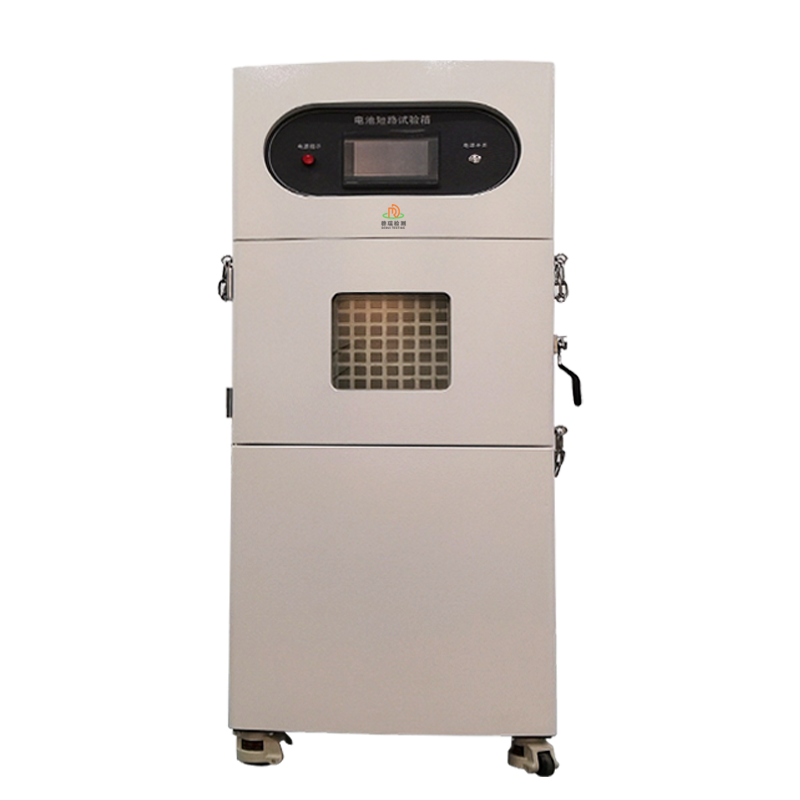
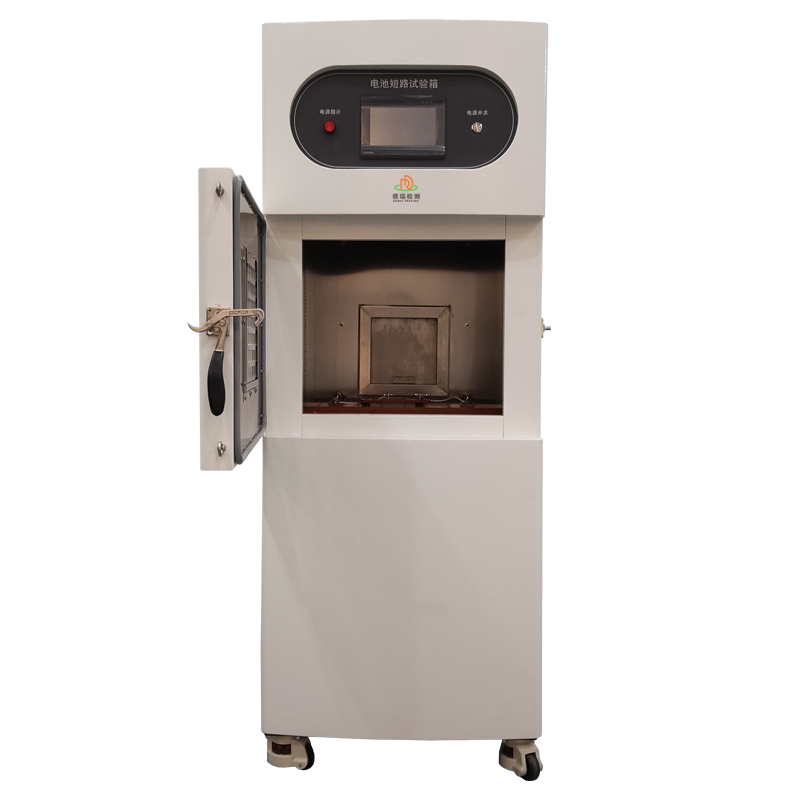
Lithium battery temperature controlled short circuit test box
188005.0 INR/Unit
Product Details:
- Operating Voltage AC 220V
- Measuring Range 01000 A
- Automation Grade Automatic
- Accuracy 1% FS
- Temperature Room temperature to 100C (controllable)
- Specimen Size Max 200x200 mm
- Humidity 2090% RH (Non-Condensing)
- Click to view more
X
Lithium battery temperature controlled short circuit test box Price And Quantity
- 1 Unit
- 188005.0 INR/Unit
- Stainless Steel
- 540C
- Emergency Stop, Door Interlock, Overheat Protection
- Observation Window with Explosion-Proof Film
- USB/RS232 Download
- LED Illumination
- High Density Polyurethane Foam
Lithium battery temperature controlled short circuit test box Product Specifications
- RS232 or USB
- Temperature control, over-current protection, data recording
- 360 kg
- Digital Touch Screen
- 01000 A (Short Circuit Current)
- Lithium Battery Temperature Controlled Short Circuit Test Box
- Customizable
- 1200 mm
- 50/60 Hz
- Floor/Stand Alone
- Short circuit safety testing of lithium batteries
- Laboratory Battery Safety Test
- 0.60.8 MPa
- AC 220V 10%, 50/60 Hz
- Adjustable, 18 mm/s
- <1 s
- Max 300 mm
- DN 25
- Max 200x200 mm
- 2090% RH (Non-Condensing)
- Room temperature to 100C (controllable)
- 1 Specimen per Test
- 0.1 A
- 1% FS
- PLC Touch Screen Control
- Automatic
- 100 mm
- 01000 A
- AC 220V
- Stainless Steel
- 540C
- Emergency Stop, Door Interlock, Overheat Protection
- Observation Window with Explosion-Proof Film
- USB/RS232 Download
- LED Illumination
- High Density Polyurethane Foam
Lithium battery temperature controlled short circuit test box Trade Information
- Cash in Advance (CID)
- 100 Unit Per Month
- 5 Days
- All India
Product Description
| Model | DR-D201 |
| Inner box size | 500x500x500mm (width x depth x height); |
| Equipment dimensions | 700x800x1530mm (width x depth x height); |
| Internal material | SUS201 stainless steel plate, thickness 1.2mm, with Teflon affixed; |
| External material | 1.5mm thick cold-rolled steel plate with paint treatment; |
| Observation window | The size is 250x250mm two-layer tempered glass, the transparent window is equipped with stainless steel mesh; |
| Smoke outlet | 100mm in diameter, located at the back of the box; |
| Pressure relief port | The size of the opening is 200x200mm, located on the back side of the box. When the sample explodes, the pressure relief port will pop open to relieve the pressure; |
| Box door | The single door opens to the left, the box door is equipped with a safety limit switch, and the side is equipped with an explosion-proof chain. The device can be operated only when the box door is closed to ensure the safety of personnel; |
| Test hole | There are 2 test holes with a diameter of 50mm on the left side of the device, which are convenient for putting in the collection lines of temperature, voltage, current, etc.; |
| Lighting device | It is convenient to observe the state of the tested sample; |
| Temperature collection range | RT-1000; |
| Temperature acquisition channel | 1 channel; |
| Temperature display accuracy | 0.5; |
| Voltage acquisition range | 0-100V; |
| Voltage acquisition channel | 1 channel; |
| Voltage display accuracy | 0.5%; |
| Maximum short-circuit current | 1000A; |
| Current acquisition channel | 1 channel; |
| Current display accuracy | 0.5%; |
| The internal resistance of the device loop | 8020m; |
| Equipment movement | There are four universal casters at the bottom of the equipment, which can be moved freely; |
| Control method | PLC touch screen control; |
| Equipment weight | 85Kg |
| Power supply | AC220V;50Hz/60Hz |
Temperature-controlled short-circuit test for lithium batteries
1. Test overview
The temperature-controlled short-circuit test for lithium batteries is a test method used to evaluate the safety performance of lithium batteries under short-circuit conditions, especially its thermal runaway behavior and temperature change. Short circuit is a kind of serious failure that Li-ion batteries may encounter in the course of use, which may lead to a large amount of heat generated inside the battery, and then trigger thermal runaway, or even fire or explosion. Through the temperature-controlled short circuit test, the short circuit situation in actual use can be simulated to evaluate the safety and stability of the battery under extreme conditions.
2. Purpose of the test
Evaluate the risk of thermal runaway: Evaluate the risk of thermal runaway of Li-ion batteries under extreme conditions by simulating a short-circuit situation.
Temperature change monitoring: Monitor the temperature change of the battery during the short-circuit process to determine its temperature rise rate and maximum temperature.
Safety verification: Verify the safety performance of the battery under different temperature conditions to ensure its reliability in actual use.
Design improvement: optimize the battery design and material selection according to the test results to improve the safety performance of the battery.
3. Test equipment
1.
Temperature control box: used to control the temperature of the test environment, usually adjustable from -40C to 150C. The temperature control box is used to control the temperature of the test environment.
2.
Short-circuit device: including low-resistance wires, relays and control systems to trigger a short circuit at a specified point in time.
3.
Temperature Sensors: Used to monitor surface and internal temperature changes in real time.
4.
Data Acquisition System: used to record temperature, current, voltage and other data, and generate test reports.
5.
Safety protection devices: including explosion-proof box, fire extinguishing system and emergency stop device to ensure the safety of the test process.
Frequently Asked Questions
Q1: What is the temperature range of a temperature controlled short circuit test?
A1: The temperature range of the temperature control box is usually from -40C to 150C, which can be adjusted according to different test requirements.
Q2: How is the short circuit device triggered?
A2: The short-circuit device is triggered by the control system at a specified point in time, usually by connecting the positive and negative terminals of the battery with low resistance wires.
Q3: What are the safety measures during the test?
A3: The test process is equipped with an explosion-proof box, fire extinguishing system and emergency stop device to ensure the safety of the test process.
Q4: How to analyze the test results?
A4: By analyzing the rate of temperature rise, maximum temperature and battery behavior, the risk of thermal runaway and safety of the battery are evaluated, and design and material improvements are made based on the results.
Q5: How to handle the battery after the test?
A5: After the test, the batteries are properly disposed of to avoid environmental pollution or safety hazards.
Precision-Controlled Safety Testing
This temperature controlled short circuit test box enables meticulous safety and performance evaluation for lithium batteries. Adjustable test speed and a broad current measuring range ensure customizable, reproducible results tailored to your lab's requirements. The PLC touchscreen control allows smooth operation and management of test parameters, enhancing user experience and experiment accuracy.
Comprehensive Safety Protection
Operator safety is ensured with extensive protective systems, including an emergency stop, door interlock mechanism, overheat safeguards, and an explosion-proof film on the observation window. These measures effectively minimize risks during hazardous short circuit testing, aligning with rigorous industry and laboratory safety protocols.
Data Connectivity and Usability
Designed for modern laboratory workflows, the box supports USB and RS232 data downloads, facilitating easy integration with analysis software and reporting. LED illumination, digital readout, and automated controls streamline testing, maximize efficiency, and deliver precise, actionable results for battery manufacturers and researchers.
FAQ's of Lithium battery temperature controlled short circuit test box:
Q: How is the short circuit test performed in this chamber?
A: The test is conducted by placing a lithium battery specimen (up to 200x200 mm) inside the stainless steel chamber, securing it, and configuring the programmable PLC touchscreen controls to set parameters such as test speed, temperature (up to 100C), stroke, and short circuit current (0-1000 A). The chamber's high-density polyurethane insulation ensures precise temperature regulation while the test automatically records data for download.Q: What safety features are integrated into the equipment during operation?
A: Safety is ensured through a combination of an emergency stop button, door interlock that prevents accidental opening, overheat protection sensors, and an explosion-proof observation window. These features collectively safeguard users and the environment during all battery short circuit testing procedures.Q: When should I use this test box in the development process?
A: This equipment is best utilized during the research, quality control, or certification phases of lithium battery production, specifically when short circuit resistance and temperature-controlled safety attributes must be validated under controlled and reproducible conditions.Q: Where can the collected test data be accessed and exported?
A: All test data is digitally recorded by the system and can be exported via USB or RS232 interface ports, making it easy to analyze, archive, or share with team members using common laboratory software.Q: What is the benefit of having a controllable temperature range during testing?
A: A controllable temperature range (room temperature to 100C) ensures that batteries are tested under realistic or extreme conditions, reflecting true performance and safety characteristics, and enabling compliance with diverse international safety standards.Q: How many specimens can be tested at once with this equipment?
A: The test box is designed for high precision and safety, thus accommodating one specimen per test to ensure independent, accurate, and repeatable results without cross-interference.Tell us about your requirement

Price:
Quantity
Select Unit
- 50
- 100
- 200
- 250
- 500
- 1000+
Additional detail
Mobile number
Email

Other Products in 'Environment Test Chamber' category

Contact Details

- 1st Floor, No. 3, Shugang Avenue, Hongmei Town,Dongguan Guangdong, China
- Mr. Shirley (Manager)
- Mobile : +8615580327593
- Send Inquiry
-

Derui Testing Equipment Co., Ltd
 Send Inquiry
Derui Testing Equipment Co. Ltd
All Rights Reserved.(Terms of Use)
Developed and Managed by Infocom Network Private Limited.
Developed and Managed by Infocom Network Private Limited.
 English
 Spanish
 French
 German
 Italian
 Chinese (Simplified)
 Japanese
 Korean
 Arabic
 Portuguese