

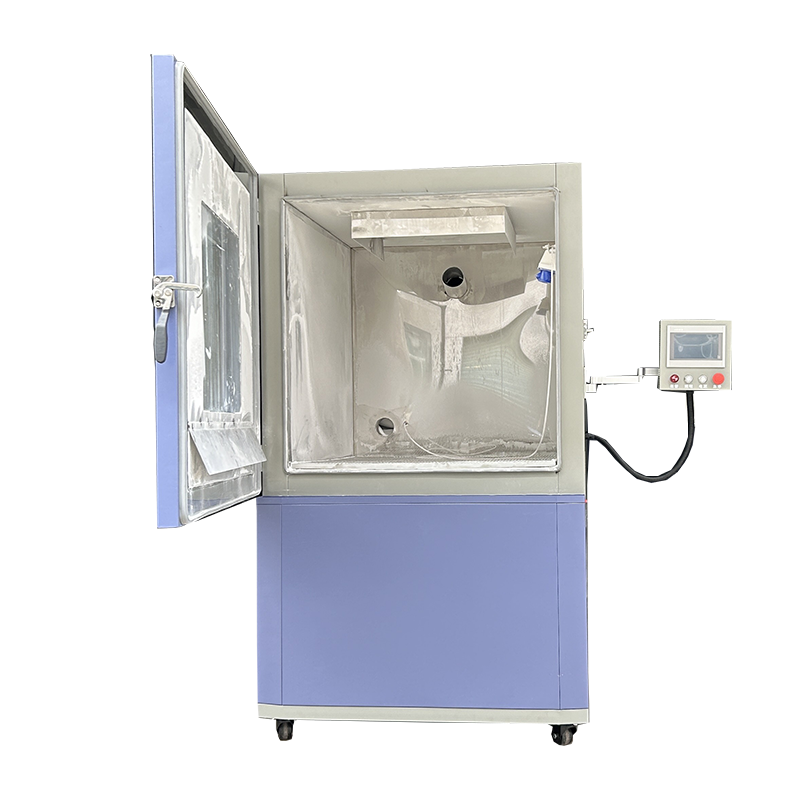
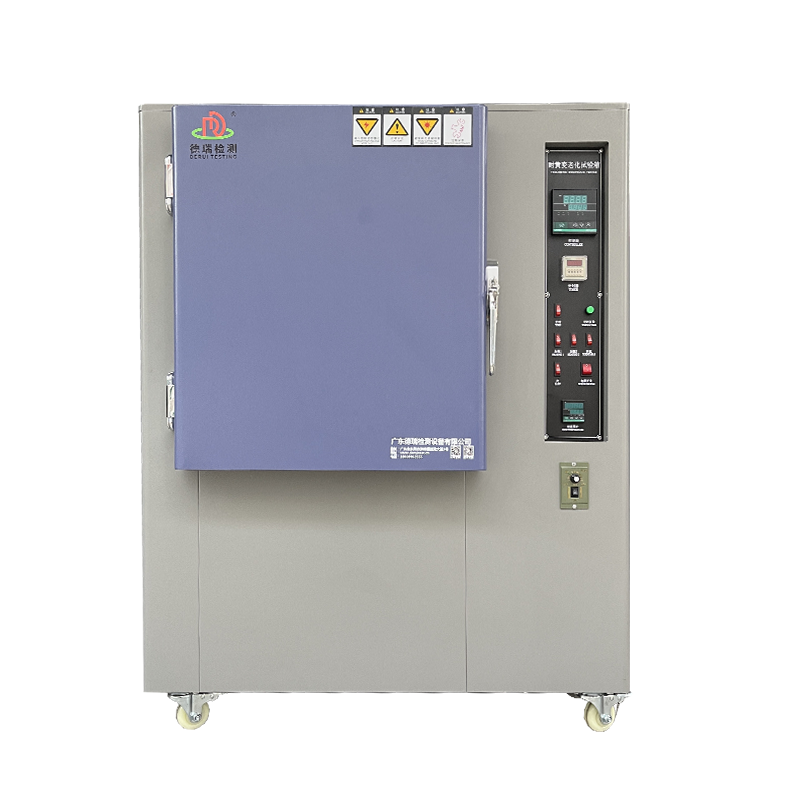
Railway signal equipment sand and dust test box
278005.0 INR/Unit
Product Details:
- Display Type Digital large LCD display
- Operating Voltage 220 V
- Mounting Type Floor standing
- Temperature Room temperature to 60C (control range)
- Frequency 50 Hz
- Humidity 20%80% RH (adjustable)
- Automation Grade Semi-automatic
- Click to view more
X
Railway signal equipment sand and dust test box Price And Quantity
- 278005.0 INR/Unit
- 1 Unit
- Stainless steel inner chamber with powder-coated exterior
- IEC 60529, GB/T 2423.37
- Over-temperature protection, emergency stop switch
- Multiple filter units, easy maintenance
- 09999 min (programmable)
- High-flow circulation system for uniform sand dispersion
- Single front-opening, silicone gasket sealed
- Integrated LED illumination
- Observation glass with defogger
- <70 dB(A)
Railway signal equipment sand and dust test box Product Specifications
- 13 pieces (adjustable)
- 2% (for air flow and pressure)
- RS485/USB (optional)
- Ingress protection of equipment against dust and sand
- <2 s
- 500 mm
- 0.6~0.8 MPa
- 75 mm
- AC 220V 10%, 50Hz
- Railway signal equipment environmental testing
- 1400 mm
- Simulate sand and dust environments for railway signal devices
- Sand and Dust Test Box
- Test chamber glass: 7 Mohs
- Programmable test cycles, automatic temperature and humidity regulation, overload protection, observation window
- Room temperature to 60C (control range)
- Digital large LCD display
- 220 V
- Floor standing
- Semi-automatic
- 180 L
- Adjustable up to 5 m/s
- 50 Hz
- 20%80% RH (adjustable)
- Max 400 x 400 x 400 mm
- 0.01 m/s (for air speed)
- Approx. 350 kg
- Digital touch-screen control
- Sand & dust ingress tests
- 600 mm
- Stainless steel inner chamber with powder-coated exterior
- IEC 60529, GB/T 2423.37
- Over-temperature protection, emergency stop switch
- Multiple filter units, easy maintenance
- 09999 min (programmable)
- High-flow circulation system for uniform sand dispersion
- Single front-opening, silicone gasket sealed
- Integrated LED illumination
- Observation glass with defogger
- <70 dB(A)
Railway signal equipment sand and dust test box Trade Information
- Cash in Advance (CID)
- 100 Unit Per Month
- 7 Days
- All India
Product Description
Dust Test Chamber Parameter
| Item | Specification |
| Internal dimension | 800W*800D*800Hmm |
| External dimension | 1300W*1000D*1700Hmm |
| Test sample | Size W20cm- L30cm-D15cm, weight 0.5kg |
| Chamber material | SUS304 Stainless steel |
| Specifications of square mesh sieve | Mesh hole 75um, mesh metal wire diameter 50um |
| Talcum powder amount | 2kg/ m |
| Airflow speed | No more than 2m/s |
| Door | Left open door with tempered glass door |
| Controller | PLC Touch Screen controller, programmable to set as below cycle: a. Blowing dust time (Stop/Blow) m/s b. Cycle time: can be adjusted c. Pre-set test time: 0s ~99m99s |
| Vacuum system | Pressure gauge, air filter, Pressure regulating FRL, connecting pipe, Vacuum pump |
| Vacuum pump capacity | 60-600 L/H |
| Fan | Centrifugal fan |
| Safety protection devices | Meter over-temperature function, Phase shortage protection, Power short-circuit protection |
Railway signal equipment sand and dust test box Test Standards and Methods
IEC 60529: International Electrotechnical Commission's test standard for enclosure protection level, stipulating the dustproof test methods for IP5X and IP6X.
GB/T 2423.37: Chinese national standard, which specifies the method of sand and dust test in the environmental test of electrical and electronic products.
ISO 12103-1: International Organization for Standardization (ISO) standard for road vehicles - Environmental conditions and tests, specifying the method of sand and dust test.
EN 50125-3: European standard specifying requirements for railroad applications - Environmental conditions - Equipment - Sand and dust environment.
IEC 62236-3-1: International Electrotechnical Commission for railroad applications - Electromagnetic compatibility - Equipment - Requirements for sand and dust environments.
Application Fields
- Railroad Signal System: Used to test the dustproof performance and signal transmission performance of railroad signal equipment in sand and dust environment.
- Railroad Infrastructure: Used to test the signal lamps, track circuit equipment, control systems, etc. along the railroad line.
- Quality inspection organizations: Quality inspection organizations are used to test the sand and dust performance of railroad signaling equipment to ensure that it meets the relevant standards.
- R&D department: The R&D department is used to test the sand and dust performance of newly designed railroad signaling equipment and evaluate its protection capability.
FAQ 1: What is a railroad signaling equipment sand and dust test chamber?
Answer:Railway signaling equipment sand and dust test chamber is a kind of equipment specially designed to simulate the sand and dust environment that railroad signaling equipment may encounter in actual operation, in order to evaluate its protection performance, durability and reliability. It simulates a dusty environment by generating and controlling the dust concentration, airflow speed and other parameters to ensure the normal operation of the equipment under adverse conditions.
FAQ 2: What types of railroad signaling equipment is the chamber suitable for?
Answer: The test chamber is applicable to various types of railroad signaling equipment, including signal lamps, track circuit equipment, signal control system, railroad communication equipment, turnout control equipment and so on. These equipments are easily affected by sand and dust along the railroad lines and in tunnels and other environments.
FAQ 3: How does the test chamber simulate the sand and dust environment?
Answer:The test chamber generates sand and dust through the sand and dust generator, and utilizes an airflow system to evenly distribute the sand and dust inside the test chamber. The dust concentration and airflow rate can be adjusted according to the test standard or customer requirements to simulate different dust environments, such as deserts, railroad construction sites, and so on.
FAQ 4: What are the test standards of the test chamber?
Answer:The main test standards include IEC 60529 (enclosure protection level), GB/T 2423.37 (Chinese National Standard), ISO 12103-1 (Road Vehicle Standard), EN 50125-3 (European Railway Standard), and IEC 62236-3-1 (Railway Electromagnetic Compatibility Standard). These standards define specific methods and requirements for sand and dust testing.
FAQ 5: What is the test procedure of the test chamber?
Answer:The test procedure includes:1) Initial inspection: Appearance and function inspection of the equipment under standard environmental conditions.2) Sample placement: Place the equipment in the test chamber.3) Setting parameters: Set the parameters such as dust concentration, airflow rate, etc. according to the standard or customer's requirements.4) Starting the test: Start the chamber to conduct the test.5) Continuous monitoring: Regularly monitor the status of the equipment and record the data.6) End of test: Remove the equipment for appearance and function inspection.7) Test procedure: Remove the equipment for appearance and function inspection.8) Test procedure: Remove the equipment for appearance and function inspection. Remove the equipment for appearance and function checking.
FAQ 6: How to evaluate the test results?
A: The evaluation criteria include appearance inspection, function test, sealing test, electrical performance test, mechanical performance test and signal transmission test. After the test, you need to check whether there is any sand and dust deposition on the surface of the equipment, whether there is any sand and dust entry in the sealing part, and evaluate whether its functions are normal or not.
Comprehensive Sand and Dust Testing
Ensure your railway signal equipment is ready to withstand harsh environments with our advanced sand and dust test box. The chamber simulates realistic dust and sand conditions, enabling accurate testing of ingress protection as per global standards. Robust construction, sophisticated control, and adjustable conditions provide confidence in your product's durability and compliance.
User-Friendly and Safe Operation
Featuring a large touch-screen interface and programmable test cycles, this test box prioritizes ease of use. The single front-opening door with silicone gasket ensures a secure seal, while safety enhancements such as an emergency stop switch and over-temperature protection deliver peace of mind during operation. The observation glass window, equipped with a defogger, allows clear visibility throughout the test process.
Efficient Maintenance and Longevity
Our test box is engineered for convenience and durability. Multiple filter units support efficient dust collection and are easy to maintain, ensuring consistent performance. Integrated LED illumination, sturdy materials, and a user-accessible layout mean the chamber is built to last, supporting rigorous, repeated testing cycles.
FAQ's of Railway signal equipment sand and dust test box:
Q: How does the sand and dust test box operate for railway signal equipment testing?
A: The test box uses a high-flow air circulation system to disperse sand and dust uniformly around the specimens placed inside. Users can program test cycles, temperature, humidity, and air flow through the digital touch screen, ensuring each test meets specific standards such as IEC 60529 and GB/T 2423.37.Q: What benefits does the observation glass window with defogger offer during the test process?
A: The observation window enables continuous monitoring of the specimens inside the chamber without interrupting the test. The built-in defogger ensures a clear view even under variable humidity and temperature, improving safety and test result verification.Q: When should I use this sand and dust test box for railway signal equipment?
A: Manufacturers, quality assurance teams, or engineers should use this test box during product development, routine quality checks, or certification processes to validate the ingress protection of railway signaling devices against dust and sand as required by industry standards.Q: Where can this test chamber be installed for optimal use?
A: The box is a floor-standing device designed for installation in laboratories, quality control rooms, or manufacturing environments. With its robust construction and moderate noise level (<70 dB(A)), it suits most technical facility settings.Q: What is the process for maintaining the test box's dust filtration system?
A: Maintenance is straightforward-filters are accessible and can be replaced or cleaned with ease, ensuring optimal air quality and consistent dust dispersion for reliable test results. Regular maintenance extends machine longevity and maintains safety standards.Q: How does the programmable timer and digital control enhance testing efficiency?
A: The timer supports programmable test durations up to 9999 minutes, while the digital control panel allows precise setting and monitoring of temperature, humidity, air flow, and test cycles. This streamlines testing workflows and ensures reproducible and accurate results each time.Q: What are the primary benefits of using this sand and dust test chamber for railway equipment?
A: By simulating challenging environmental conditions, the chamber helps ensure devices will function reliably in the field. Its compliance with international standards also facilitates easier product certification, enhances brand reputation, and reduces warranty claims due to environmental ingress failures.Tell us about your requirement

Price:
Quantity
Select Unit
- 50
- 100
- 200
- 250
- 500
- 1000+
Additional detail
Mobile number
Email

Other Products in 'Environment Test Chamber' category

Contact Details

- 1st Floor, No. 3, Shugang Avenue, Hongmei Town,Dongguan Guangdong, China
- Mr. Shirley (Manager)
- Mobile : +8615580327593
- Send Inquiry
-

Derui Testing Equipment Co., Ltd
 Send Inquiry
Derui Testing Equipment Co. Ltd
All Rights Reserved.(Terms of Use)
Developed and Managed by Infocom Network Private Limited.
Developed and Managed by Infocom Network Private Limited.
 English
 Spanish
 French
 German
 Italian
 Chinese (Simplified)
 Japanese
 Korean
 Arabic
 Portuguese