

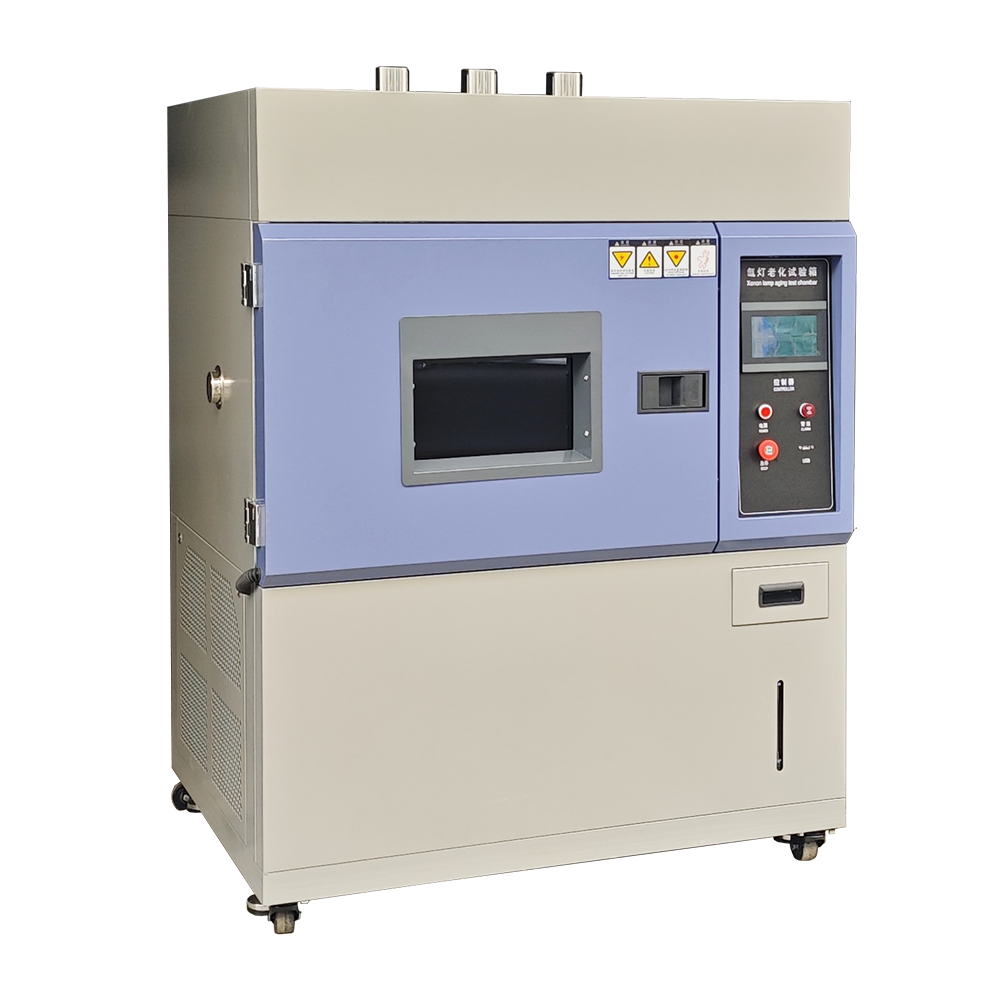
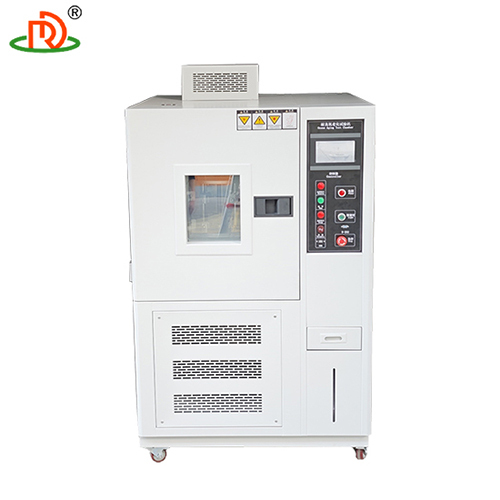
xenon arc lamp acceleration aging test chamber
478005.0 INR/Unit
Product Details:
- Power Supply AC 220V/50Hz
- Mounting Type Floor-standing
- Humidity 30% RH to 98% RH
- Operating Voltage AC 220V 10%, 50/60Hz
- Display Type Digital Color Touchscreen Display
- Automation Grade Fully Automatic
- Response Time <5 seconds
- Click to view more
X
xenon arc lamp acceleration aging test chamber Price And Quantity
- 478005.0 INR/Unit
- 1 Unit
- Up to 20 user-defined test profiles
- Aluminum Alloy / Stainless Steel
- 340nm, 420nm selectable, fully adjustable
- 304 Stainless Steel, corrosion-resistant
- 1500 hours (typical)
- Programmable Spray Intervals / Deionized Water System
- Integrated for easy specimen observation
- <65 dB(A)
- Air and Water Cooling Dual System
- Onboard and USB Export
- Overload/Overtemperature/Lamp Failure Alarm
- 2.5 kW (Air-cooled type)
- Optical Glass and Borosilicate Filters
xenon arc lamp acceleration aging test chamber Product Specifications
- AC 220V/50Hz
- 340 Liters
- AC 220V 10%, 50/60Hz
- Floor-standing
- 30% RH to 98% RH
- Weathering and Light Fastness Testing
- UV, Visible, and IR Light Simulation
- <5 seconds
- Fully Automatic
- Programmable Touch Screen Control
- Digital Color Touchscreen Display
- Room Temperature to 80C (3C)
- 75 mm x 150 mm (Standard Panel Size)
- RS232/USB
- 0.1C, 1% RH
- Programmable, Over-temperature protection, Automatic water supply
- Xenon Arc Lamp Acceleration Aging Test Chamber
- 50 mm to 300 mm (customizable)
- 0.1C (Temperature), 2% RH (Humidity)
- Approx. 350 kg
- 1 to 24 (Adjustable Racks)
- Customized as per requirement
- 1650 mm
- 0.5 - 0.8 MPa (Air)
- Accelerated Weathering, Aging, and Durability Testing
- 0-100% Transmission, 300-800nm Wavelength
- 50/60 Hz
- Adjustable
- Standard inlet port 1/2 inch
- Up to 20 user-defined test profiles
- Aluminum Alloy / Stainless Steel
- 340nm, 420nm selectable, fully adjustable
- 304 Stainless Steel, corrosion-resistant
- 1500 hours (typical)
- Programmable Spray Intervals / Deionized Water System
- Integrated for easy specimen observation
- <65 dB(A)
- Air and Water Cooling Dual System
- Onboard and USB Export
- Overload/Overtemperature/Lamp Failure Alarm
- 2.5 kW (Air-cooled type)
- Optical Glass and Borosilicate Filters
xenon arc lamp acceleration aging test chamber Trade Information
- Cash in Advance (CID)
- 90 Unit Per Month
- 5 Days
- All India
Product Description
Standard Features
| Model | HD-E801 |
| Internal dimension (WxDxH) | 500*600*500mm |
| External dimension (WxDxH) | 1000*1000*1750mm |
| Temperature range | RT+10~ 60 (suggest to use 402) |
| Temperature Fluctuation | 1 |
| Ozone concentration | 50~1000 pphm, adjustable |
| Ozone concentration deviation | 10% |
| Sample holder | SUS#304 stainless steel |
| Temperature controller | Programmable touch screen controller |
| Ozone concentration analysis | Concentration analysis meter |
| Ozone generator | High pressure silence discharge type |
| Protection system | Leakage, short circuit, over temperature, over heat |
| Test criteria | ASTM D1149, ISO 1431, JIS K6259... |
Xenon arc lamp accelerated aging test chamber is a device used to simulate and enhance the weathering and accelerated photo aging of materials, widely used in various fields such as automobiles, coatings, rubber, plastics, pigments, adhesives, fabrics, etc. The following is a detailed guide for product selection and equipment configuration of xenon arc lamp accelerated aging test chamber:
1 Clarify experimental requirements
When choosing a xenon lamp aging test chamber, the first step is to clarify the experimental requirements, including:
1. Types and sizes of test samples: Different industries and materials have different requirements for the aging test chamber, such as electrical and electronic products, automotive parts, plastics, rubber, coatings, paints, etc.
2. Required light intensity range: Select the appropriate light intensity range according to the testing requirements.
3. Accuracy of temperature and humidity control: High precision temperature and humidity control is an important guarantee for ensuring the accuracy of test results.
4. Test cycle and frequency: Determine the test cycle and frequency according to the experimental requirements.
2 Understand technical indicators
The technical indicators of the xenon lamp aging test chamber are an important basis for evaluating its performance. The following are some key technical indicators:
1. Light source: Xenon lamp is the core component of the test chamber, and its power and stability directly affect the accuracy of the test results. Usually, the power of the light source ranges from several hundred watts to several thousand watts, and the selection should be based on experimental requirements.
2. Light intensity: Light intensity is a key parameter for simulating natural environmental lighting conditions. The xenon lamp aging test chamber can provide adjustable light intensity to meet the testing needs of different materials.
3. Temperature and humidity control: The test chamber should have automatic temperature and humidity control systems that can accurately control the test environment.
4. Irradiance control: For experiments that require precise control of irradiance, the test chamber should have an automatic irradiance adjustment function to ensure consistency in testing conditions.
5. Studio size: The studio size should be determined based on the size and quantity of the test samples to ensure that the samples can be fully exposed to light and temperature and humidity environments.
3 Equipment configuration
The equipment configuration of xenon lamp aging test chamber usually includes:
1. Light source system: Xenon arc lamp is used as the light source to simulate the full sunlight spectrum and provide adjustable light intensity.
2. Control system: Equipped with an automatic control system that can accurately control temperature, humidity, light intensity, and irradiance.
3. Sample rack: Design appropriate studio sizes and sample racks based on the size and quantity of the test samples.
4. Data recording and analysis system: used to record and analyze test data to ensure the accuracy and repeatability of test results
Xenon Lamp Weathering Test Chamber, Xenon Lamp Aging Test Chamber Special December Hot List - Instruments Xenon lamp weather resistance test chamber, xenon lamp aging test
When determining the working chamber size of the xenon arc lamp accelerated aging test chamber, the following key factors need to be considered:
1. Size and quantity of test samples
Sample size: Measure the size of the largest sample you will be testing to ensure that the studio can accommodate these samples.
Sample quantity: Determine the number of samples to be placed in each test to ensure that all samples can be tested simultaneously.
2. Design of sample rack
Sample rack size: Design sample racks based on the size and quantity of the samples to ensure that each sample has sufficient space for uniform lighting and thermal radiation.
Sample rack layers: If a large number of samples need to be tested, a multi-layer sample rack design can be considered to improve space utilization.
3. Uniformity of illumination and thermal radiation
Uniformity of lighting: Ensure uniform lighting in the studio to avoid inaccurate test results caused by uneven lighting.
Uniformity of thermal radiation: Ensure uniform thermal radiation within the studio to avoid local overheating or overcooling.
4. Overall dimensions of the equipment and laboratory space
Equipment size: Consider the overall space of the laboratory to ensure that the installation of the equipment does not affect other operations in the laboratory.
Ventilation and heat dissipation: Ensure that the equipment has sufficient ventilation and heat dissipation space to ensure its normal operation.
5. Testing standards and specifications
Industry standards: Refer to relevant industry standards and specifications to ensure that the studio size meets the standard requirements.
Specific testing requirements: Adjust the studio size based on specific testing requirements such as temperature, humidity, light intensity, etc.
6. Recommendations from equipment manufacturers
Manufacturer's Guide: Refer to the guidelines and recommendations provided by equipment manufacturers, who typically have recommended sizes based on experience and test data.
Actual steps:
1. Measurement and recording: Measure the size of the largest sample and record the number of samples required for testing.
2. Design sample rack: Design sample racks based on sample size and quantity.
3. Calculate space requirements: Calculate the required internal space of the studio to ensure uniformity of lighting and thermal radiation.
4. Consider laboratory space: Measure the available space in the laboratory to ensure that equipment installation does not affect other operations.
5. Consult with manufacturers: Communicate with equipment manufacturers to obtain professional advice and recommended sizes
Advanced Irradiance and Climate Control
Achieve highly accurate simulation of natural weathering conditions with selectable and fully adjustable irradiance at 340nm and 420nm. The chamber maintains consistent humidity (30-98% RH) and temperature (ambient to 80C), ensuring precise testing environments for a diverse range of materials. It also supports programmable water spray intervals using a deionized water system.
Superior Durability and User-Centric Design
Built from 304 stainless steel and featuring optic glass and borosilicate filters, the chamber offers robust corrosion resistance and longevity. The design emphasizes user convenience with integrated specimen lighting, adjustable racks to accommodate 1-24 specimens, and a color touchscreen for easy parameter control and monitoring.
Comprehensive Data Management and Safety
Effortlessly store and export test results with onboard memory and USB connectivity. Multiple safety features, including overload, overtemperature, and lamp failure alarms, provide dependable operation and sample protection, ensuring uninterrupted accelerated aging tests.
FAQ's of xenon arc lamp acceleration aging test chamber:
Q: How does the xenon arc lamp accelerate material aging in the test chamber?
A: The chamber uses a powerful 2.5 kW xenon arc lamp to emit UV, visible, and IR light, effectively simulating sunlight exposure. By controlling irradiance, temperature, humidity, and water spray, the chamber accelerates weathering, predicting long-term durability in a condensed timeframe.Q: What materials are suitable for testing in this chamber, and how many samples can be accommodated at once?
A: This chamber is suitable for paints, coatings, plastics, textiles, automotive parts, and more. It accommodates between 1 to 24 specimens using adjustable racks, making it versatile for various laboratory and industrial testing needs.Q: When should I use the deionized water spray feature during testing?
A: The programmable deionized water spray is used to mimic natural rainfall or dew formation, exposing specimens to cycles of wet and dry conditions. This feature is essential for assessing moisture-related durability and is customizable according to test protocols.Q: Where is the control interface located, and what features does it offer?
A: The programmable color touchscreen control interface is positioned on the front panel of the chamber for easy access. It allows users to set and monitor test parameters such as irradiance, humidity, temperature, test cycles, and enables data export via USB.Q: What are the process steps for setting up an aging test in the xenon arc chamber?
A: To begin testing, install the specimens on the adjustable aluminum alloy/stainless steel racks, configure test parameters using the touchscreen, select the required filters, and start the programmed test cycle. The chamber automatically maintains conditions and records all data for later analysis.Q: How does the chamber ensure user and specimen safety during operation?
A: The chamber incorporates overload, overtemperature, and lamp failure alarms, along with an automatic water supply and dual cooling system, to protect users and ensure consistent operation without damaging samples.Q: What benefits do fully adjustable and programmable cycles provide for accelerated aging tests?
A: Customizable test profiles, with up to 20 user-defined cycles, allow simulation of real-world weathering scenarios. This flexibility delivers comprehensive and repeatable material evaluations, speeding up research and quality control processes.Tell us about your requirement

Price:
Quantity
Select Unit
- 50
- 100
- 200
- 250
- 500
- 1000+
Additional detail
Mobile number
Email

Other Products in 'Environment Test Chamber' category

Contact Details

- 1st Floor, No. 3, Shugang Avenue, Hongmei Town,Dongguan Guangdong, China
- Mr. Shirley (Manager)
- Mobile : +8615580327593
- Send Inquiry
-

Derui Testing Equipment Co., Ltd
 Send Inquiry
Derui Testing Equipment Co. Ltd
All Rights Reserved.(Terms of Use)
Developed and Managed by Infocom Network Private Limited.
Developed and Managed by Infocom Network Private Limited.
 English
 Spanish
 French
 German
 Italian
 Chinese (Simplified)
 Japanese
 Korean
 Arabic
 Portuguese