

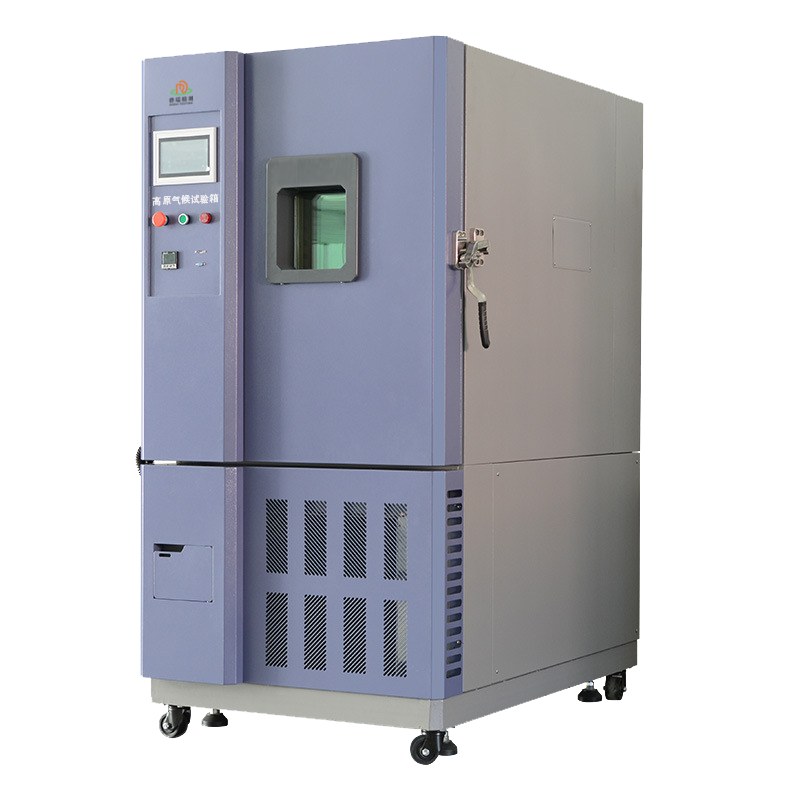
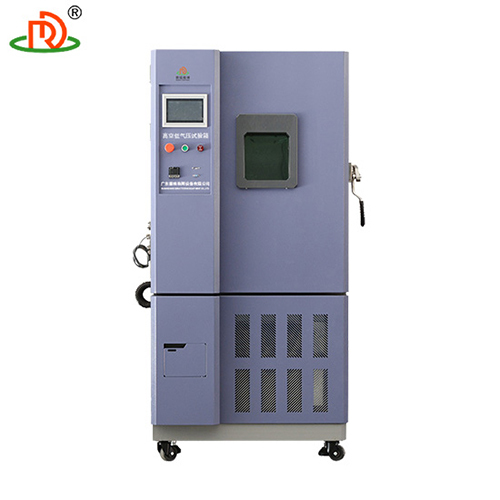
altitude temperature test chamber
448005.0 INR/Unit
Product Details:
- Gas Pressure 0.5~1 MPa (for optional vacuum/altitude simulation)
- Max Height Simulates up to 30000 m altitude
- Humidity 20%~98% RH (programmable)
- Mounting Type Floor Mounted
- Response Time Within 3 minutes (temperature change)
- Resolution 0.1C (temperature); 0.1% (humidity)
- Frequency 50 Hz / 60 Hz
- Click to view more
X
altitude temperature test chamber Price And Quantity
- 448005.0 INR/Unit
- 1 Unit
- 65 dB
- 80 mm (polyurethane foam)
- Over-temperature, phase sequence, leakage, compressor overload, water shortage
- Supports data logging and export via USB
- Mechanical refrigeration with cascade compressor
- Powder-coated steel
- SUS 304 stainless steel
- Internal LED chamber illumination
- Equipped with locking caster wheels
altitude temperature test chamber Product Specifications
- Approx. 800 kg
- Floor Mounted
- 20%~98% RH (programmable)
- Up to 1000 mm
- Temperature, Pressure/Altitude, Humidity
- 1~3 (rack adjustable)
- 0.5C (temperature), 2.5% RH (humidity), 200 m (altitude)
- 0.1C (temperature); 0.1% (humidity)
- 50 Hz / 60 Hz
- Customizable
- Temperature, Humidity and Pressure/Altitude
- Within 3 minutes (temperature change)
- Altitude and temperature environmental testing
- 225L (standard), up to 1000L available
- 0.5~1 MPa (for optional vacuum/altitude simulation)
- Simulates up to 30000 m altitude
- Automatic
- Max. 600 x 800 x 800 mm
- Simulating environmental conditions for aerospace, automotive, electronics, and defense components
- 380V AC, 50Hz
- Altitude Temperature Test Chamber
- Standard industrial grade materials
- -70C ~ +150C
- USB, Ethernet, RS232
- PLC/Touchscreen
- Programmable
- Digital Touchscreen Display
- 600 mm
- AC 380V, 50Hz
- Programmable control, safety protection, customizable port sizes, energy-efficient system
- 65 dB
- 80 mm (polyurethane foam)
- Over-temperature, phase sequence, leakage, compressor overload, water shortage
- Supports data logging and export via USB
- Mechanical refrigeration with cascade compressor
- Powder-coated steel
- SUS 304 stainless steel
- Internal LED chamber illumination
- Equipped with locking caster wheels
altitude temperature test chamber Trade Information
- Cash in Advance (CID)
- 100 Unit Per Year
- 7 Days
- All India
Product Description
Specifications:
| Internal dimension (W*D*H) | 1000*1000*1000mm |
| Temperature range | -70~+100(no load);-55~+100(with load) |
| Temperature fluctuation | 0.5 |
| Temperature uniformity | 2 |
| Ambient Humidity | 85%RH |
| Cooling speed | 1/min in average (with loading 15kg,+85~-55 ) |
| Heating speed | 1/min in average (with loading,-55~+85) |
| Pressure Range | 101Kpa~1Kpa |
| Pressure Accuracy | 5% |
| Pressure Control Method | Adjust temperature first, then pump vacuum |
| Internal chamber material | Steel plate with plastic spray |
| External chamber material | Stainless steel |
| Cooling method | Water Cooler |
| Controller | LCD touch screen, programmable control temperature and Pressure Can set different parameter for cyclic test |
| Insulation material | Compound material without sweating, special for low pressure |
| Heating Method | Electrical |
| Compressor | Imported new generation with low noise |
| Safety protection device | Protection for leakage Over-temperature Compressor over voltage and overload Heater short circuit |
The high-altitude temperature test chamber is a comprehensive environmental testing equipment that combines low-pressure (high-altitude simulation) and temperature control, used to evaluate the performance stability of products in high-altitude low-temperature and low-pressure environments. The following is a detailed technical analysis and usage guide:
1 Core functions and technical parameters
1. Environmental simulation capability
Low pressure range:
Conventional model: 15 kPa (simulated altitude of approximately 12000 meters) to standard atmospheric pressure (101.3 kPa)
High end model: can be as low as 1 kPa (simulating an altitude of about 31000 meters, close to near space environment)
Temperature range:
Low temperature:- 70 C to+150 C (some aerospace grade equipment supports -80 C to+180 C)
Temperature fluctuation: 0.5 C (high-precision model)
Composite control: supports synchronous or cyclic testing of temperature, low air pressure, and humidity (optional)
2. Key performance indicators
Pressure rise and fall rate: 0.1~10 kPa/min (rapid testing or gradient simulation)
Temperature change rate: 1 C/min (linear) to 10 C/min (rapid temperature change model)
Humidity range (optional): 10%~98% RH (requires anti condensation design).
2 Application Fields and Testing Standards
industry
Test scenario
Reference standards
EADS
Satellite components and onboard equipment start at low temperature and low pressure
MIL-STD-810H (Method 500.6)
New energy vehicles
Low temperature charging and discharging performance of power batteries at high altitudes
GB/T 31467.3, ISO 12405
Consumer Electronics
Reliability of high-altitude low-temperature operation of mobile phones/drones
IEC 60068-2-1 (Low temperature test)
Military equipment
Weapon system adaptability to high-altitude mountainous environments
GJB 150.2A (low pressure test)
Precision Cooling and Environmental Simulation
Utilizing a cascade compressor system, this chamber excels at rapid and precise thermal transitions, coupled with programmable humidity control and gas pressure for realistic altitude simulations. The 80 mm polyurethane foam insulation guarantees energy efficiency, maintaining stable conditions throughout rigorous testing cycles.
Advanced User Interface and Data Management
Navigate and control all parameters seamlessly using the digital touchscreen, with options for data export through USB, Ethernet, and RS232. The PLC controller ensures automation and convenience, while internal LED illumination enhances specimen visibility during operation, aiding inspection and analysis.
Robust Safety and Mobility Features
Comprehensive safety mechanisms-over-temperature, phase sequence, leakage, compressor overload, and water shortage-protect the equipment and samples. Heavy-duty construction with caster wheels enables easy relocation, and customizable ports maximize flexibility for various test applications.
FAQ's of altitude temperature test chamber:
Q: How does the altitude temperature test chamber simulate altitude and pressure conditions?
A: The chamber uses a combination of controlled gas pressure (0.5-1 MPa) and vacuum systems to accurately simulate high-altitude environments, reaching up to 30,000 meters. This allows for comprehensive testing of specimens under real-world altitude and pressure scenarios.Q: What types of specimens can be tested, and what is the maximum specimen size?
A: The chamber accommodates 1 to 3 specimens simultaneously on adjustable racks, with a maximum size of 600 x 800 x 800 mm per specimen. Industries such as aerospace, automotive, electronics, and defense use it to evaluate diverse components.Q: When should I use programmable control for test cycling?
A: Programmable control, accessed through the digital touchscreen and PLC, is ideal when testing requires rapid, repeatable environmental condition changes across temperature, humidity, and altitude. This ensures test reliability and efficient automation.Q: Where can the data from chamber tests be accessed and exported?
A: Test data is logged and can be exported via USB, Ethernet, or RS232 interfaces. This supports effortless data analysis, documentation, and integration into laboratory information systems.Q: What safety features protect components and operators during testing?
A: The chamber includes multiple safety protections: over-temperature, phase sequence, leakage detection, compressor overload, and water shortage. These features safeguard both the equipment and the test items.Q: How does the cooling system maintain stable temperatures?
A: A mechanical refrigeration system with a cascade compressor delivers rapid cooling and stable temperature control, enabling high-precision simulation from -70C up to +150C within 3 minutes response time.Q: What benefits does the chamber offer for environmental testing applications?
A: It offers versatile programmable test ranges, energy-efficient operation, precise measurement, customizable ports, robust safety, and ease of mobility. These features accelerate product development and qualification under challenging environmental conditions.Tell us about your requirement

Price:
Quantity
Select Unit
- 50
- 100
- 200
- 250
- 500
- 1000+
Additional detail
Mobile number
Email

Other Products in 'Environment Test Chamber' category

Contact Details

- 1st Floor, No. 3, Shugang Avenue, Hongmei Town,Dongguan Guangdong, China
- Mr. Shirley (Manager)
- Mobile : +8615580327593
- Send Inquiry
-

Derui Testing Equipment Co., Ltd
 Send Inquiry
Derui Testing Equipment Co. Ltd
All Rights Reserved.(Terms of Use)
Developed and Managed by Infocom Network Private Limited.
Developed and Managed by Infocom Network Private Limited.
 English
 Spanish
 French
 German
 Italian
 Chinese (Simplified)
 Japanese
 Korean
 Arabic
 Portuguese