

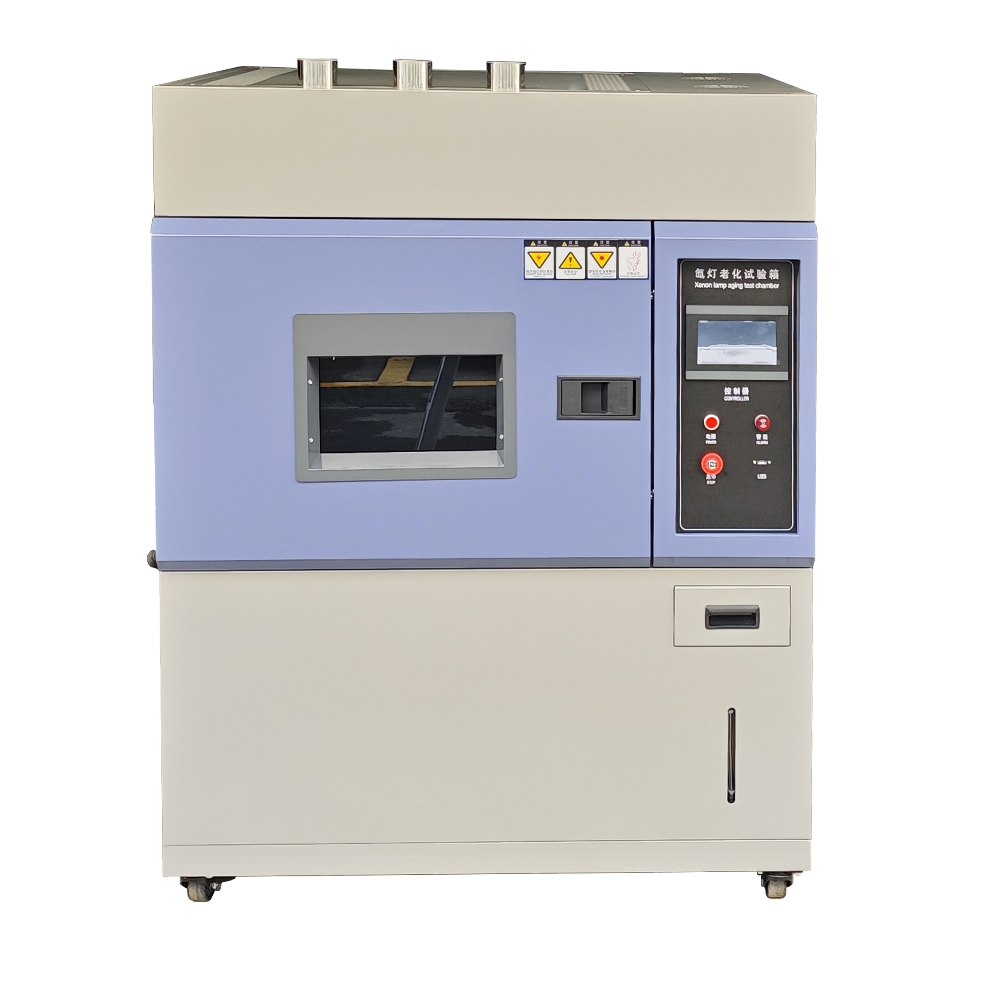
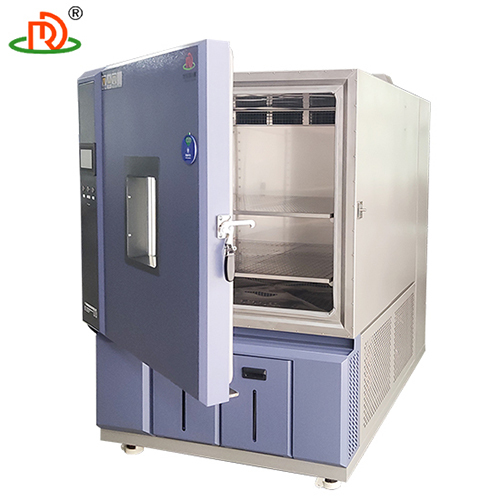
Full Spectrum Xenon Exposure Test Chamber with Water Spray & Rotating Rack
68000.0 INR/Unit
Product Details:
- Equipment Type Full Spectrum Xenon Exposure Test Chamber
- Accuracy 2% for irradiance and temp control
- Mounting Type Floor Standing
- Display Type 7-inch TFT Touchscreen
- Resolution 0.1C / 0.1% RH
- Application Accelerated Weathering, Material Durability Testing
- Max Height Approx. 1600 mm
- Click to view more
X
Full Spectrum Xenon Exposure Test Chamber with Water Spray & Rotating Rack Price And Quantity
- 68000.0 INR/Unit
- 1 Unit
- Programmable: 1 min to 99 min
- Water Cooling + Forced Air
- Built-in irradiance & Temp/RH calibration ports
- On-site and Remote via Interface
- Indoor, 5-40°C, 30-80% RH
- 30 to 180 W/m²
- 1100 mm (W) × 1600 mm (H) × 850 mm (D)
- Typically 1500 hours
- Stainless Steel 304
- 800 mm (Diameter) × 900 mm (Height)
- 1500W Water-cooled Xenon Arc Lamp
- <65 dB(A)
- Dark/Light, Spray/No Spray Sequences
- Over-temperature, low-water, lamp cover interlock
- ASTM G155, ISO 4892-2, GB/T 16422.2
- Supports external USB storage
Full Spectrum Xenon Exposure Test Chamber with Water Spray & Rotating Rack Product Specifications
- 0.1C / 0.1% RH
- Continuous rotation, 360
- Floor Standing
- 36 specimen slots
- 7-inch TFT Touchscreen
- Full Spectrum Xenon Exposure Test Chamber
- 2% for irradiance and temp control
- PID Digital Touchscreen Controller
- 30% to 95% RH (programmable)
- Approx. 300 kg
- Room Temp to 70C (Controllable)
- Up to 36
- Variable - 1 to 10 rpm (Rack Rotation)
- Approx. 1600 mm
- Accelerated Weathering, Material Durability Testing
- Fully Automatic
- Standard Water Inlet 1/2 BSP
- Xenon lamp chamber - atmospheric
- Laboratory, R&D Facilities
- 200 nm to 800 nm (light spectrum)
- Specimen rack width up to 400 mm
- 220 VAC
- 50Hz / 60Hz
- 220V AC, 50Hz / 60Hz
- 75 mm 150 mm Max
- <2 seconds
- Full spectrum UV and visible light
- Water Spray, Rotating Rack, Programmable Irradiance, Precise Temp/Humidity Control, Safety Interlocks
- RS-232 / USB for data logging
- Programmable: 1 min to 99 min
- Water Cooling + Forced Air
- Built-in irradiance & Temp/RH calibration ports
- On-site and Remote via Interface
- Indoor, 5-40°C, 30-80% RH
- 30 to 180 W/m²
- 1100 mm (W) × 1600 mm (H) × 850 mm (D)
- Typically 1500 hours
- Stainless Steel 304
- 800 mm (Diameter) × 900 mm (Height)
- 1500W Water-cooled Xenon Arc Lamp
- <65 dB(A)
- Dark/Light, Spray/No Spray Sequences
- Over-temperature, low-water, lamp cover interlock
- ASTM G155, ISO 4892-2, GB/T 16422.2
- Supports external USB storage
Full Spectrum Xenon Exposure Test Chamber with Water Spray & Rotating Rack Trade Information
- Cash in Advance (CID)
- 100 Unit Per Month
- 10 Days
- All India
Product Description
Product Features
A Xenon Exposure Test Chamber is a sophisticated device designed to evaluate the durability and performance of materials under accelerated weathering conditions. It simulates the effects of natural sunlight, temperature, and humidity, providing a controlled environment for testing. Here are the key features of a Xenon Exposure Test Chamber:
- Xenon Arc Lamp Technology
- Utilizes xenon arc lamps to generate a broad spectrum of UV, visible, and infrared light, closely mimicking natural sunlight.
- Ensures accurate replication of outdoor weathering conditions for consistent test results.
- Temperature and Humidity Control
- Equipped with precise systems to regulate temperature and humidity levels, simulating diverse environmental conditions.
- Rain Simulation
- Some models include rain simulation features to test materials under wet conditions, enhancing the realism of the testing environment.
- Programmable Test Cycles
- Offers pre-defined or customizable test cycles to replicate specific weather patterns, such as tropical, desert, or temperate climates.
- User-Friendly Interface
- Intuitive control panels and software for easy programming, monitoring, and data analysis.
- Supports remote monitoring and control for convenience.
- Durable Construction
- Built from high-quality, corrosion-resistant materials to ensure long-lasting performance and resistance to wear and tear.
-
Item
Specification
Internal Dimension (W*D*H)
700*500*600mm
External Dimension (W*D*H)
1350*1300*1850mm
Internal chamber material
SUS 304 # Stainless Steel, anti-rust
External chamber material
Cold-rolled steel with spray
Chamber humidity range
55%~90% RH
Chamber temperature
35~90
Black panel temperature
45~95, adjustable
Temperature uniformity
3
Filter
Window glass filter / daylight filter
Light source
Air cooled long arc xenon lamp
Xenon lamp power
1.8 KW * 3 pcs = 5.4 KW
Irradiance strength
0.51 W/m2@340 nm(follow up to specified test standard)
Control system
LCD programmable controller,
Auto display irradiance, capacity: 100 groups program, 99 cycles.
Illumination time
1~999 hours, adjustable
Water spray system
Water spray time 999 minutes settable
Interval spray time, 1~240 minutes settable
Sample holder
Stainless steel, 1 pc
Distance from sample
holder to lamp
250~300 mm
Heating
Nickel-chromium alloy electric heater
Humidification power
Stainless steel surface evaporative humidifier
Insulation materials
Supper fine glass fiber
Temperature sensor
PT100 high precision sensor
Air circulation system
Stainless steel centrifugal rotor vane to improve the uniformity of temperature and humidity
-
Product Advantages
The Xenon Exposure Test Chamber offers numerous benefits that make it an essential tool for industries requiring rigorous material testing:
- Accurate Simulation of Natural Weathering
- Provides reliable testing results by simulating real-world environmental conditions, ensuring products meet durability standards.
- Energy Efficiency
- Designed to operate efficiently, minimizing energy consumption without compromising performance.
- Easy Maintenance
- Simple maintenance procedures and accessible components make upkeep straightforward and cost-effective.
- Compact Design
- Space-saving design allows for easy integration into laboratory settings without requiring extensive floor space.
- Compliance with Standards
- Meets international testing standards, ensuring results are recognized and accepted globally.
Installation Tips
Proper installation is crucial to ensure optimal performance and longevity of your Xenon Exposure Test Chamber. Follow these tips:
- Choose the Right Location
- Place the chamber in a well-ventilated area with controlled temperature and humidity levels.
- Ensure adequate space around the device for proper airflow and easy access.
- Ensure Proper Power Supply
- Verify that the power supply meets the devices requirements to avoid electrical issues.
- Install a stable power source with appropriate grounding.
- Follow Safety Guidelines
- Adhere to all safety precautions provided in the manual, including protective gear and emergency shutdown procedures.
- Regular Maintenance
- Schedule routine maintenance to clean filters, inspect lamps, and replace worn-out parts as needed.
- Calibration
- Periodically calibrate the chamber to maintain accurate test results and ensure consistent performance.
Frequently Asked Questions (FAQs)
- What materials can be tested in a Xenon Exposure Test Chamber?
- A wide range of materials, including plastics, coatings, textiles, rubber, and composites, can be tested for their durability under simulated weathering conditions.
- How long does a typical test cycle last?
- Test cycles vary depending on the desired weathering simulation. They can range from a few days to several weeks, depending on the intensity of the exposure.
- Can the chamber be customized for specific applications?
- Yes, many manufacturers offer customization options, such as adding additional sensors, adjusting test parameters, or modifying the chamber size to suit specific needs.
- What is the lifespan of xenon arc lamps?
- Xenon arc lamps typically have a lifespan of several thousand hours, depending on usage frequency and intensity. Regular lamp replacement ensures optimal performance.
- Is the chamber easy to operate?
- Absolutely. Most models feature user-friendly interfaces and intuitive controls, making them accessible even for those with limited technical expertise.
- How much space does the chamber require?
- The chambers footprint varies by model, but most are designed to be compact, fitting easily into standard laboratory environments.
- Can the chamber be used for multiple samples simultaneously?
- Yes, many chambers accommodate multiple samples, allowing for efficient testing of various materials or products at once.
Comprehensive Environmental Simulation
This test chamber simulates a wide range of environmental conditions, including full-spectrum sunlight, water spray, high humidity, and temperature variations. By carefully controlling these parameters, it provides an accelerated platform for assessing material weatherability and product longevity in laboratory and R&D settings.
Precision Control & Automation
With a PID digital touchscreen controller and programmable dark/light, spray/no-spray cycles, the chamber offers highly accurate test repeatability. Built-in calibration ports for irradiance and temperature/humidity make regular instrument checks seamless, ensuring data integrity for every test run.
Safety and Support Assured
Integrated over-temperature, low-water, and lamp cover interlock systems guarantee operational safety. The chamber's service support includes both on-site and remote assistance for swift troubleshooting. Its fully automatic operation minimizes manual intervention, optimizing workflow efficiency.
FAQ's of Full Spectrum Xenon Exposure Test Chamber with Water Spray & Rotating Rack:
Q: How does the Full Spectrum Xenon Exposure Test Chamber simulate natural weathering conditions?
A: The chamber utilizes a 1500W water-cooled xenon arc lamp to replicate the full UV and visible light spectrum found in sunlight. Combined with programmable water spray, precise temperature, and humidity controls, it accurately mimics various environmental parameters for reliable accelerated weathering and material durability testing.Q: What is the process for running a test, and what types of specimens can be evaluated?
A: Testing involves placing up to 36 specimens (maximum size 75 mm 150 mm) onto the rotating rack. Using the digital touchscreen, you can program cycles for light/dark periods and water spray durations. The chamber then automatically manages irradiance, temperature, humidity, and spray sequences to expose samples consistently throughout the set test duration.Q: When should calibration of irradiance and temperature/humidity be performed?
A: Calibration is recommended before initial use and at regular intervals thereafter, as indicated by your facility's quality protocols. The chamber features built-in calibration ports, allowing straightforward verification and adjustment of irradiance and temperature/humidity sensor accuracy without dismantling equipment.Q: Where can this test chamber be installed, and what are its space requirements?
A: Designed for indoor use in laboratories and R&D facilities, the chamber requires a space accommodating its external dimensions: 1100 mm (W) 1600 mm (H) 850 mm (D). Access to a 220V AC power supply, water inlet (1/2 BSP), and ambient conditions (5-40C, 30-80% RH) is necessary for optimal operation.Q: How does the safety system function during operation?
A: Safety is ensured by multiple interlocks: automatic shut-off if over-temperature or low-water conditions are detected, and a lamp cover interlock to prevent accidental exposure. These measures protect users and the equipment, ensuring safe continuous testing.Q: Can test data be exported and how is it accessed?
A: Yes, test data can be easily exported via USB storage or logged through the RS-232 interface. The 7-inch TFT touchscreen provides real-time monitoring and data review, streamlining analysis and documentation for compliance or research reporting.Q: What are the main benefits of using this chamber for material testing?
A: The chamber delivers accelerated, reproducible weathering simulations, enabling faster material evaluations compared to outdoor exposure. Its programmable features, robust safety interlocks, and support for global test standards make it invaluable for developing and qualifying materials for demanding environments.Tell us about your requirement

Price:
Quantity
Select Unit
- 50
- 100
- 200
- 250
- 500
- 1000+
Additional detail
Mobile number
Email

Other Products in 'Environment Test Chamber' category

Contact Details

- 1st Floor, No. 3, Shugang Avenue, Hongmei Town,Dongguan Guangdong, China
- Mr. Shirley (Manager)
- Mobile : +8615580327593
- Send Inquiry
-

Derui Testing Equipment Co., Ltd
 Send Inquiry
Derui Testing Equipment Co. Ltd
All Rights Reserved.(Terms of Use)
Developed and Managed by Infocom Network Private Limited.
Developed and Managed by Infocom Network Private Limited.
 English
 Spanish
 French
 German
 Italian
 Chinese (Simplified)
 Japanese
 Korean
 Arabic
 Portuguese