

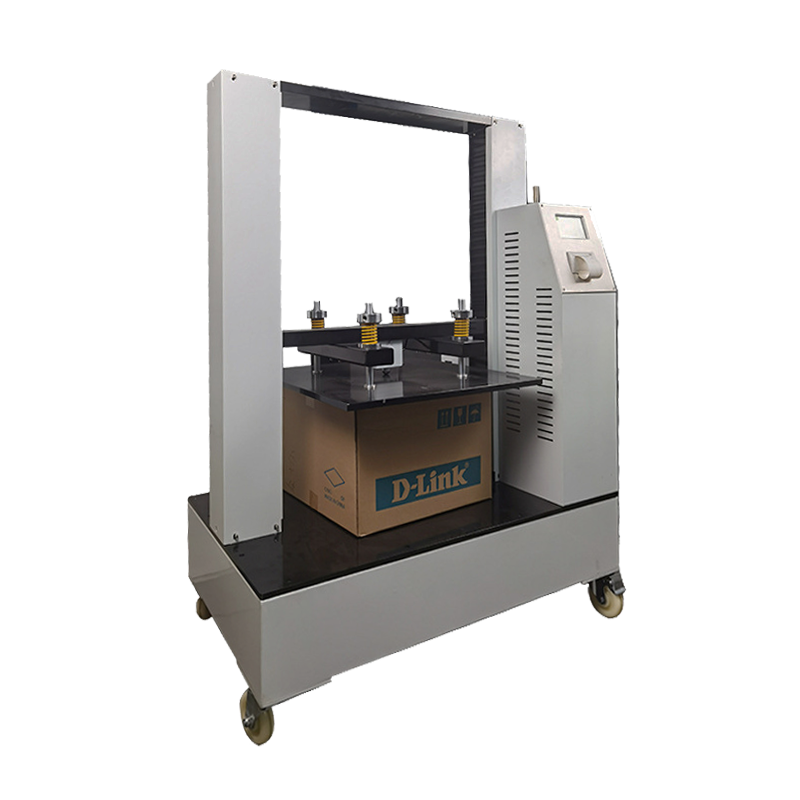
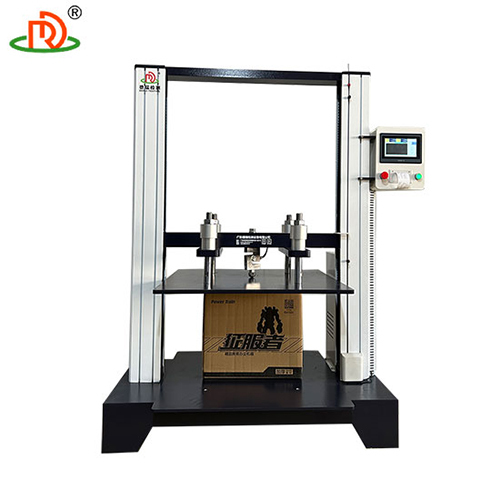
Corrugated cardboard box compressive strength testing machine
188005.0 INR/Unit
Product Details:
- Automation Grade Automatic
- Accuracy 1%
- Equipment Type Compressive Strength Tester
- Response Time <1 s
- Test Range 0-50 kN
- Measuring Range 0-50,000 N
- Humidity 20%~80% RH
- Click to view more
X
Corrugated cardboard box compressive strength testing machine Price And Quantity
- 1 Unit
- 188005.0 INR/Unit
- Emergency stop button, Over-travel limit switch
- Stores up to 100 test results
- 20 N
- Electric motor-driven lead screw
- Non-condensing
- <65 dB
- Peak load, Deflection at break, Constant compression
- Printable and exportable via USB
- 1200 x 1200 mm
- Industrial Grey
Corrugated cardboard box compressive strength testing machine Product Specifications
- Corrugated cardboard box compression test
- 220 V
- 10C~35C
- 0.01 N
- AC 220V 10%, 50Hz
- Digital LCD / Computer Interface
- Digital/Computer control
- Standard and custom sizes
- Floor standing
- USB/RS232
- Automatic control, Overload protection, Data storage
- Up to 1200 mm
- 1200 mm
- Single or multiple
- Compressive Strength Tester
- 10-300 mm/min adjustable
- 1%
- 1000 mm
- Automatic
- 50 Hz
- 20%~80% RH
- Compressive strength measurement of cardboard boxes
- 0-50,000 N
- Up to 50,000 N (50 kN)
- Approx. 500 kg
- <1 s
- 0-50 kN
- Emergency stop button, Over-travel limit switch
- Stores up to 100 test results
- 20 N
- Electric motor-driven lead screw
- Non-condensing
- <65 dB
- Peak load, Deflection at break, Constant compression
- Printable and exportable via USB
- 1200 x 1200 mm
- Industrial Grey
Corrugated cardboard box compressive strength testing machine Trade Information
- Cash in Advance (CID)
- 100 Unit Per Month
- 7 Days
- All India
Product Description
| Item | DR-B211-900 | DR-B211-1200 | DR-B211-1500 |
| Max. Force | 10KN(1000 kg ,2205lb) | 20KN(2000 kg, 4409lb) | 50KN(5000kg,11023lb) |
| Load cell | 1 load cell for highest accuracy | ||
| Control system | Dual control (Computer control with Windows mode+Touch screen control ) | ||
| Servo Motor | 400W | 750W | |
| Servo Driver | 400W | 750W | |
| Screws | Ball screws(Double ball guide rod design, high transmission accuracy, high transmission power efficiency) | ||
| Force reading | Gf, kgf, Ibf, N, KN, T etc | ||
| Load cell Resolution | 1/250,000 | ||
| Load Precision | within 0.5% | ||
| Effective test area (L x W x H) | 700x900x900mm | 1000x1200x1000mm | 1300x1500x1500mm |
| Compression Stroke | 0~900mm | 0~1000mm | 0~1500mm |
| Lift speed | 0.1~200mm/min | ||
| Software | Mtest HD-002-A(Independent R&D) | ||
| Data display | Load, displacement, speed, loading rate and elapsed time | ||
| Safety features | E-Stop Over-load protection Upper and lower limit switches Load sensor with automatic retreat | ||
| Report items | Serial number, peak value, average value, set pressure holding value, pressure holding time | ||
| Electrical Supply | 1phase, AC 220V, 500W, 50HZ | 1phase, AC 220V,550W,50HZ | 1phase, AC 220V,900W,50HZ |
| Overall Dimensions (L x W x H) | Approx.1510x1200x1645mm | Approx.1510x1200x1645mm | Approx.1865mmx1500mmx2235mm |
| Weight | Approx.350kg(772lb) | Approx.670kg(1477lb) | Approx. 1000kg(2205lb) |
| Operation Temperature and relative humidity | 10~40, 30~80% | ||
Corrugated Box Compressive Strength Tester
1. Equipment Overview
The Corrugated Carton Compressive Strength Tester is a precision instrument specially designed to evaluate the compressive strength and overall structural stability of corrugated cartons, honeycomb cardboard boxes and other packaging containers. The equipment accurately measures the compressive capacity, deformation and compressive stability of corrugated cartons by simulating the pressure they are subjected to during actual transportation, storage and stacking. The tester is widely used in packaging material manufacturing industry, logistics and transportation industry as well as quality control departments to ensure that packaging materials comply with relevant standards and customer requirements.
2. Main Functions
Compressive strength test: Measure the maximum compressive capacity of the corrugated carton in the vertical direction to assess its load-bearing capacity during stacking, transportation and storage.
Deformation test: Record the deformation of the carton under pressure and evaluate its deformation degree and recovery ability.
Stacking test: simulate the force of carton in actual stacking situation, evaluate its stacking stability and load-bearing capacity.
Cyclic Pressure Test: Load and unload the carton for several cycles to evaluate its fatigue performance and durability.
Data analysis and report generation: Built-in data analysis software can automatically generate detailed test reports, including maximum compressive strength, deformation, loading curve and other parameters.
3. Working Principle
1.
Specimen Preparation: Place the corrugated carton to be tested between the platens of the testing machine to ensure that the position and direction of the carton is in accordance with the testing requirements.
2.
Parameter Setting: Set the test parameters through the control panel, including loading speed, pressure range, displacement limit, etc.
3.
Loading process: start the tester, the platen applies pressure to the carton at the set loading speed. The tester monitors and records the deformation of the carton and the pressure applied in real time.
4.
Data Acquisition and Analysis: During the testing process, the equipment automatically collects the pressure and deformation data, and generates a test report at the end of the test. The test report usually includes parameters such as maximum compressive strength, deformation amount, stacking height and so on.
4. Equipment Features
High-precision control: Adopting advanced control system, it can accurately control parameters such as loading speed, pressure and displacement to ensure the accuracy and reliability of test results.
Automated operation: fully automated operation, reducing human intervention, improving test efficiency and repeatability of test results.
Safety and Reliability: Equipped with multiple safety protection devices, such as overload protection, limit protection, emergency stop device, etc., to ensure the safety and reliability of the testing process.
Data processing and analysis: Built-in data processing software can automatically generate test reports and provide data analysis function, which is convenient for users to analyze the results and quality control.
Sturdy structure: Made of high-strength materials, it has good rigidity and stability and can withstand large testing pressure.
User-friendly interface: friendly operation interface, simple parameter setting and convenient operation.
5. Application Fields
The corrugated carton compressive strength tester is widely used in the following fields:
Packaging material manufacturing industry: used to evaluate the compressive strength and deformation performance of packaging materials such as corrugated cartons and honeycomb cardboard boxes.
Logistics and transportation industry: to evaluate the load-bearing capacity and stability of packaging materials during actual transportation and stacking.
Quality control: To carry out quality control during the production process to ensure that packaging materials comply with relevant standards and customer requirements.
6. FAQ
Q1: What is the testing speed of the Corrugated Box Compressive Strength Tester?
A1: The testing speed is usually between 1-500mm/min, which can be adjusted according to different testing needs.
Q2: How does the machine ensure the accuracy of the test results?
A2: The equipment adopts advanced control system and high-precision sensors, which can accurately control the parameters of loading speed, pressure and displacement, and ensure the safety and reliability of the testing process through multiple safety protection devices to ensure the accuracy of the test results.
Q3: Is the equipment easy to operate?
A3: Yes, the equipment is equipped with user-friendly interface, simple parameter setting and easy operation. Meanwhile, the fully automated operation reduces human intervention and improves testing efficiency and repeatability of results.
Q4: What is included in the test report?
A4: The test report usually contains parameters such as maximum compressive strength, deformation, stacking height, etc. It also provides data analysis function, which is convenient for users to analyze the results and quality control.
Q5: Does the device support customized test parameters?
A5: Yes, the equipment supports the setting of different parameters such as loading speed, pressure range and displacement limit according to different materials and testing requirements to meet various testing requirements.
Versatile Test Capability
This compressive strength tester accommodates both standard and custom cardboard box sizes, enabling comprehensive evaluation with single or multiple specimens. Its adjustable test speed (10-300 mm/min) and broad test range (0-50,000 N) make it suitable for varied requirements in packaging quality control.
Advanced Data Management
The machine not only provides instant digital readouts but also stores up to 100 test results. Data is easily exportable via USB or RS232, facilitating reporting, analysis, and traceability. Supporting printable reports, it streamlines the documentation process for quality assurance teams.
Safety & Automation Features
Fitted with emergency stop and over-travel limit switch, the system ensures operational safety. Its automatic control and overload protection minimize operator risks and potential equipment damage, making it reliable for continuous industrial use.
FAQ's of Corrugated cardboard box compressive strength testing machine:
Q: How does the compressive strength testing machine operate during a standard test?
A: The machine uses an electric motor-driven lead screw to apply compressive force through a large loading plate (1200 x 1200 mm). The force is digitally monitored in real time, with the ability to select different test modes such as peak load and constant compression. All testing parameters are managed via a digital interface or computer control.Q: What types of cardboard box specimens can be tested on this machine?
A: This equipment supports both standard and custom-sized corrugated cardboard boxes, with a maximum width of 1000 mm and a maximum height of 1200 mm. Multiple or single specimens can be tested, providing flexibility for various packaging designs.Q: When should I use the emergency stop or over-travel safety features?
A: The emergency stop button should be pressed immediately if an unsafe condition or unexpected operation occurs. The over-travel limit switch prevents the moving parts from exceeding preset mechanical boundaries, safeguarding both the operator and the equipment during testing cycles.Q: Where does the machine save test results, and how can data be exported?
A: Test results are stored in the machine's internal memory, with a capacity for up to 100 test results. Data can be conveniently exported via USB or RS232 interface, allowing for backup, further analysis, or report printing.Q: What is the process for measuring compressive strength with this equipment?
A: Place the cardboard box specimen on the test platform, select the desired test mode and parameters using the digital interface or computer, then start the test. The loading plate compresses the specimen while the digital system records force and deflection until the box fails or reaches set limits.Q: How does using this tester benefit packaging manufacturers or suppliers?
A: The machine provides reliable, accurate compressive strength measurements (1% accuracy, 0.01 N resolution), supporting quality control and assurance for packaging materials. Automatic operation, comprehensive data reporting, and safety features help manufacturers ensure product standards and reduce waste.Q: What are the working environment and installation requirements for this tester?
A: The machine is floor-standing and best operated in a non-condensing environment, with humidity between 20% to 80% RH and temperature from 10C to 35C. It requires an AC 220V (10%), 50Hz power supply and should be installed in a stable location due to its approximate weight of 500 kg.Tell us about your requirement

Price:
Quantity
Select Unit
- 50
- 100
- 200
- 250
- 500
- 1000+
Additional detail
Mobile number
Email

Other Products in 'Paper Packaging Test Equipment' category

Contact Details

- 1st Floor, No. 3, Shugang Avenue, Hongmei Town,Dongguan Guangdong, China
- Mr. Shirley (Manager)
- Mobile : +8615580327593
- Send Inquiry
-

Derui Testing Equipment Co., Ltd
 Send Inquiry
Derui Testing Equipment Co. Ltd
All Rights Reserved.(Terms of Use)
Developed and Managed by Infocom Network Private Limited.
Developed and Managed by Infocom Network Private Limited.
 English
 Spanish
 French
 German
 Italian
 Chinese (Simplified)
 Japanese
 Korean
 Arabic
 Portuguese