

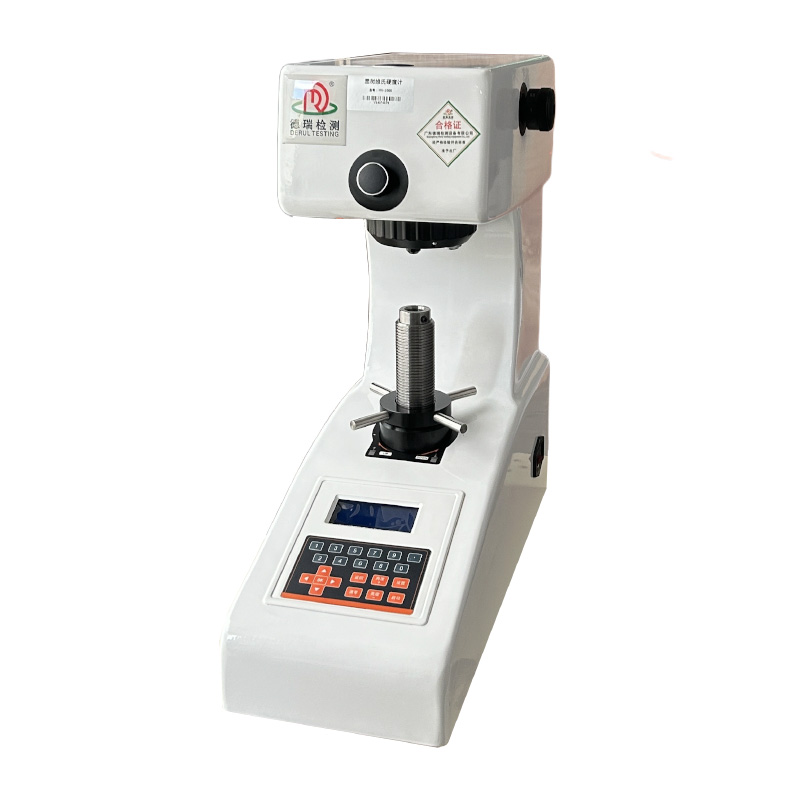
portable brinell hardness testing machine
128005.0 INR/Unit
Product Details:
- Humidity 85% RH (non-condensing)
- Automation Grade Manual
- Display Type Analogue (microscope/optical measure separately required)
- Max Height 180 mm (specimen)
- Test Range 8-650 HBW
- Operating Voltage Not applicable (manual)
- Specimen Size Flat and cylindrical up to 180 mm height
- Click to view more
X
portable brinell hardness testing machine Price And Quantity
- 128005.0 INR/Unit
- 1 Unit
- 0.5 mm to 6 mm
- 2.5 mm and 5 mm options
- Carrying Case Provided
- High Strength Steel
- From 500 to 3000 kgf
- 20X microscope for indentation measurement
portable brinell hardness testing machine Product Specifications
- 150 mm (maximum distance from center of indentation to machine arm)
- 0.5 HBW
- Clamp-on (surface mount, hand-held)
- No external power required (manual operation)
- In-situ hardness measurement, field inspection, quality control
- Brinell hardness (8-650 HBW)
- Max. 180 mm
- Single specimen per test cycle
- 0C to 40C
- On-site Brinell hardness testing of metals, steel structures, heavy components, and welded parts
- Standard Brinell application speed
- Not applicable (manual)
- 13 kg (approx)
- Manual lever operation
- Up to 3000 kgf test force
- 1% of reading
- Immediate (visual/manual)
- Portable, compact, single-person operation, direct testing on large/immovable objects, robust metal body, no electrical dependency
- Manual operation
- Flat and cylindrical up to 180 mm height
- 8-650 HBW (Brinell Hardness Value)
- Not applicable (manual)
- 8-650 HBW
- 180 mm (specimen)
- Analogue (microscope/optical measure separately required)
- Manual
- 85% RH (non-condensing)
- 0.5 mm to 6 mm
- 2.5 mm and 5 mm options
- Carrying Case Provided
- High Strength Steel
- From 500 to 3000 kgf
- 20X microscope for indentation measurement
portable brinell hardness testing machine Trade Information
- Paypal
- 100 Unit Per Month
- 7 Days
- All India
Product Description
| Type | DR-C203 |
| Measuring range | 20-88HRA, 20-100HRB, 20-70HRC |
| Test force | 588, 980, 1471N (60, 100, 150kgf) |
| Max. height of test piece | 165mm |
| Distance from indenter to outer wall | 160mm |
| Rockwell scaleplate | HRA,HRB,HRC,HRD,HRE,HRF,HRG,HRH,HRK |
| Hardness measuring range | HRA:20-88 HRB:20-100 HRC:20-70 HRD:40-77 |
| HRF:60-100 HRG:30-94 HRH:80-100 HRK:40-100 | |
| Initial force | 1000kgf (98.07N) |
| Dimensions | 466 x 238 x630mm |
| Weight | Approx. 70kg |
| Accessories | Large flat anvil: 1 pc. Small flat anvil: 1 pc. V-notch anvil: 1 pc. Diamond cone indenter: 1 pc. 1/16" steel ball indenter: 1 pc. ockwell standardized block: 5pcs. |
The portable Brinell hardness tester is a compact and easy to carry Brinell hardness testing device. Compared with traditional desktop Brinell hardness testing machines, portable devices have higher flexibility and adaptability, and are suitable for various on-site testing needs. The following is a detailed introduction to the portable Brinell hardness tester:
Main features:
one
Strong portability:
Compact design, lightweight, easy to carry, suitable for use in laboratories, factory workshops, or on-site.
Usually equipped with a portable suitcase for easy transportation and storage.
two
Easy to operate:
User friendly interface, usually equipped with touch screen or simple button operation.
High degree of automation, capable of automatic loading, unloading, and measurement, reducing human operational errors.
three
Multifunctionality:
Capable of conducting tests on various loads and indenter diameters, adapting to different materials and testing requirements.
Some portable devices also support other hardness testing methods, such as Rockwell hardness, Vickers hardness, etc.
four
High precision measurement:
Adopting high-precision sensors and digital display systems, it can provide accurate measurement results.
Built in data processing software that can automatically calculate hardness values and generate test reports.
five
Battery powered:
Usually powered by rechargeable batteries, suitable for use on site without power supply.
Long battery life, able to meet long-term testing needs.
working principle:
The working principle of the portable Brinell hardness tester is basically the same as that of the traditional Brinell hardness tester:
one
Prepare the sample: Polish the surface of the metal material to be tested flat to ensure the accuracy of the measurement results.
two
Loading: Select the appropriate load and indenter diameter on the testing machine and apply them to the surface of the material.
three
Indentation measurement: The indenter presses a circular indentation on the surface of the material, and the diameter of the indentation is measured using the built-in measurement system or portable microscope.
four
Calculate hardness: Use the Brinell hardness formula to calculate the hardness value based on the indentation diameter and load.
Application areas:
The portable Brinell hardness tester is widely used in the following fields:
Manufacturing industry: used for quality control and on-site inspection of metal components.
Architecture and infrastructure: used for hardness testing of metal structures such as steel structures, bridges, pipelines, etc.
Maintenance and upkeep: Used for the maintenance and fault diagnosis of mechanical equipment.
Research and development: used for hardness testing in the research and development process of new materials.
advantage:
High flexibility: Testing can be conducted in different locations without the need to bring samples to the laboratory.
Save time and costs: Reduce sample transportation and testing time, improve work efficiency.
Strong adaptability: Suitable for various complex and harsh on-site environments.
matters needing attention:
Calibration: Regularly calibrate the portable Brinell hardness testing machine to ensure the accuracy of measurement results.
Operating standards: Strictly follow the operating manual to avoid measurement errors caused by improper operation.
Maintenance: Regularly clean and maintain to extend the service life of the equipment.
If you have specific needs or questions, such as choosing appropriate equipment or operating methods, I can provide more details and I will do my best to assist you.
Effortless On-Site Brinell Hardness Testing
Make rapid, accurate hardness measurements wherever you need them. This portable machine delivers reliable Brinell hardness testing for large, immovable objects, heavy steel parts, welded areas, and moredirectly in the field. Its manual operation, durable construction, and compact design ensure straightforward and consistent results, even outside the lab.
Versatile and Precise Measurement Capability
Equipped with selectable 2.5 mm and 5 mm indenter diameters, the tester adjusts seamlessly for various load ranges between 500 and 3000 kgf. The high-magnification (20X) microscope enables precise indentation measurement, while its robust clamp-on mounting accommodates both flat and cylindrical specimens up to 180 mm tall. Ideal for quality control and field inspections.
FAQs of portable brinell hardness testing machine:
Q: How does the portable Brinell hardness tester operate without an external power supply?
A: This machine is manually operated using a lever system, so it does not require any electrical power. The portable design allows you to perform hardness measurements in any environment, making it ideal for on-site field testing and inspections where power sources may not be available.Q: What is the process for measuring Brinell hardness with this device?
A: To use the tester, clamp it onto your specimen, apply the required test force (between 500 and 3000 kgf) using the manual lever, and create an indentation with either a 2.5 mm or 5 mm indenter. After loading, use the 20X microscope to accurately measure the diameter of the indentation, then reference the Brinell hardness value using the standard calculation.Q: When should I choose this portable Brinell hardness tester over a bench-top model?
A: This portable tester is best used when you need to test large, heavy, or fixed components that cannot be moved easily to a laboratory. Its perfect for in-situ inspections of metal structures, pipelines, welded joints, and quality control checks directly at the site of construction or manufacturing.Q: Where can this hardness tester be used?
A: The device is suitable for use in various settings, including manufacturing plants, construction sites, workshops, shipyards, and field inspection locations. Its compact body and carrying case make it convenient for transportation and on-the-go testing in challenging work environments.Q: What are the main benefits of using this manual Brinell hardness tester?
A: Key benefits include portability, the ability to test without electrical power, suitability for large or immovable objects, robust construction, and high accuracy (1% of reading). It enables single-person operation and delivers immediate, visual/manual results.Q: Which specimen sizes and shapes can be tested with this machine?
A: This tester accommodates both flat and cylindrical specimens up to 180 mm in height, making it versatile for a wide range of metal components and welded parts. The clamp-on mounting design helps secure the tester for consistent, repeatable results.Q: What type of results and accuracy can I expect from this device?
A: The tester provides Brinell Hardness values (8-650 HBW) with a measurement resolution of 0.5 HBW and accuracy within 1% of the reading. Results are obtained immediately and measured visually with the supplied microscope.Tell us about your requirement

Price:
Quantity
Select Unit
- 50
- 100
- 200
- 250
- 500
- 1000+
Additional detail
Mobile number
Email

Other Products in 'Leather And Shoes Testing Machine' category

Contact Details

- 1st Floor, No. 3, Shugang Avenue, Hongmei Town,Dongguan Guangdong, China
- Mr. Shirley (Manager)
- Mobile : +8615580327593
- Send Inquiry
-

Derui Testing Equipment Co., Ltd
 Send Inquiry
Derui Testing Equipment Co. Ltd
All Rights Reserved.(Terms of Use)
Developed and Managed by Infocom Network Private Limited.
Developed and Managed by Infocom Network Private Limited.
 English
 Spanish
 French
 German
 Italian
 Chinese (Simplified)
 Japanese
 Korean
 Arabic
 Portuguese